
The Picture of Dorian Gray Summary, Themes, and Ending: A Book Club Guide With Teeth
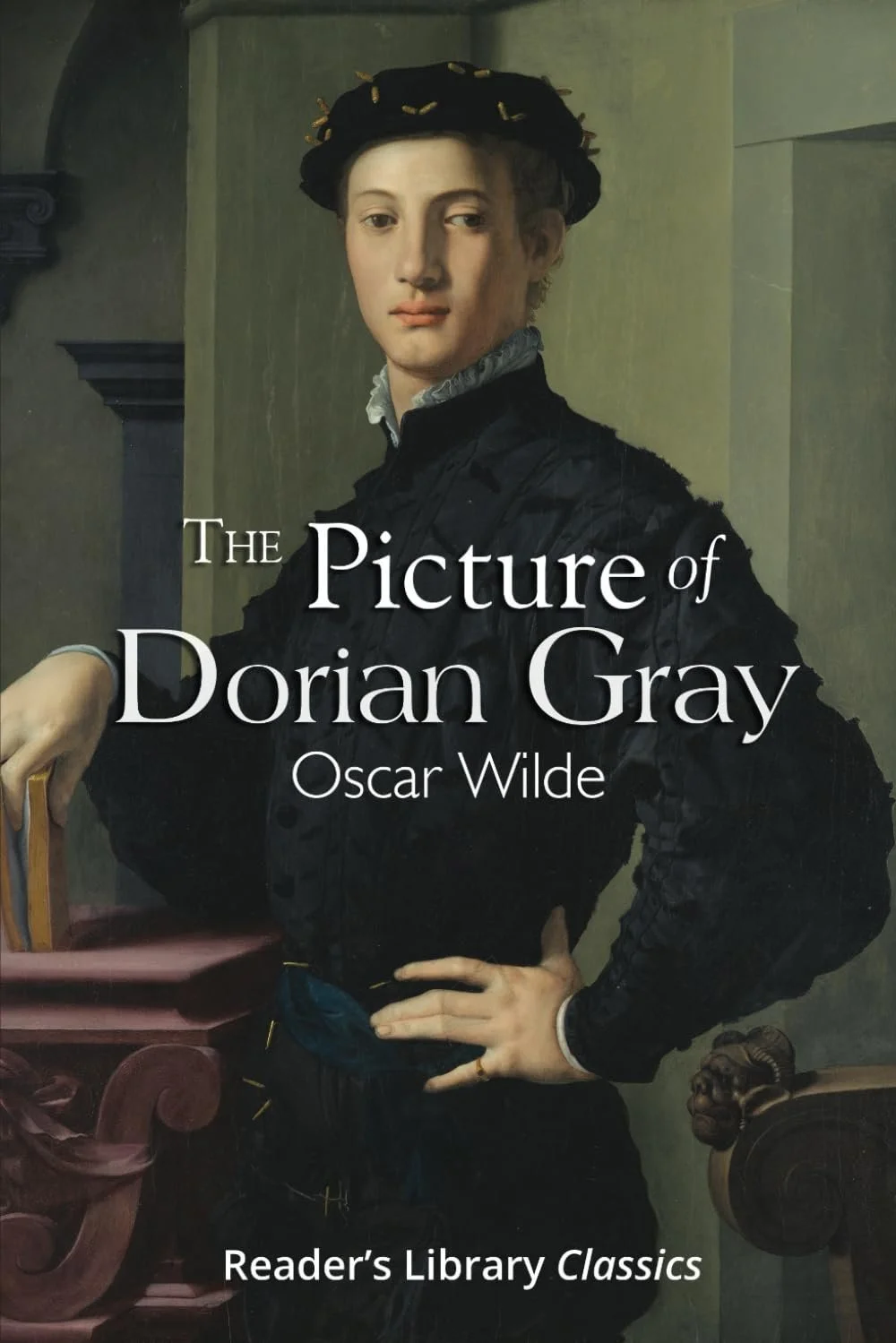
Some classics feel like polite homework. The Picture of Dorian Gray feels like opening a door you were told not to touch and finding a mirror that knows your search history.
Oscar Wilde’s only novel first appeared in 1890 in Lippincott’s Monthly Magazine and was expanded into a book in 1891 with six new chapters and the now-famous preface. The scandal around its “immorality” was immediate, which makes its survival as a modern favourite even more satisfying.
If you want a wider map of Wilde’s work, our guide to Oscar Wilde Books in Order is the best next stop.
This post stays focused on The Picture of Dorian Gray itself, with a closer look at what the story is doing beneath the velvet.
Affiliate Disclaimer: This article may contain affiliate links for which, through no additional cost to you, we may receive compensation. For more information about our affiliate use, check our Disclaimer page.
The Picture of Dorian Gray in five sentences
Dorian Gray, a young aristocrat of extraordinary beauty, sits for a portrait by the painter Basil Hallward. Basil introduces him to Lord Henry Wotton, whose dazzling philosophy celebrates youth, pleasure, and social theatre. In a moment of panic about ageing, Dorian wishes that the portrait would grow old and bear the marks of his choices instead of him. The wish comes true, and Dorian remains outwardly perfect while the painting becomes a hidden ledger of his cruelty, obsession, and moral decay, touching everyone around him. When he finally tries to destroy the portrait, he is found dead, aged and disfigured, while the canvas returns to Basil’s original vision.
Who is Dorian Gray?
Dorian is not born wicked. He is born impressionable, adored, and dangerously convinced that admiration is a form of love. He learns to treat himself as a beautiful object, then as a man beyond consequence, then as someone who can lock his conscience in a room and call it privacy.
Key characters in one glance
Basil Hallward is the artist who paints the portrait and believes beauty should be tied to a kind of moral tenderness.
Lord Henry Wotton is the charismatic thinker who treats ethics like a dress code for other people.
Sibyl Vane is the young actress whose love story with Dorian exposes his ability to mistake art for life.
James Vane is Sibyl’s brother, a human embodiment of the consequences Dorian keeps trying to outrun.
Alan Campbell is the friend Dorian blackmails, showing how far his corruption spreads beyond the glamorous surfaces.
The key players in Dorian Gray
The novel’s core tension is not beauty versus ugliness
A lot of quick summaries frame Dorian Gray as a cautionary tale about vanity. That is part of the engine. The deeper unease comes from a different question.
What happens when you can do harm and stay beautiful?
Wilde does not let Dorian avoid consequences entirely. He just relocates them. The portrait becomes a private truth that cannot be bribed, charmed, or rationalised. It grows hideous while Dorian stays immaculate, which is its own kind of horror.

Aestheticism, art, and the preface that dares you to judge
The 1891 edition opens with a preface of epigrams that pushes back against moral panic. It argues that art should not be reduced to a sermon, and that the reader’s reaction says a lot about the reader. This is Wilde defending the novel while also teasing the people who tried to police it.
Read the preface before your next re-read. It sharpens the irony of the entire book.
Youth and beauty as a moral loophole
Dorian’s downfall is not that he enjoys pleasure. The more chilling move is the way he learns to treat youth as a warranty. If he looks untouched, he convinces himself that he is untouched.
The portrait destroys that illusion. It is essentially a conscience with brushstrokes. The novel’s major theme set often gets summed up as youth, beauty, surfaces, influence, and the consequences of chasing appearances at the cost of responsibility.
Influence is a theme, not an excuse
Lord Henry is one of literature’s great persuaders. He gives Dorian a language that makes selfishness sound like sophistication. Basil offers the opposite pull, a belief that beauty should inspire goodness.
Dorian chooses the worldview that flatters him most. The book keeps hinting that influence is real and dangerous, yet moral agency still matters.
The queer subtext and the fear of exposure
Modern readers often pick up on the intimacy between Basil and Dorian, and on the novel’s obsession with reputation, secrecy, and the terror of being known too well. The 1890 version was edited before publication, and later revisions show Wilde navigating a culture primed to punish certain desires.
Reading Dorian Gray with Wilde’s 1895 conviction in mind adds a grim resonance to its locked rooms and coded dangers.
The ending explained: punishment, self-knowledge, or redemption?
Dorian’s final act is usually read as a last, reckless attempt to destroy evidence. That reading works.
There is another path through the ending, one that makes the book feel even more human.
Dorian has spent years pretending his sins are safely sealed away, but he cannot escape the knowledge of what the portrait has become. When he stabs it, the act can look like panic. It can also look like intention.
On this reading, the knife is not only aimed at the painting. It is aimed at the version of himself he cannot bear to keep living with. His body turning monstrous while the portrait returns to its original beauty can be taken as Wilde’s bleakest kind of mercy. Dorian finally pays the price, and the restored image suggests the person he might have been, or the purity he reaches in that last moment of reckoning.
This is why the book can feel less like a simple morality tale and more like a story about humanity’s hunger for absolution, even when the route there is brutal.

Why this story still feels modern
We live in an era where image often gets treated as identity. The novel’s supernatural trick is a Victorian way of dramatizing a very current fear.
What if the version of you that the world applauds is built on private rot?
If you want more classics that rip the mask off power and image, our 1984 Book Summary and Review is a strong companion read.
For satire that tracks how systems manipulate truth, the character guide in Animal Farm Allegorical Characters & Animal Quotes pairs surprisingly well with Dorian’s private moral economy.
A short reading note on editions
Most readers today pick up the 1891 expanded text. The 1890 magazine version is shorter and offers a fascinating glimpse into the novel’s earlier shape. If you love literary archaeology, reading both can be a treat.
Book club questions for The Picture of Dorian Gray
Who carries the greater responsibility for Dorian’s fall, Dorian himself or Lord Henry?
Is Basil’s love for Dorian protective, possessive, or both?
What does the portrait represent in your reading: conscience, soul, reputation, or something else?
Where does the novel invite sympathy for Dorian, and where does it cut that sympathy off?
How does Sibyl Vane change the story’s ethical temperature?
Which moment is Dorian’s true turning point?
Does the ending feel like justice, escape, or a final act of self-awareness?
How do you read the book’s stance on art and morality after the preface?
Which social pressures in the novel still exist now, with better branding?
If the portrait were replaced by something modern, what would it be?
For a broader prompt library, we also have Book Club Discussion Questions ready to steal.
Dorian Gray theme map
A quick guide for readers and book clubs.
- Youth and beauty: when admiration becomes a moral loophole.
- Influence: ideas that sound like freedom and act like a leash.
- Art and morality: the preface vs the story’s emotional consequences.
- Secrecy: the cost of a life split into public perfection and private decay.
- Redemption: whether self-knowledge arrives in time to matter.
Read next on His and Hers Book Club
If Dorian Gray is your gateway into Wilde, our Oscar Wilde Quotes collection gives the sharpest lines with context.
Our Classic Horror Books list also features Dorian as one of the genre’s anchor texts.
And if you are building a classics shelf, this older but still handy guide can give you ideas for your next pick: 30 classic books to read at least once.
If you’d like to give Oscar Wilde’s works to someone on Audible or Kindle, but have no idea how that works, check out our How to Gift an Audible Book and How to Gift a Kindle Book guides.

FAQ
What is The Picture of Dorian Gray about?
It follows a young man whose wish to stay forever youthful comes true, while his portrait absorbs the visible consequences of his cruelty, vanity, and corruption. The story tracks how that bargain reshapes his relationships, his conscience, and his ability to feel human limits.
What is a short summary of The Picture of Dorian Gray?
Dorian Gray sits for a portrait and becomes obsessed with youth and beauty after meeting Lord Henry. He wishes the portrait would age instead of him, and the wish is granted. As Dorian’s life grows more destructive, the painting becomes grotesque while he remains outwardly perfect. When he tries to destroy the portrait, he dies, and the painting returns to its original beauty.
What are the main themes of The Picture of Dorian Gray?
The novel explores youth and beauty as power, influence and moral responsibility, the split between public image and private truth, art and ethics, and the long, messy cost of avoiding accountability.
What does the portrait symbolize in The Picture of Dorian Gray?
The portrait is a physical record of Dorian’s spiritual and moral decay. It works like a conscience made visible, storing the truth he cannot face in public.
What does the ending of The Picture of Dorian Gray mean?
The ending can be read as the price of Dorian’s choices finally becoming unavoidable. It can also be read as a last, desperate attempt at self-reckoning. The restoration of the portrait while Dorian’s body becomes ruined suggests that truth cannot stay buried without destroying the person who buried it.
Is The Picture of Dorian Gray a morality tale?
It can be read that way, but it’s more unsettling than a simple warning. Wilde shows how easily beauty can become permission, and how self-deception can feel like freedom right up until it becomes a prison.
Why was The Picture of Dorian Gray controversial?
Victorian critics accused it of immorality, especially in its treatment of desire, decadence, and the tension between aesthetics and ethics. The novel’s coded intimacy and obsession with secrecy also collided with the era’s anxieties about sexuality and reputation.
What is the role of Lord Henry in The Picture of Dorian Gray?
Lord Henry is the voice of seductive ideas. He encourages Dorian to treat pleasure as philosophy and conscience as a social inconvenience. He influences Dorian, yet the book leaves room for the argument that Dorian still chooses how far to go.
What is the role of Basil Hallward?
Basil represents an artistic and moral counterweight to Lord Henry. He loves beauty, yet fears what that beauty awakens in others and in himself. His relationship with Dorian adds emotional depth to the novel’s tensions around desire, idealisation, and exposure.
What is the importance of the preface?
The preface frames the book as a challenge to moral policing of art. It nudges readers to question whether disgust says more about the artwork or about the person judging it.
Is The Picture of Dorian Gray a gothic or horror novel?
It has strong gothic DNA: a cursed object, hidden rooms, moral dread, and psychological decay. It also carries social satire and philosophical argument, which is part of why it still feels so slippery and modern.
Should I read the 1890 or 1891 version?
Most readers start with the 1891 expanded edition. If you love seeing how a story evolves under public pressure, reading the 1890 magazine version later can add a fascinating second layer.


Dungeon Crawler Carl book 6, The Eye of the Bedlam Bride, reviewed: what happens, why the series keeps getting better, and whether it's worth reading. Honest fan take.