10 Best Classic Horror Books (A Reading & Collecting Guide)
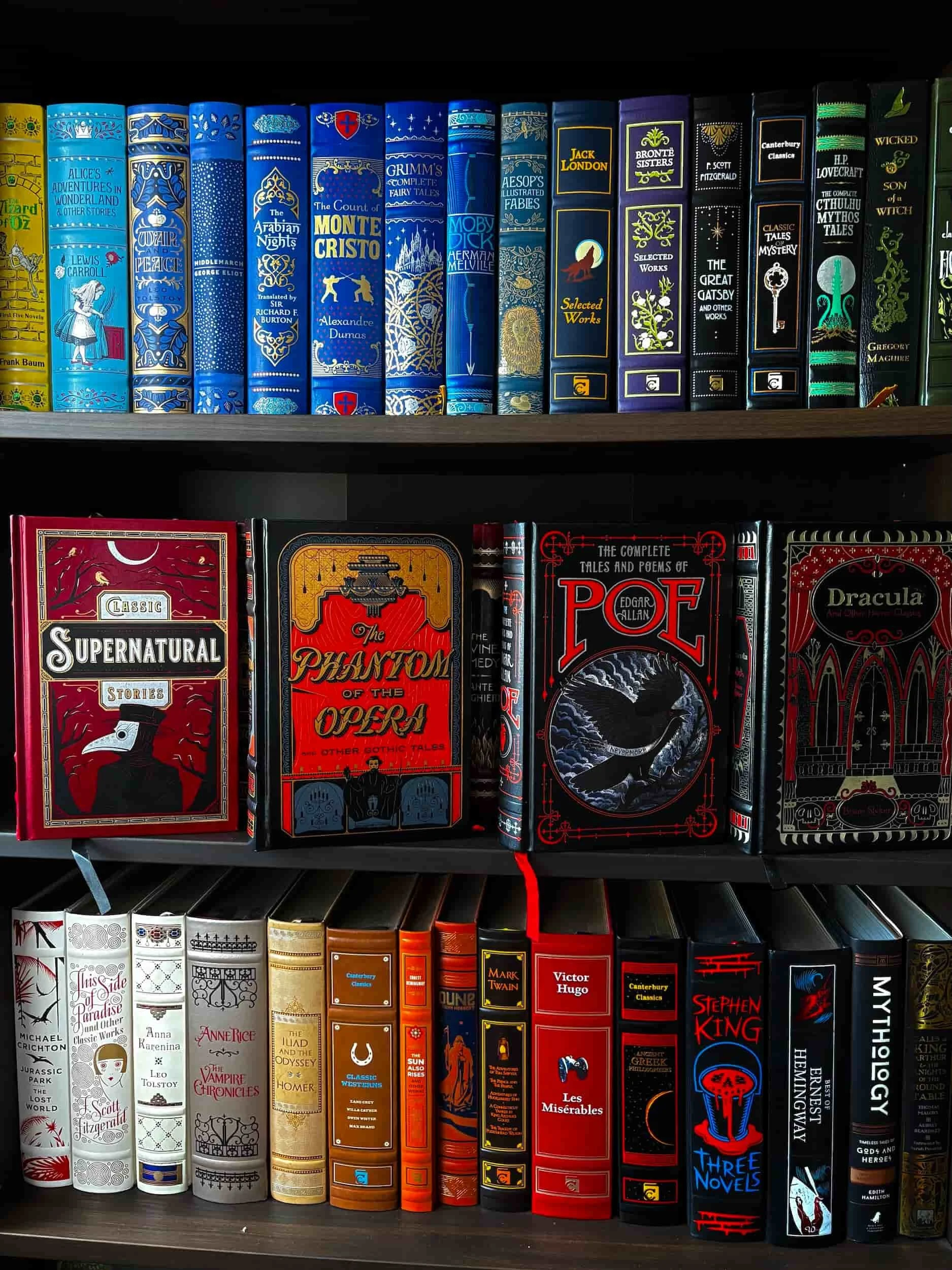
My "Spooky Shelf." These leatherbound editions are some of the most beautiful books I own.
(Affiliate Disclaimer) This post contains affiliate links. If you use these links to buy something we may earn a commission. For more information, please see our Disclaimer.
There is something undeniably satisfying about a classic horror novel. Unlike modern thrillers that often rely on jump scares and gore, the classics rely on atmosphere. They are about crumbling castles, foggy London streets, and the slow, creeping dread that something is wrong.
As a collector of Barnes & Noble Leatherbound Classics, I have accidentally built a library that looks like it belongs to a Victorian vampire hunter. But these books aren't just for display. Inside these beautiful covers are some of the most disturbing, philosophical, and terrifying stories ever written.
Whether you are looking for a "Dark Academia" read for a rainy afternoon or just want to see which editions look best on a shelf, here is my curated guide to the best classic horror books (and the specific editions I own).
At a Glance: The 10 Best Classic Horror Books
Dracula and Other Horror Stories by Bram Stoker
Frankenstein by Mary Shelley
The Picture of Dorian Gray by Oscar Wilde
The Complete Cthulhu Mythos by H.P. Lovecraft
The Vampire Chronicles by Anne Rice
The Complete Tales & Poems of Edgar Allan Poe
Classic Supernatural Stories (Anthology)
The Phantom of the Opera by Gaston Leroux
Grimm’s Complete Fairy Tales by The Brothers Grimm
Classic Tales of Horror (Anthology)
Part 1: The Absolute Must-Reads
These are the titans of the genre. I have read them, loved them, and lost sleep over them.
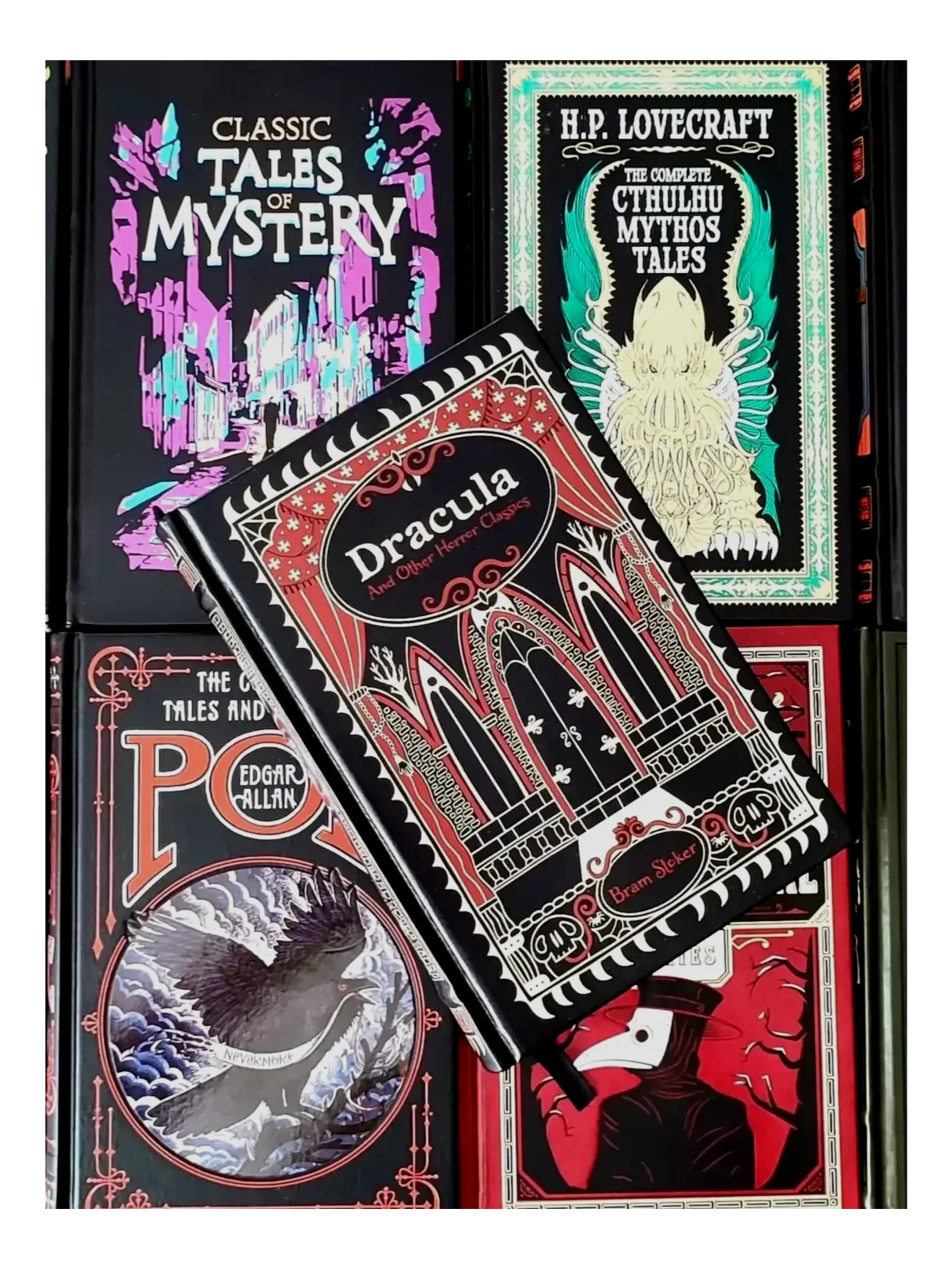
This edition of Dracula was one of the first leatherbound books I ever bought.
1. Dracula and Other Horror Stories
Author: Bram Stoker
First Published: 1897
Genre: Gothic Horror / Vampire Fiction
Reading Difficulty: Medium (Epistolary format)
My Personal Take: You cannot talk about horror without the Count. But here is the surprise: this specific edition offers so much more than just the main novel. When I picked this up, it was my first time reading Stoker's lesser-known works included in the back, specifically The Jewel of Seven Stars and The Lair of the White Worm.
However, the real hidden gem here is "Dracula's Guest." This short story was originally a chapter excised from the main novel, and reading it puts so many of Dracula's actions into context. It is an undervalued masterpiece that paints a much more complete picture of the vampire's reach than the novel alone. If you only read the standard version of Dracula, you are missing a crucial piece of the puzzle.
The Edition: The B&N edition is gorgeous. The blood-red leather and silver filigree make it a centerpiece of our collection. The back cover art is arguably the best in the entire series. (For more on Stoker’s impact, check out our deep dive on the Best Horror Authors of all time).
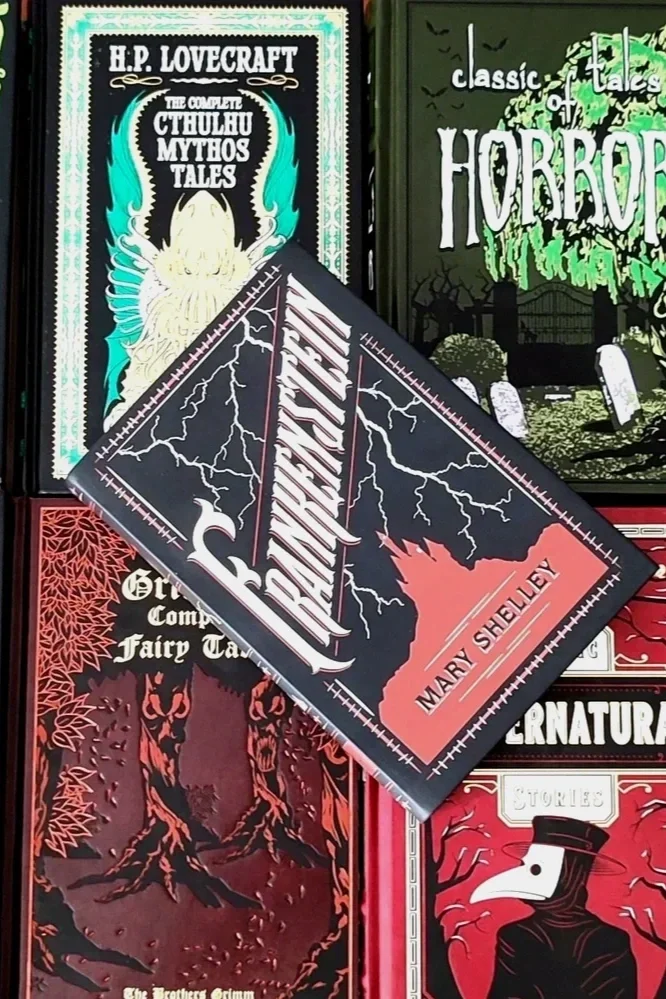
I actually own two Frankenstein special editions - this one, and the Puffin Classics one.
2. Frankenstein
Author: Mary Shelley
First Published: 1818
Genre: Science Fiction / Gothic Tragedy
Reading Difficulty: Medium-Hard (Dense prose)
My Personal Take: Forget the green monster with bolts in his neck you see in movies. The book is not a creature feature; it is a heartbreaking philosophical tragedy. Frankenstein is one of my all-time favorite books because it asks the uncomfortable question: Who is the real monster? Is it the creature who lashes out in pain, or the man (Victor) who created life only to abandon it because it was "ugly"?
It is beautifully written, deeply sad, and surprisingly relevant to modern discussions on AI and technology. (If you want to discuss the themes of playing God with your reading group, feel free to use our Book Club Discussion Questions to get the conversation started).
The Edition: I actually own two copies (don't judge me). The Flexibound edition has cool sprayed edges and feels like a field journal. The Puffin Clothbound is tactile and features a stark, haunting cover design.
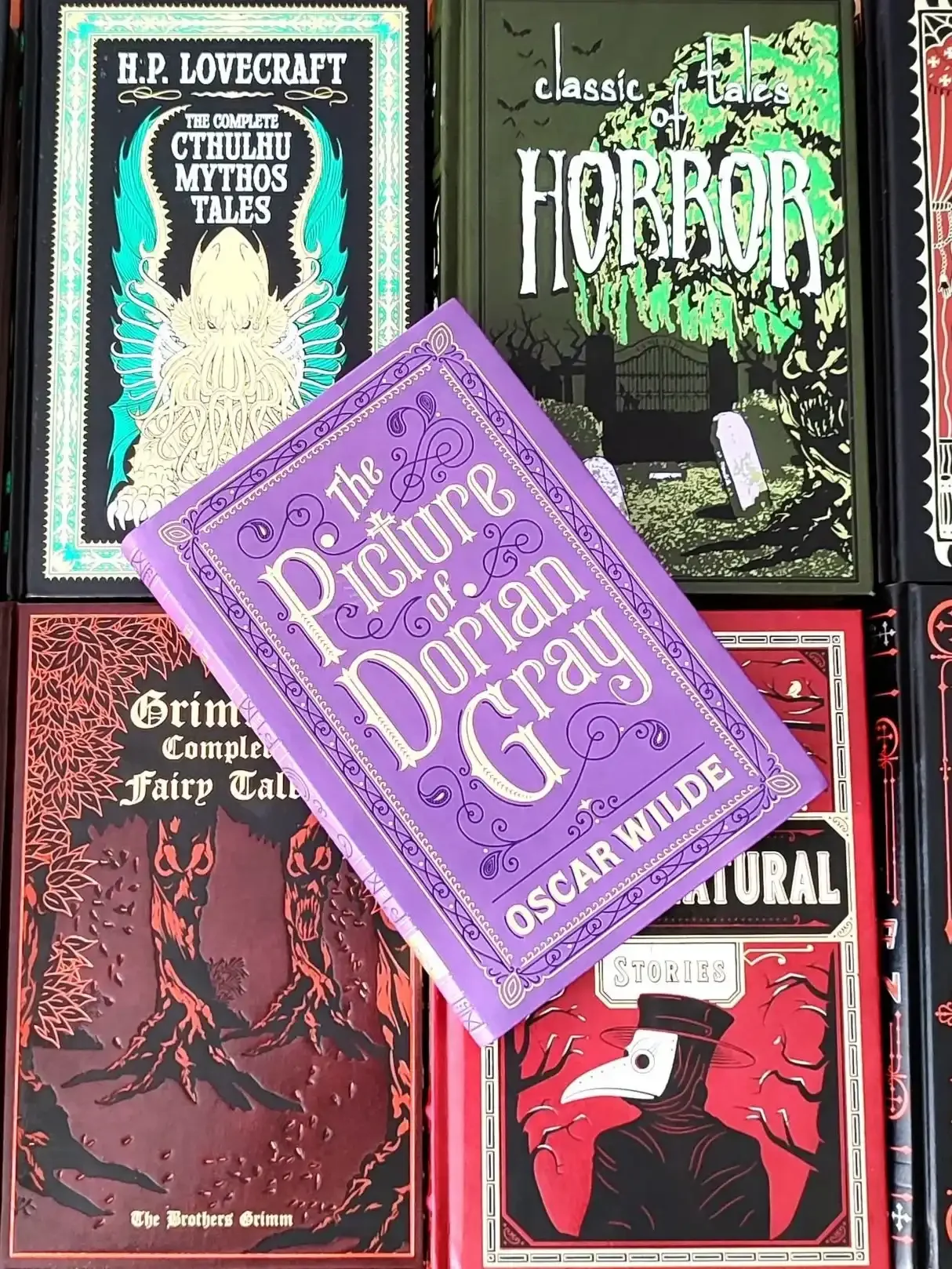
The purple of this edition always reminds me of the Joker from DC comics - doesn’t seem that scary until you take a peek inside.
3. The Picture of Dorian Gray
Author: Oscar Wilde
First Published: 1890
Genre: Philosophical Horror
Reading Difficulty: Easy-Medium
My Personal Take: This is horror for the soul. There are no ghosts, no vampires, and no demons: only the rotting corruption of a man's conscience. The prose is witty and sharp (as expected of Wilde), but the ending is pure nightmare fuel. It serves as the ultimate warning about vanity and the cost of a life lived without consequences. (For a full breakdown of the plot and themes, read my dedicated The Picture of Dorian Gray Summary).
The Edition: The Flexibound cover is stunning, but if you want to dive deeper into Wilde's other works, check out our guide to Oscar Wilde Books in Order.
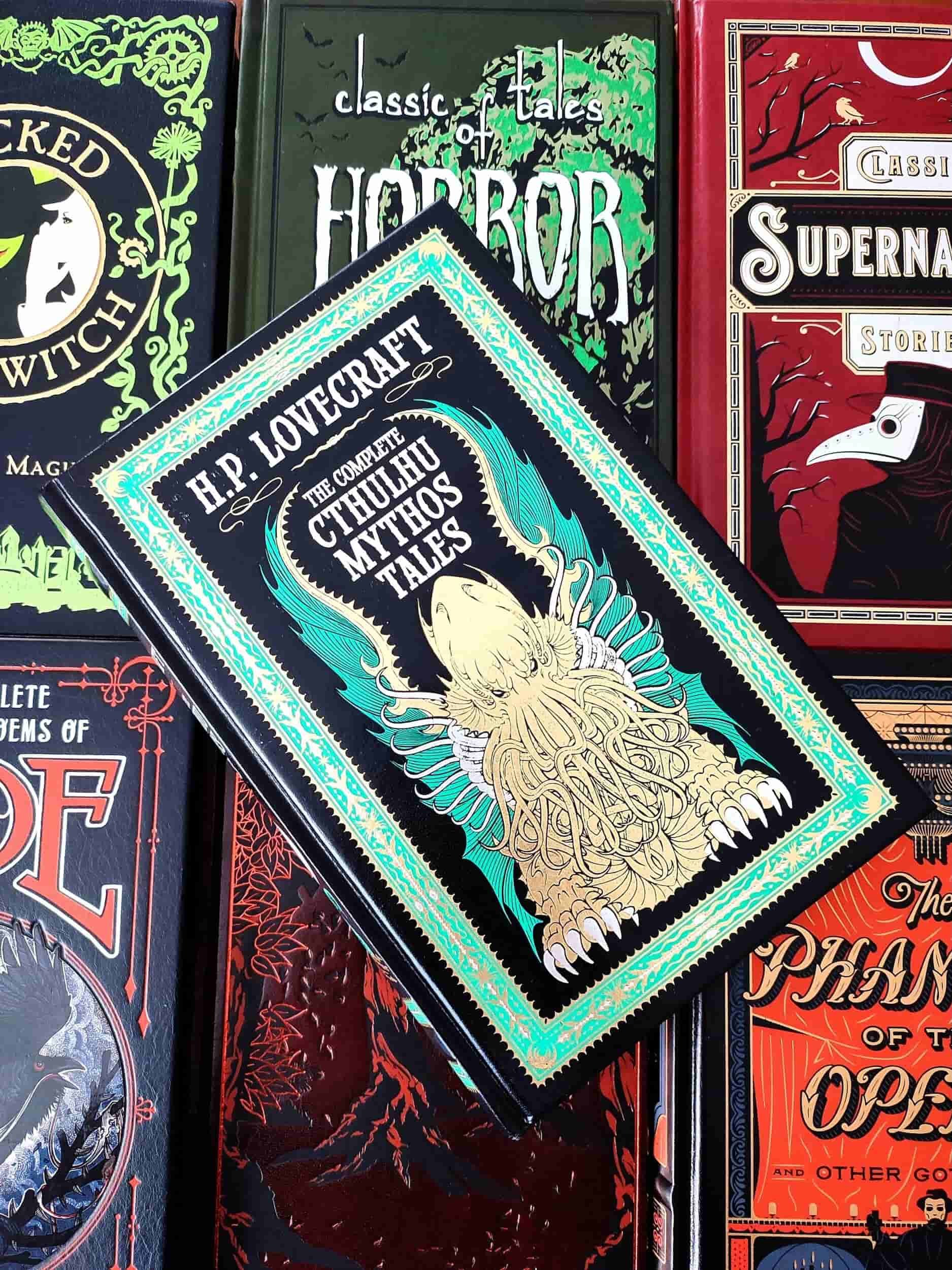
I fell in love with this edition of The Cthulhu Mythos the first time I saw it. It also came with a poster tucked neatly behind the front cover!
4. The Complete Cthulhu Mythos Tales
Author: H.P. Lovecraft
First Published: 1928 (Call of Cthulhu)
Genre: Cosmic Horror
Reading Difficulty: Hard (Very dense, archaic language)
My Personal Take: If you want to feel insignificant, read Lovecraft. This anthology defines "Cosmic Horror": the fear of the unknown. The horror here isn't a monster you can fight with a stake or a silver bullet. Cthulhu is an entity so vast and ancient that merely looking at him drives you mad. Reading the complete mythos gave me a new appreciation for how interconnected these stories are. It’s not just scary; it’s a masterclass in world-building.
The Edition: This is visually one of the coolest books I own. The cover features a gold Cthulhu and arcane symbols that look like they were taken straight from the Necronomicon.
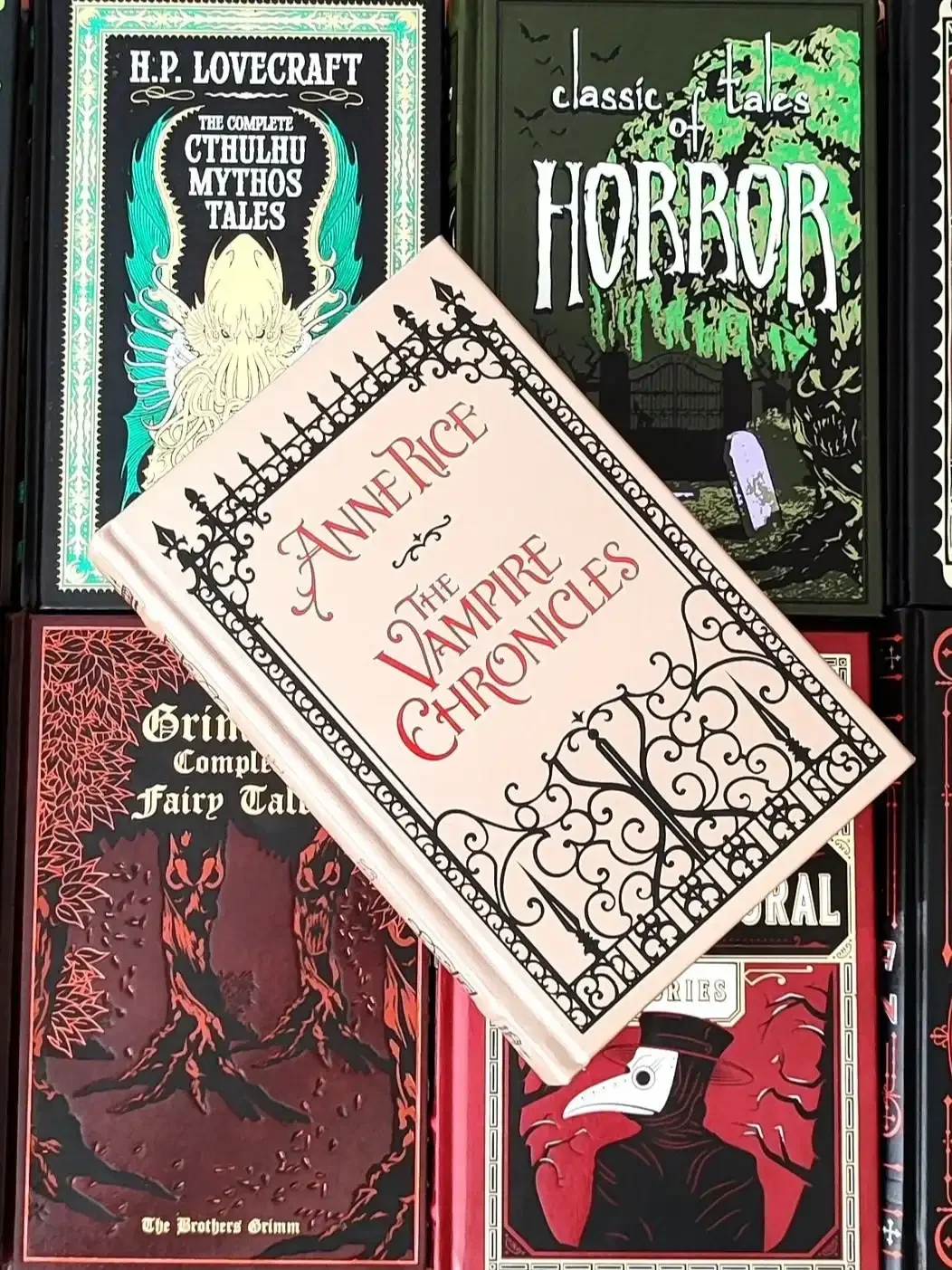
This edition of The Vampire Chronicles is probably the chunkiest book in our library.
5. The Vampire Chronicles (Interview with the Vampire)
Author: Anne Rice
First Published: 1976
Genre: Modern Gothic / Romance
Reading Difficulty: Medium
My Personal Take: Is 1976 "classic"? In the vampire genre, absolutely. Anne Rice reinvented the vampire. Before her, they were monsters to be hunted. After her, they were tragic, romantic, philosophical figures.
Reading the first book, Interview with the Vampire, was a revelation. It is deeper, darker, and much more sensual than the movie adaptation. Louis and Lestat are not villains; they are tragic figures trapped in immortality.
Part 2: The Collector’s Shelf (Anthologies & Editions)
I admit, I haven't finished every story in these massive omnibuses yet. But as objects of art and anthologies of fear, they deserve a spot on every horror lover's shelf.
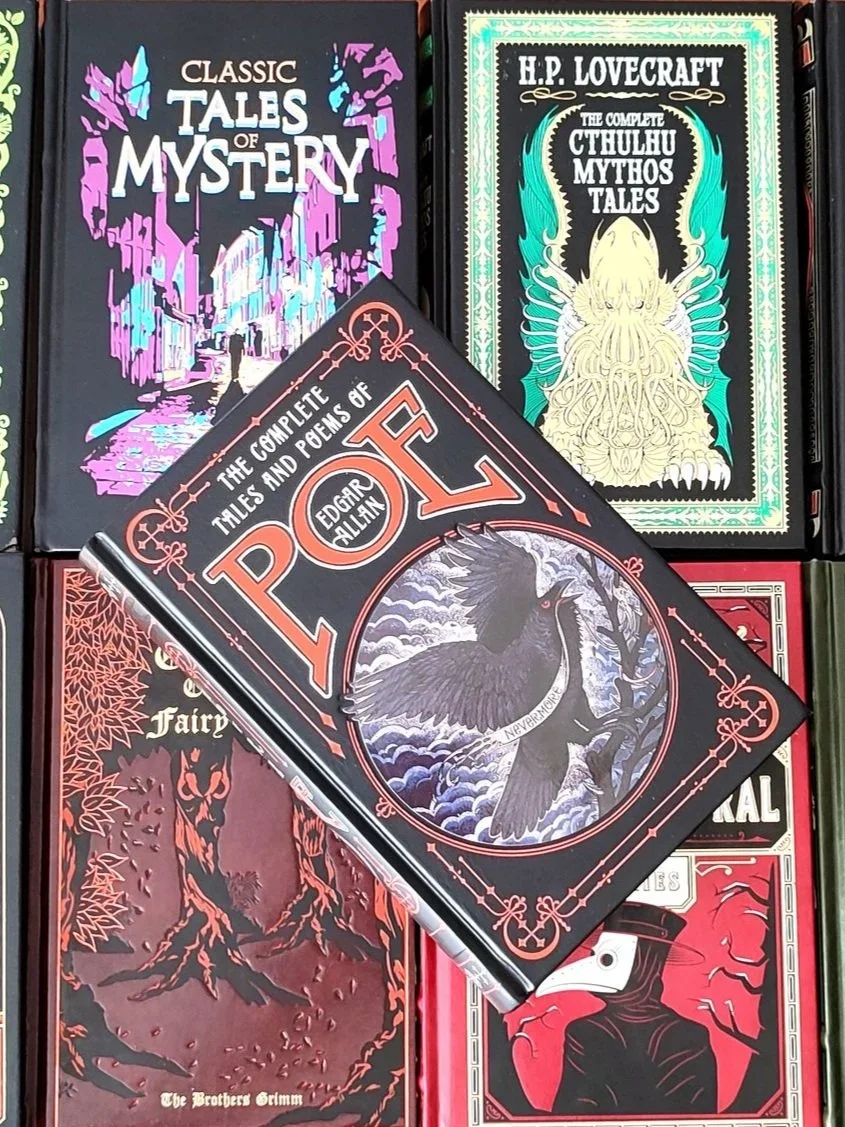
I’ve read a few of Poe’s works but never sat down to finish this complete edition - I think I shall remedy that soon.
6. The Complete Tales & Poems of Edgar Allan Poe
Format: Omnibus Collection
Year Published: Various (1809–1849)
Genre: Gothic / Psychological Horror
The Edition: Barnes & Noble Leatherbound (Red & Black)
Why It’s Essential: Poe isn't just a horror writer; he is the architect of the modern short story. This 1,000-page brick contains every nightmare he ever penned. While everyone knows "The Raven," the real horror here is in his psychological tales.
Must-Read Story: "The Cask of Amontillado." It’s a masterclass in revenge. No ghosts, just a man walling his enemy up alive in a catacomb while he begs for mercy.
The Edition: This book is surprisingly sturdy for its size. The red-on-black cover design is iconic, and the metallic sprayed edges give it a premium feel that makes it one of the best-looking books on my shelf.
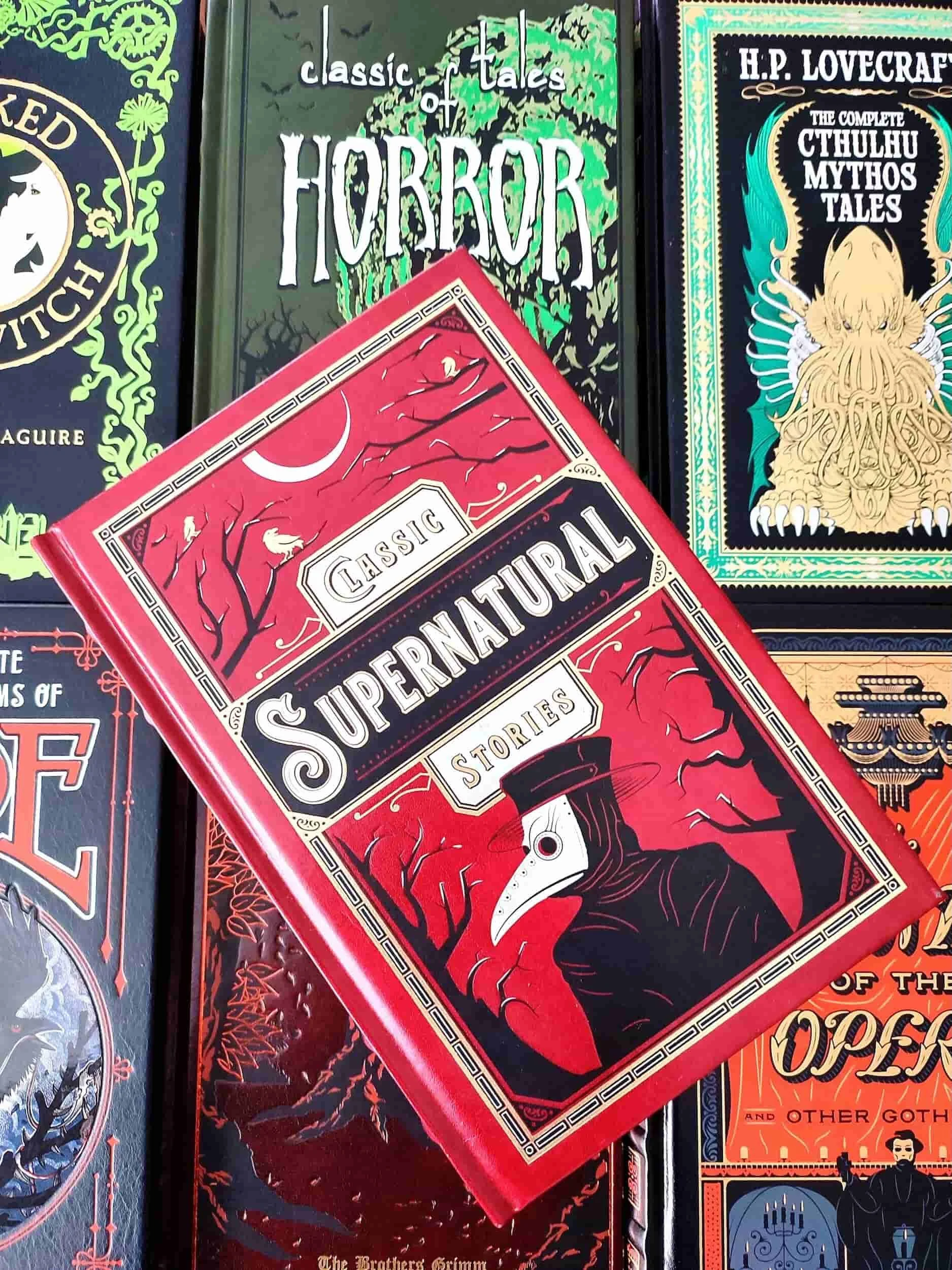
People that tell you don’t judge a book by its cover have obviously never seen this edition.
7. Classic Supernatural Stories
Format: Short Story Anthology
Key Authors: H.P. Lovecraft, Vernon Lee, William Hope Hodgson
Genre: Weird Fiction / Occult
The Edition: Barnes & Noble Leatherbound (Plague Mask Cover)
Why It’s Essential: This anthology captures a very specific era of horror: the turn-of-the-century "Weird Fiction" movement. These stories aren't about vampires; they are about cursed objects, invisible monsters, and things that go bump in the night.
Hidden Gem: It includes works by Vernon Lee and William Hope Hodgson, authors who are often left out of standard anthologies but were pioneers of the "ghost story."
The Edition: Look at that cover. The plague doctor mask is genuinely unsettling. It is arguably the most "atmospheric" cover in the entire B&N collection.
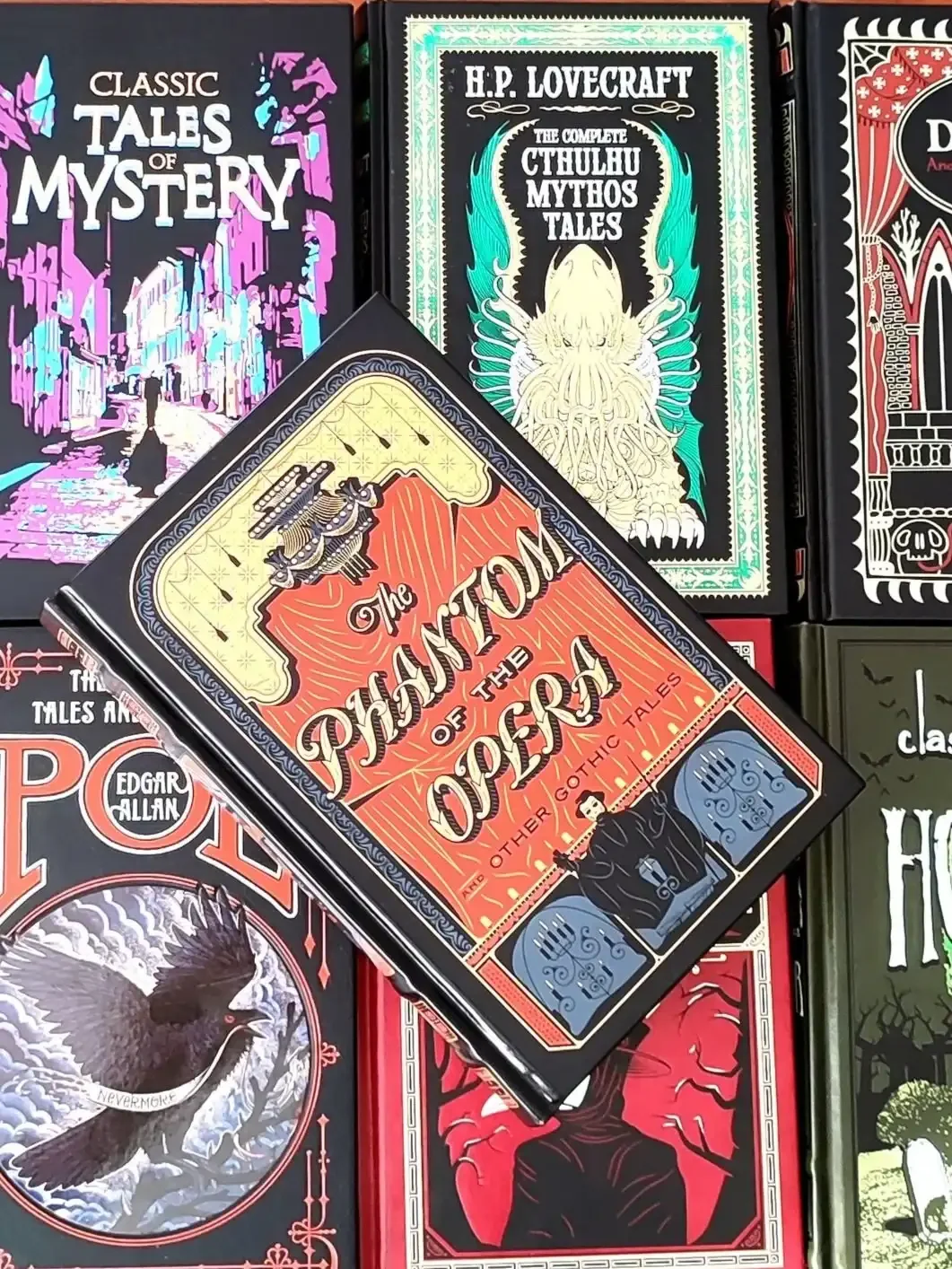
The Phantom of the Opera and Other Gothic Tales - the Barnes and Noble Leatherbound Edition.
8. The Phantom of the Opera and Other Gothic Tales
Author: Gaston Leroux (plus Walpole, Le Fanu, etc.)
First Published: 1910
Genre: Gothic Romance / Mystery
The Edition: Barnes & Noble Leatherbound (Red & Gold)
Why It’s Essential: Most people know the musical; fewer know the book is actually a grim mystery. The "Phantom" here is much more of a corpse-like figure than a romantic lead, and the book reads more like a detective novel than a romance.
The Bonus Content: This volume is a "Gothic Starter Pack." It includes The Castle of Otranto by Horace Walpole (the first Gothic novel ever written) and Carmilla by J. Sheridan Le Fanu (the vampire story that inspired Dracula).
The Edition: The red and gold design is elegant rather than scary, fitting the "Opera" theme perfectly.
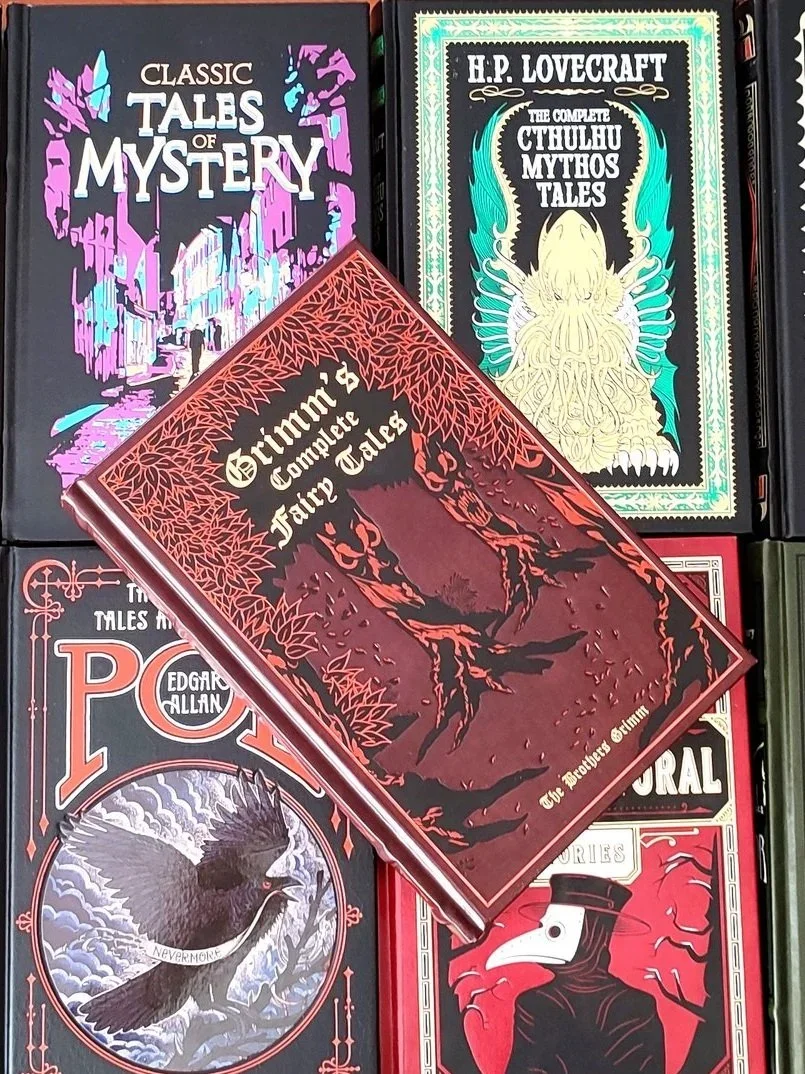
If you think these tales have anything in common with the Disney version, you’re in for a surprise.
9. Grimm’s Complete Fairy Tales
Authors: Jacob & Wilhelm Grimm
First Published: 1812
Genre: Folklore / Dark Fantasy
The Edition: Canterbury Classics
Wait, is this horror? Absolutely. If you grew up on Disney, the originals will shock you. These were warning tales meant to scare children into behaving.
The Horror: In the original Cinderella, the stepsisters slice off their own toes to fit into the slipper. In The Robber Bridegroom, a woman discovers her fiancé eats his victims. It is brutal, bloody, and fascinating.
The Edition: The Canterbury Classics leatherbound edition captures that gruesome aesthetic perfectly. The cover art is intricate but slightly twisted—beware the owl illustration!
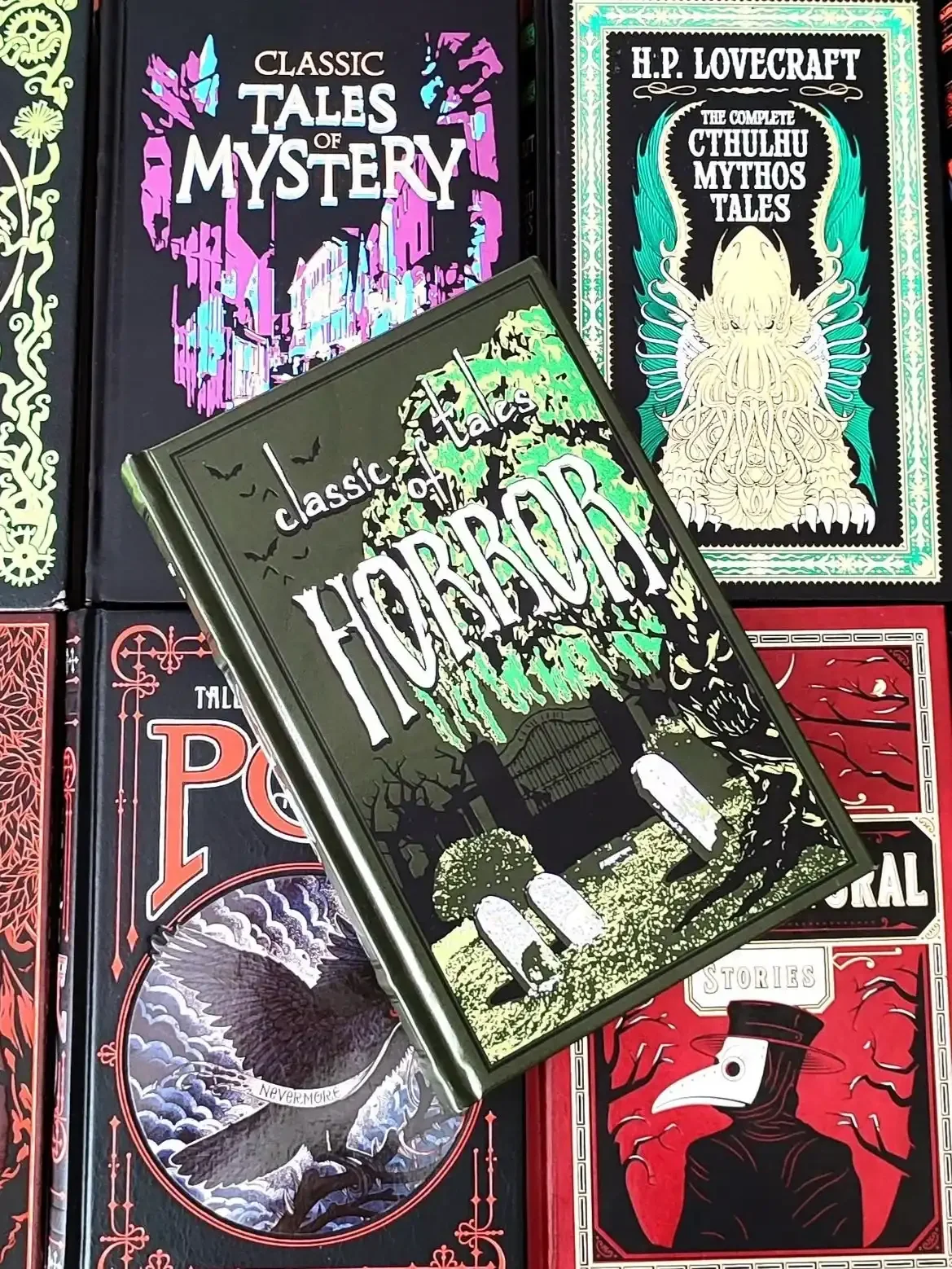
Classic Tales of Horror, photo taken from His and Hers Book Club personal archive, part of our Classic Horror Books Collection.
10. Classic Tales of Horror
Format: Multi-Author Anthology
Key Authors: Hawthorne, Poe, Lovecraft, Doyle
Genre: Pulp Horror
The Edition: Canterbury Classics
Why It’s Essential: If you want one book that has everything, this is the "Sampler Platter." It collects over 50 stories from the biggest names in the genre.
Why Buy It: It’s the perfect book to leave on a coffee table in October. You can flip to any page and find a 10-page story that will creep you out.
The Edition: Unlike the elegant B&N editions, this Canterbury Classics version leans into the "Pulp" vibe. The cover features a zombie-themed graveyard under a full moon: it’s campy, fun, and totally different from the rest of my collection.
FAQ: Getting into Classic Horror
What is the best classic horror book for beginners?
Start with Dracula. It is surprisingly fast-paced and uses a "found footage" style (letters and diaries) that feels very modern. If you want something shorter, try The Picture of Dorian Gray.
Are classic horror books actually scary?
They are rarely "jump-scare" scary. They are "unsettling." They stick with you because they deal with isolation, madness, and the loss of humanity.
What is the difference between Gothic and Horror?
Gothic fiction (like Frankenstein) focuses on atmosphere, romance, and tragedy in a spooky setting. Pure Horror focuses on fear and revulsion. Most classics on this list are a blend of both.

Dungeon Crawler Carl book 6, The Eye of the Bedlam Bride, reviewed: what happens, why the series keeps getting better, and whether it's worth reading. Honest fan take.