30 Best Classic Books to Read Once (An Honest Curated List)
(Affiliate Disclaimer) This post contains affiliate links. If you use these links to buy something we may earn a commission. For more information, please see our Disclaimer.
Let’s be brutally honest about classic literature: it can be incredibly intimidating. When you search for the best classic books to read, you are usually hit with academic lists that feel more like a college syllabus than a fun reading challenge.
I wanted to build something different. This is a realistic, highly curated list of 30 classic books everyone should read at least once.
Here is my full disclaimer: I have not read every single book on this list. Out of these 30 titles, I have personally read about half. The rest are sitting on my TBR shelf right now. But this list isn't just my opinion. I spent weeks researching, polling our reading community, and debating with fellow book lovers to find the undisputed masterpieces of literature that actually hold up today.
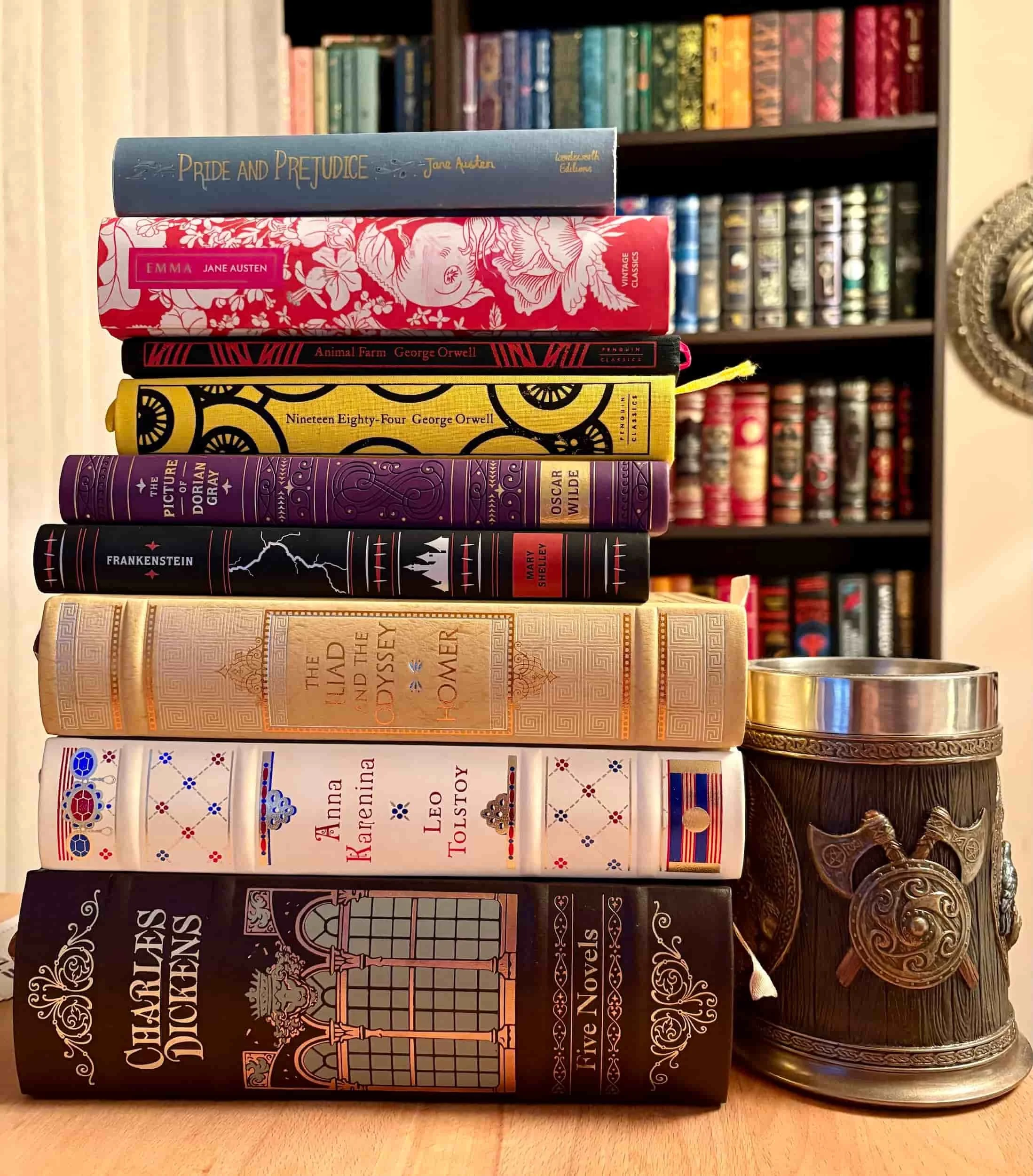
(Note: To save you from scrolling past 30 individual book covers, I’ve broken this massive list down into 5 thematic categories. For each category, I just snapped a photo of the physical copies stacked on my own shelf: except for a handful I haven't managed to collect yet!)
At a Glance: The 30 Best Classic Books to Read
The Unforgettable Epics:The Count of Monte Cristo, The Three Musketeers, The Lord of the Rings, The Iliad, The Odyssey, Moby-Dick.
The Dark & Gothic Masterpieces:Frankenstein, The Picture of Dorian Gray, Jane Eyre, Dracula, Wuthering Heights, The Strange Case of Dr. Jekyll and Mr. Hyde.
The Dystopian & Social Critiques:1984, To Kill a Mockingbird, Lord of the Flies, Of Mice and Men, Animal Farm, Fahrenheit 451.
The Romance & Society Dramas:Pride and Prejudice, Great Expectations, Emma, Little Women, Anna Karenina, The Great Gatsby.
The Groundbreaking Journeys:Gulliver's Travels, The Last of the Mohicans, The Decameron, Paradise Lost, Don Quixote, A Tale of Two Cities.
Whether you are looking for sweeping epics, dark gothic horror, or razor-sharp social critiques, here are the top classic books to add to your lifetime reading list.
Category 1: The Unforgettable Epics & Adventures
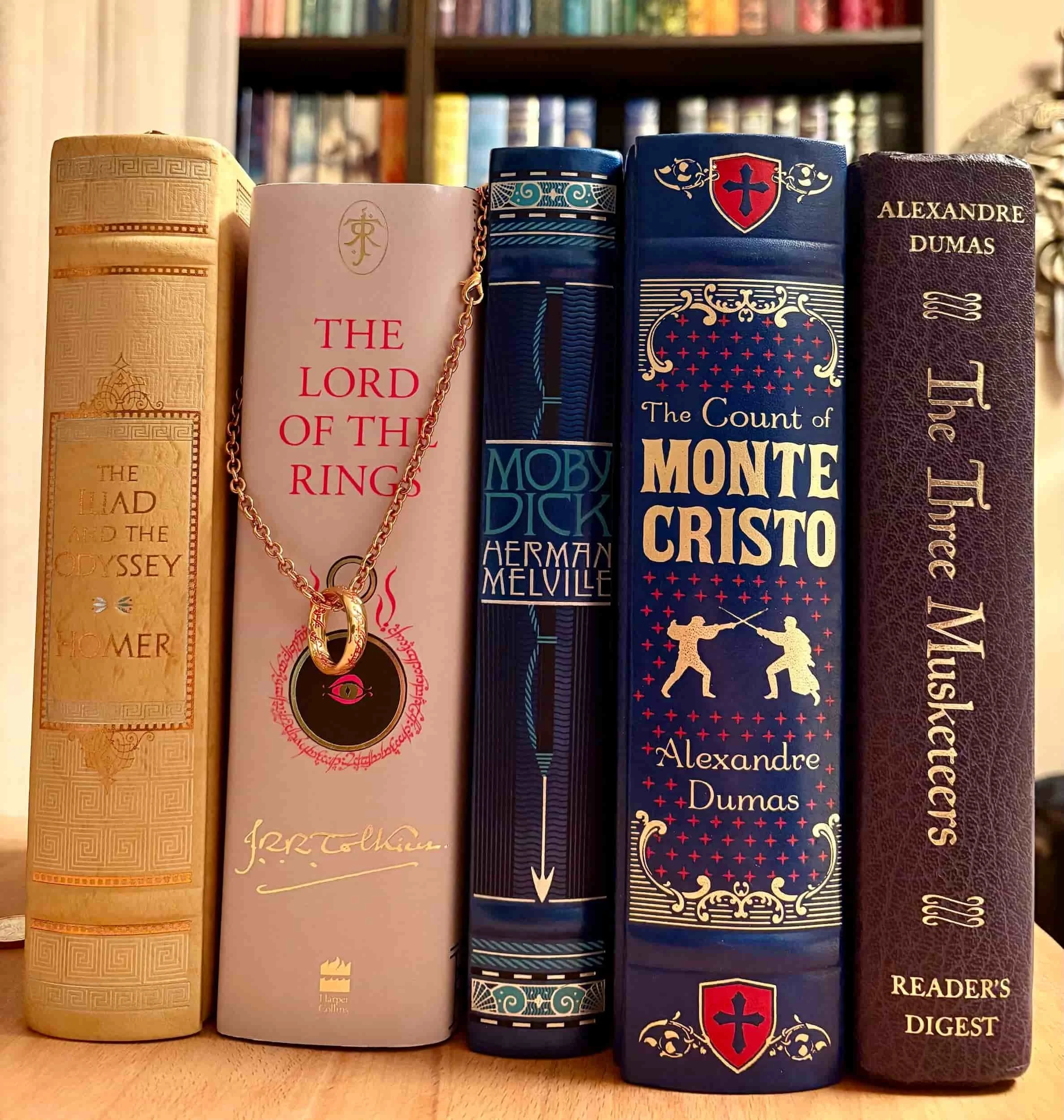
These are the massive, sweeping journeys that define the adventure genre. If you want to lose yourself in another world or a different century, start here.
1. The Count of Monte Cristo by Alexandre Dumas
Genre: Historical Adventure
Length: Epic (1,000+ pages)
My Status: Read it & Loved it.
My Take: This is easily one of my top 5 books of all time. I utterly fell in love with it the first time I read it. The plot follows Edmond Dantès, who is falsely imprisoned on the eve of his wedding, only to escape years later, find a hidden treasure, and systematically destroy the lives of the men who ruined his.
But beyond the revenge plot, it is a timeless story of genuine human experience—jealousy, desperation, ambition, love, and redemption—that remains intensely relatable today.
2. The Three Musketeers by Alexandre Dumas
Genre: Historical Fiction / Swashbuckler
Length: Long (700+ pages)
My Status: Read it & Loved it.
My Take: Forget the cheesy movie adaptations; the original novel is a masterpiece of pacing. It follows the young d'Artagnan traveling to Paris to join the King's elite guard, but what truly makes this book a classic is the banter. It is surprisingly funny, packed with political intrigue, and driven by a genuine sense of brotherhood. (Check out my full review of The Three Musketeers).
3. The Lord of the Rings by J.R.R. Tolkien
Genre: High Fantasy
Length: Epic (1,000+ pages across 3 volumes)
My Status: Read it & Loved it.
My Take: I will put this simply: this is my favorite book of all time, and it is the exact book that got me into reading as a hobby. The journey of Frodo Baggins across a war-torn continent to destroy a cursed ring is the grandfather of all modern fantasy. The world-building is unparalleled in the history of English literature. (It firmly holds the top spot on our list of the 10 best fantasy series to read once).
4. The Iliad by Homer
Genre: Epic Poetry / Mythology
Length: Medium (500+ pages)
My Status: Read it a long time ago (Bound for a re-read soon).
My Take: Living here in Bulgaria, just a stone's throw from where these epic sieges supposedly took place, I've always been drawn to Greek mythology. The Iliad covers the bloody, brutal final weeks of the Trojan War. What makes it brilliant is the pantheon of gods. Unlike divinities that came before them, the Greek gods are far closer to humanity—capricious, emotional, and heavily flawed. They make mistakes, they suffer, and they are never, ever boring.
5. The Odyssey by Homer
Genre: Epic Poetry / Mythology
Length: Medium (500+ pages)
My Status: Read it a long time ago (Bound for a re-read soon).
My Take: Following The Iliad, this is the ten-year journey of Odysseus trying to sail home. It showcases everything I love about Greek myths: mortal trickery going up against divine wrath. Even when mere mortals manage to get the upper hand through deception, the gods always extract a tenfold repayment for the insult (just look at Poseidon's relentless revenge on Odysseus).
6. Moby-Dick by Herman Melville
Genre: Adventure / Philosophical Fiction
Length: Long (600+ pages)
My Status: Read it.
My Take: Let me be brutally honest: this book almost broke me as a reader. I suspect most people who put Moby-Dick on their "Best Classics" lists have never actually read it and are just going along with the hype. This book is hard. It is a slow, often boring mix of philosophical musings and a literal encyclopedia on whaling.
I now possess an in-depth knowledge of 19th-century whales that I have absolutely no use for. The titular whale doesn't even show up until the last 30 pages. But those 30 pages? That breathtaking culmination makes the grueling journey totally worth it, earning it a rightful spot on this list.
Category 2: The Dark & Gothic Masterpieces
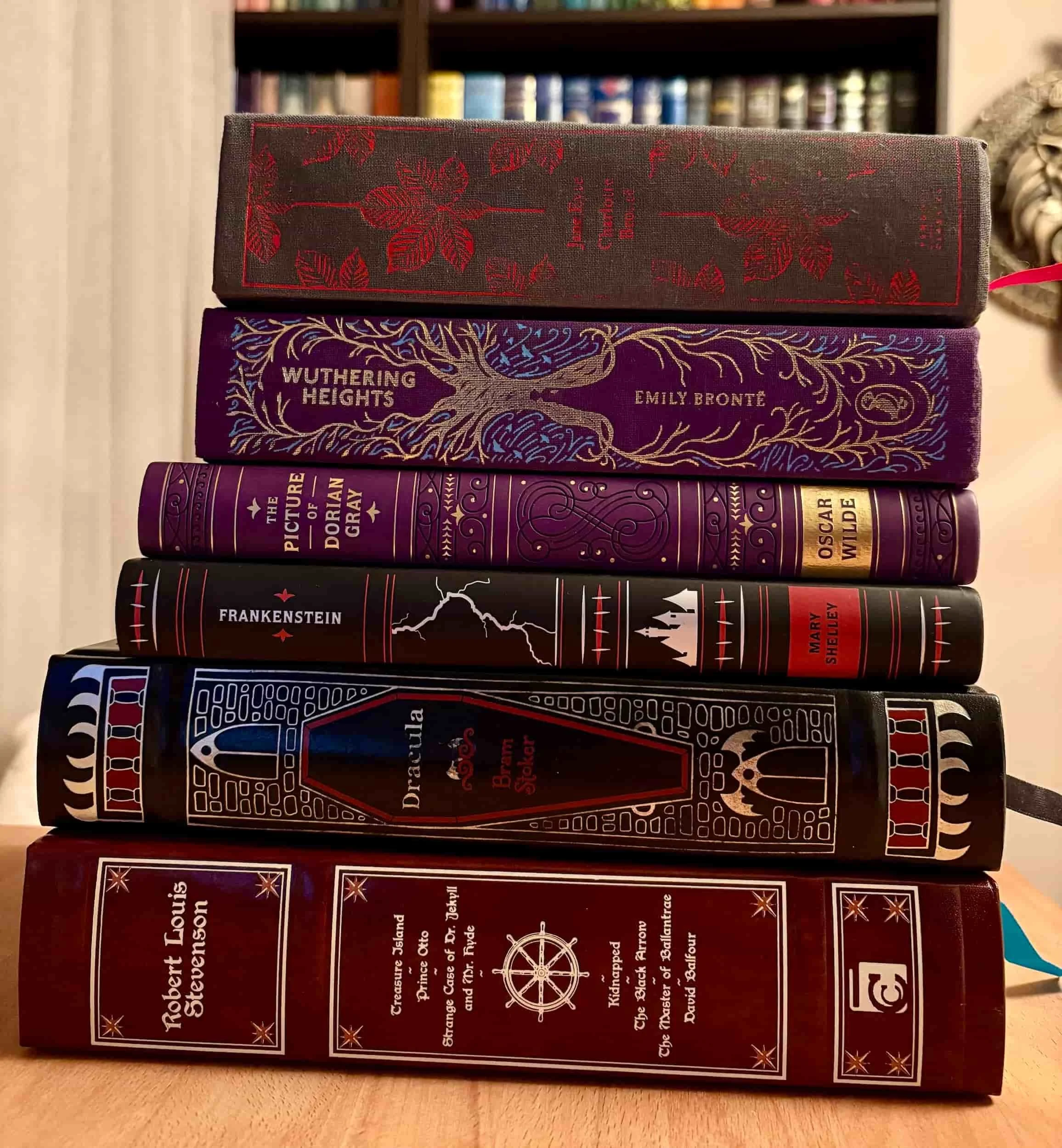
There is a massive debate in literary circles about where to categorize the Brontë sisters. Most lists lump Jane Eyre and Wuthering Heights into "Romance" right next to Jane Austen. I completely disagree. These books are dark, psychological, and deeply unsettling. They belong right here in the Gothic section, alongside the monsters and the madmen.
7. Frankenstein by Mary Shelley
Genre: Gothic Sci-Fi / Horror
Length: Short (Approx. 280 pages)
My Status: Read it (and I re-read it constantly).
My Take: This is a book I try to revisit at least once every couple of years. Every single time I read it, I am in absolute awe of the fact that the foundational text of modern science fiction was essentially written by a teenager on a dare during a rainy summer in Switzerland. It is far more philosophical and heartbreaking than the green, bolt-necked movie monster pop culture has turned it into (I genuinely believe it is one of the top 10 classic horror books ever written!)
8. The Picture of Dorian Gray by Oscar Wilde
Genre: Gothic Fiction / Philosophical Horror
Length: Short (Approx. 250 pages)
My Status: Read it & Loved it.
My Take: Oscar Wilde’s only novel is a brilliant, terrifying look at vanity and the corruption of the human soul. Dorian remains young and beautiful while a hidden portrait of him ages and decays with every terrible sin he commits. The prose is incredibly sharp, dripping with Wilde's signature wit, but the underlying horror of a man losing his humanity is what makes it a masterpiece. (Read my full review and summary of The Picture of Dorian Gray).
9. Jane Eyre by Charlotte Brontë
Genre: Gothic Romance
Length: Medium (Approx. 500 pages)
My Status: Read it & Loved it.
My Take: This is the book that practically invented the "Madwoman in the Attic" trope. Yes, it has a central romantic arc, but Charlotte Brontë wrapped the entire story in classic horror architecture. You have a brooding Byronic hero, an isolated, creepy mansion (Thornfield Hall), unexplained fires, eerie laughter echoing down the halls at night, and supernatural premonitions. It uses fear and mystery to drive the plot just as much as romance. (Check out my mini review of Jane Eyre).
10. Dracula by Bram Stoker
Genre: Gothic Horror
Length: Medium (Approx. 400 pages)
My Status: On the TBR pile.
My Take: I haven't tackled this one yet, but you cannot have a credible classic horror list without the undisputed king of vampires. What makes this book so structurally fascinating is that it is an epistolary novel—meaning the entire story is told through a collection of diary entries, letters, and newspaper clippings. It pieces together the terrifying arrival of Count Dracula in England and the desperate hunt to stop him.
11. Wuthering Heights by Emily Brontë
Genre: Psychological Horror / Gothic Fiction
Length: Medium (Approx. 400 pages)
My Status: On the TBR pile.
My Take: For the longest time, I thought this was just a polite, classic love story. I was completely wrong. Stani and I watched the new Emerald Fennell movie adaptation with Margot Robbie and Jacob Elordi a couple of nights ago, and I am now incredibly excited to actually read the book.
There are no polite society balls here. We are talking about literal ghosts tapping on windows, intense generational abuse, and Heathcliff digging up graves on the freezing, isolated Yorkshire moors. It is a violent, disturbing exploration of obsession.
12. The Strange Case of Dr. Jekyll and Mr. Hyde by Robert Louis Stevenson
Genre: Gothic Horror / Thriller
Length: Novella (Approx. 100 pages)
My Status: Read it & Loved it.
My Take: I absolutely love this book. It is incredibly short, but it is such a brilliantly written piece of suspense that explores the duality of human nature. It always reminds me of rainy train journeys; I actually read it for the very first time while riding on one, and the gloomy, rhythmic aesthetic fit the Victorian London setting so perfectly that it enhanced the entire reading experience tenfold.
Category 3: The Dystopian & Social Critiques
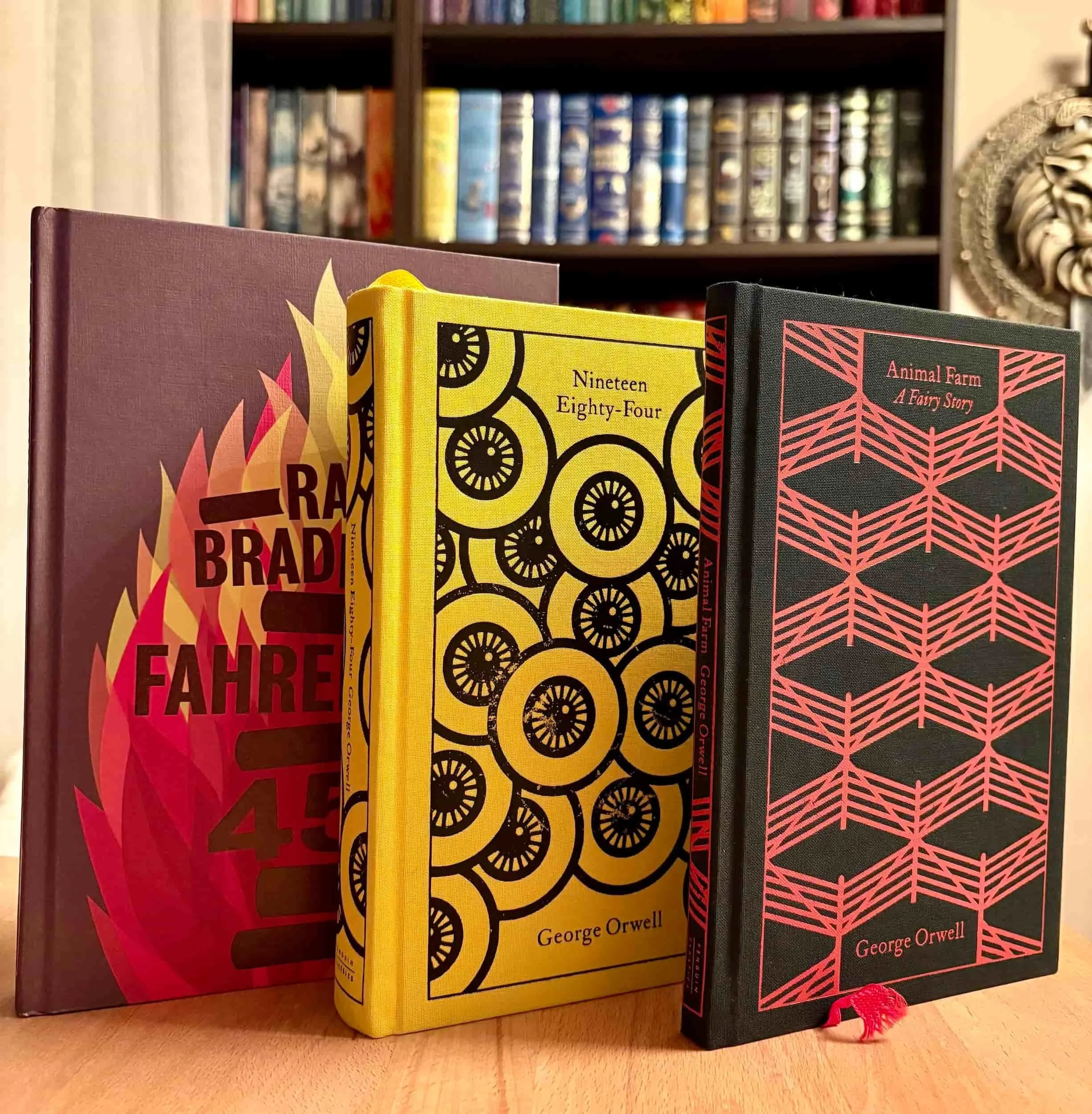
These are the books that hold a mirror up to society and show us the darkest reflections of human nature, politics, and power. They aren't always easy to read, but they are absolutely essential for understanding the modern world.
13. 1984 by George Orwell
Genre: Dystopian / Political Fiction
Length: Medium (Approx. 300 pages)
My Status: Read it & Loved it.
My Take: This was easily one of the best books I read last year, and I firmly believe every adult should read it at least once. Most people treat Orwell's grotesque totalitarian future as pure fiction, but if you look at our not-so-distant past, you'll be shocked by how many of these morbid depictions are pulled straight from actual historical regimes.
What is even more terrifying is looking at our society today. With social media, AI-generated content flooding the internet, and a tiny fraction of people controlling global media, Orwell's warning feels less like fiction and more like an instruction manual on how to manipulate truth, history, and reality.
I can only hope that while a "Big Brother" will always try to find their way to the top, they will never be able to fully extinguish the human spirit and our innate desire for liberty. (Read my full 1984 review, summary, and quotes).
14. Animal Farm by George Orwell
Genre: Political Satire / Allegory
Length: Novella (Approx. 140 pages)
My Status: Read it & Loved it.
My Take: This book is deceptively small but brilliantly sharp. In under 150 pages, Orwell delivers a fairy-tale fable, a political thriller, and a haunting lesson on how ideals get easily corrupted. If you’re a history fan like me, every revolution and purge in this story is a chilling wink to real-life events where a dream gets hijacked by leaders in love with control.
It is also the ideal pick for group reads—short, punchy, and accessible. Read it, discuss it with your group, and then ask yourself: are the animals and the men so different after all? (Check out my full breakdown of the allegorical characters).
15. To Kill a Mockingbird by Harper Lee
Genre: Southern Gothic / Social Drama
Length: Medium (Approx. 280 pages)
My Status: On the TBR pile (Still need to track down a physical copy!).
My Take: When I polled our community for this list, this was arguably the most aggressively recommended book. It tackles incredibly heavy themes of racial injustice, prejudice, and moral destruction in the Deep South, but it manages to filter all of that darkness through the innocent, observational perspective of a young child, Scout Finch.
16. Lord of the Flies by William Golding
Genre: Psychological Allegory
Length: Short (Approx. 220 pages)
My Status: On the TBR pile (Don't own a copy yet).
My Take: The premise of this one is legendary: a group of ordinary, well-behaved schoolboys is stranded on a deserted island and quickly descends into brutal, primitive savagery. It is a dark, pessimistic look at exactly what happens to human nature the second that societal rules and consequences are stripped away.
17. Of Mice and Men by John Steinbeck
Genre: Tragedy / Social Realism
Length: Novella (Approx. 100 pages)
My Status: On the TBR pile (Don't own a copy yet).
My Take: This is a tiny novella that I am told packs an absolutely devastating punch. It follows George and Lennie, two displaced migrant ranch workers during the Great Depression, clinging desperately to a shared dream of owning a small piece of land. It is widely considered the ultimate, tragic critique of the American Dream.
18. Fahrenheit 451 by Ray Bradbury
Genre: Dystopian Sci-Fi
Length: Short (Approx. 250 pages)
My Status: On the TBR pile.
My Take: In Bradbury’s dystopian future, "firemen" don't put out fires—they start them to burn illegal books. It is essentially a love letter to literature disguised as a fast-paced sci-fi thriller. While it was written decades ago, its core message serves as a timeless warning against government censorship, anti-intellectualism, and the numbing effects of mass media addiction.
Category 4: The Romance & Society Dramas
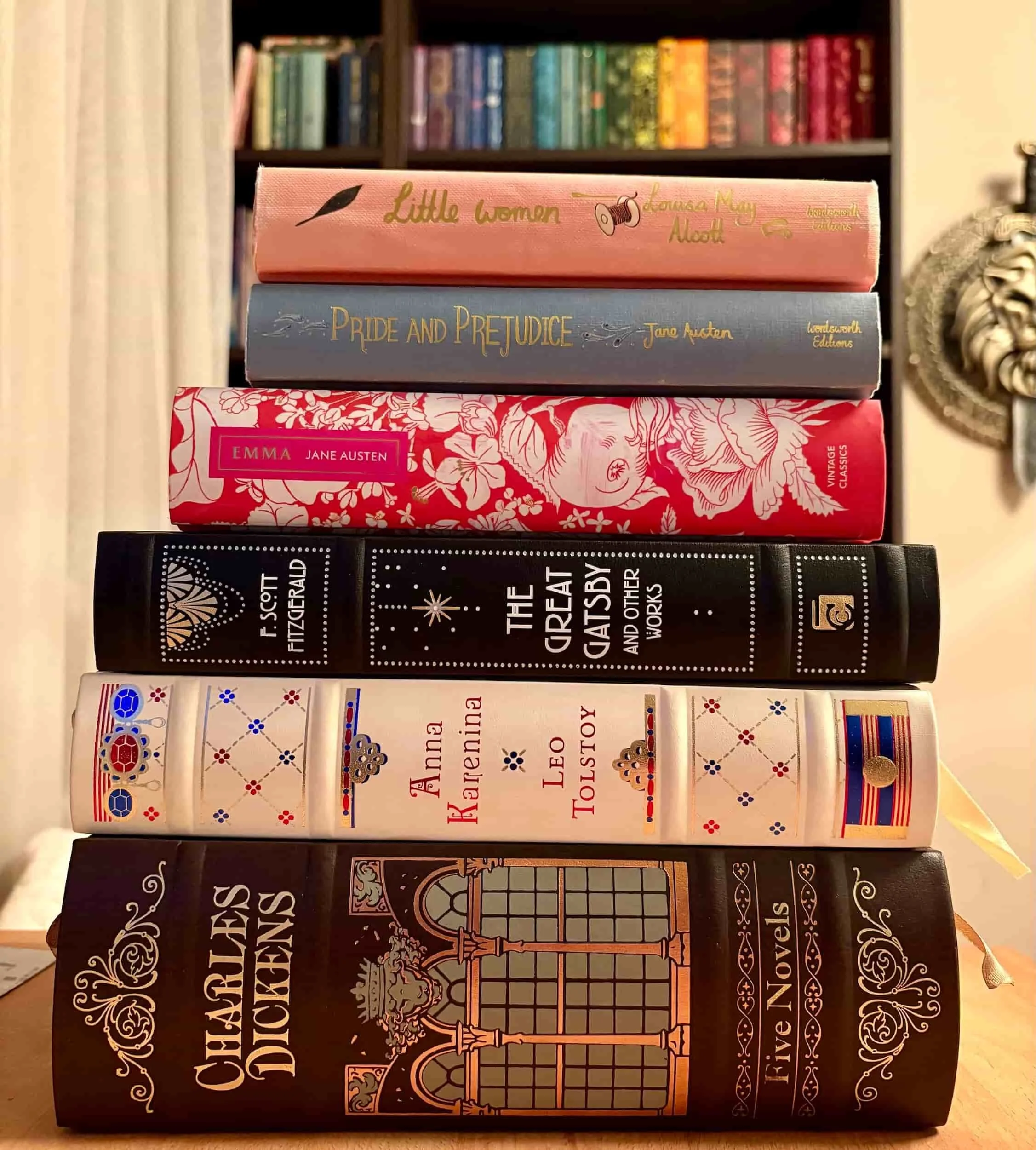
These are the books that dive deep into the drawing rooms, ballrooms, and social hierarchies of the past. They are packed with sharp wit, devastating heartbreak, and the timeless struggle of trying to navigate the heavy expectations of society.
19. Pride and Prejudice by Jane Austen
Genre: Romance / Comedy of Manners
Length: Medium (Approx. 350 pages)
My Status: Read it & Loved it.
My Take: Jane Austen essentially invented the blueprint for the modern "enemies-to-lovers" trope, and nobody has done it better since. It follows the sharp-tongued Elizabeth Bennet as she navigates her overbearing family and spars with the wealthy, aloof Mr. Darcy. It is incredibly funny, deeply romantic, and full of razor-sharp social commentary. (Read my full review of Pride and Prejudice).
20. Great Expectations by Charles Dickens
Genre: Coming-of-Age (Bildungsroman)
Length: Medium (Approx. 500 pages)
My Status: Read it & Loved it.
My Take: This is easily one of my favorite Dickens novels. While it might seem like the stakes are a tad lower all around compared to the French Revolution in A Tale of Two Cities or the supernatural elements of A Christmas Carol, the characters here feel so much more real. They are facing issues that we can still deeply relate to today—mainly, the crushing weight of great expectations and the psychological burden of trying to live up to them.
21. Emma by Jane Austen
Genre: Romance / Comedy of Manners
Length: Medium (Approx. 400 pages)
My Status: On the TBR pile.
My Take: I haven't tackled this one yet, but the anticipation is building. In the last half-year alone, at least three separate people have asked me to read it and tell them my thoughts. I know it follows a wealthy, slightly spoiled, and entirely well-meaning heroine who cannot stop meddling in the romantic lives of her friends. With that much community hype, I am incredibly excited to finally see what makes Emma Woodhouse so beloved.
22. Little Women by Louisa May Alcott
Genre: Coming-of-Age / Family Drama
Length: Medium (Approx. 500 pages)
My Status: Read it & Loved it.
My Take: I adored this story of the four March sisters, but I have a hilarious warning for international readers. There is a massive difference in how this book is printed for European vs. American audiences. European publishers generally split the story into two books: Little Women and Good Wives.
American publishers print it all as one massive volume. Being based in Europe, I picked up Little Women, read it, and then watched the movie. I was entirely, utterly confused by the second half of the film. I'm ashamed to admit how long it took me to figure out where the disconnect was. Live and learn!
23. Anna Karenina by Leo Tolstoy
Genre: Realist Fiction / Tragedy
Length: Epic (Approx. 800+ pages)
My Status: On the TBR pile (Next 5 books!).
My Take: This has been on my list for a long, long time. Honestly, I could have probably made half of this entire list just by including Russian classics: War and Peace, The Idiot, The Brothers Karamazov, The Master and Margarita—there are so many monumental options.
But I am striving for diversity here, which meant I had to ruthlessly select only one. I chose the one I've been the most excited to read ever since I bought my gorgeous leatherbound copy. It is officially in my next 5 TBR books, so expect a full review on the blog soon.
24. The Great Gatsby by F. Scott Fitzgerald
Genre: Tragedy / Historical Fiction
Length: Short (Approx. 200 pages)
My Status: On the TBR pile.
My Take: I still haven't read the actual novel, but I absolutely loved the Baz Luhrmann movie with Tobey Maguire and Leonardo DiCaprio. The last massive party Stani and I went to in The Hague right before Covid hit was a "Roaring Twenties" theme.
The dress code literally said: "Dress like you're auditioning as an extra for The Great Gatsby." The costumes and the energy were mesmerizing, and I cannot wait to finally read this book to see if the tragic, glittering source material lives up to the aesthetic hype.
Category 5: The Groundbreaking Journeys
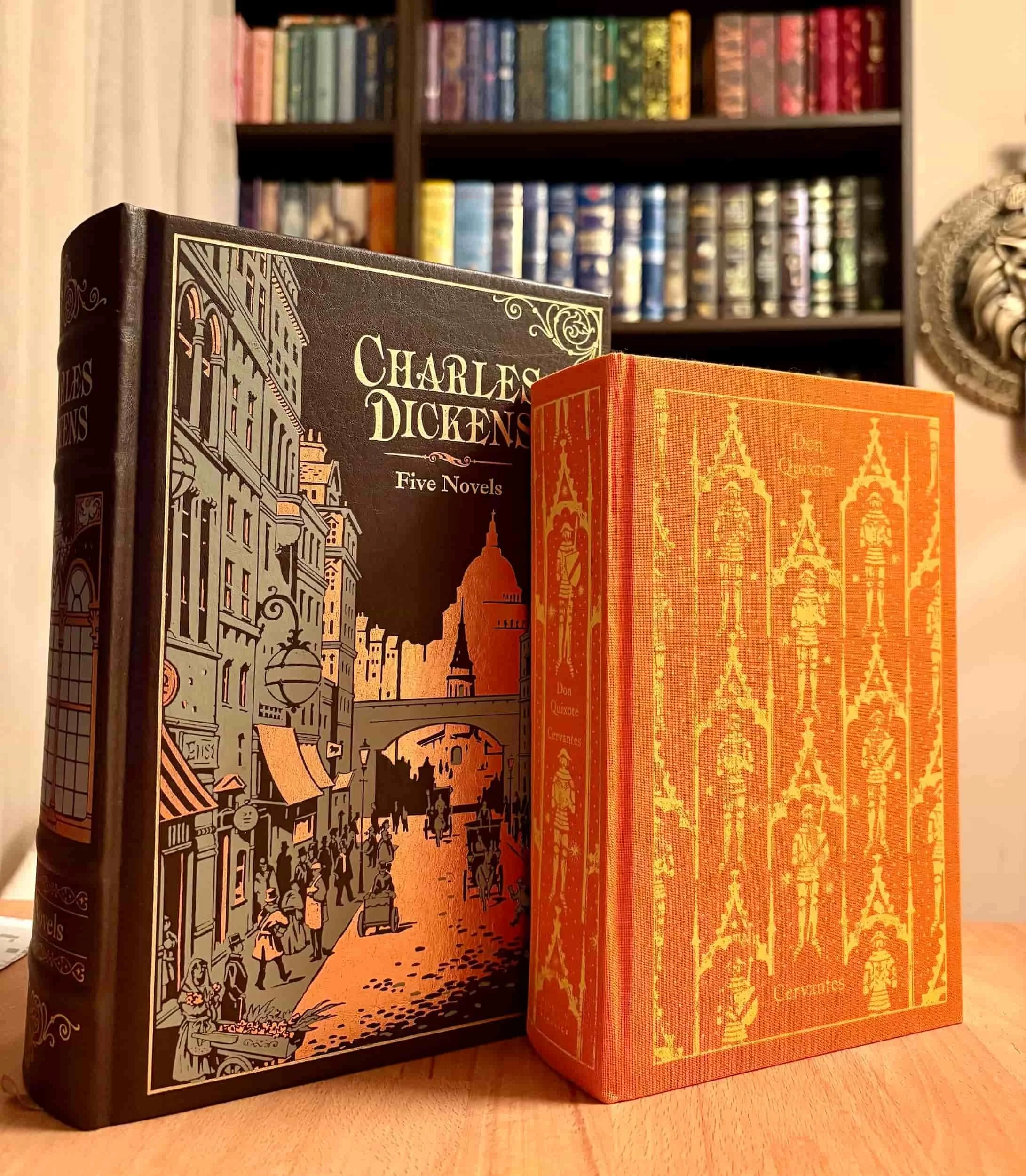
This final category is dedicated to the pioneers. These are the books that essentially invented the modern novel, the frontier adventure, and the biting political satire.
25. A Tale of Two Cities by Charles Dickens
Genre: Historical Fiction
Length: Medium (Approx. 400 pages)
My Status: Read it & Loved it.
My Take: I absolutely loved this book. But looking at it next to The Count of Monte Cristo, I am starting to realize I have a very specific favorite trope: people being imprisoned for half their life in a dismal dungeon and then desperately trying to make a life for themselves afterward.
Since I have thankfully never been to prison, I am guessing a therapist would probably have a field day exploring my psyche on this one. And when that moment comes, and they ask me how I feel today, there is really only one way I could reply: "It was the best of times, it was the worst of times..."
26. Don Quixote by Miguel de Cervantes
Genre: Satire / Adventure
Length: Epic (Approx. 1,000 pages)
My Status: On the TBR pile.
My Take: Often credited as the very first modern novel ever written, this follows a man who essentially reads too many fantasy books, loses his grip on reality, and rides out in a rusty suit of armor to fight windmills he believes are giants. As someone who runs a book blog and reads an absurd amount of fantasy, the premise of losing your mind to fiction feels dangerously relatable. I own a massive copy; I just need to carve out the month it will take to read it.
27. Gulliver's Travels by Jonathan Swift
Genre: Satire / Fantasy
Length: Medium (Approx. 300 pages)
My Status: On the TBR pile (Need a physical copy!).
My Take: Pop culture has completely sanitized this story into a children's tale about a giant man tied down by tiny people (the Lilliputians). In reality, Swift's original, unabridged novel is a savage, biting, and often grotesque critique of human nature, politics, and 18th-century European society. I am incredibly excited to read the adult, unfiltered version.
28. The Last of the Mohicans by James Fenimore Cooper
Genre: Historical Adventure
Length: Medium (Approx. 400 pages)
My Status: On the TBR pile (Need a physical copy!).
My Take: Set during the French and Indian War, this is the cornerstone of the American frontier adventure. I am highly familiar with the epic Daniel Day-Lewis movie adaptation, but I want to see where the tropes of rugged wilderness survival, tracking, and complex cultural clashes actually originated.
29. The Decameron by Giovanni Boccaccio
Genre: Short Story Collection / Satire
Length: Epic (Approx. 800+ pages)
My Status: On the TBR pile (Need a physical copy!).
My Take: Written in the 14th century, the setup for this book is wild: a group of young people fleeing the Black Death isolate themselves in a countryside villa and spend their time telling each other 100 different stories. From what I hear, those stories range from deeply tragic to utterly inappropriate and hilarious. It sounds like the medieval equivalent of reality television, and I am entirely here for it.
30. Paradise Lost by John Milton
Genre: Epic Poetry
Length: Medium (Approx. 350 pages)
My Status: On the TBR pile (Need a physical copy!).
My Take: We are ending the list with arguably the most intimidating text of all. This is the ultimate rebellion story: the epic poem detailing Satan's fall from heaven and the temptation of Adam and Eve. It essentially shaped the entire modern, Western conception of angels, demons, and the underworld. It is heavy, complex, and absolutely necessary for a lifetime reading list.
Final Thoughts: Where to Begin?
If you made it to the bottom of this list, do not let the sheer volume of pages overwhelm you. You don't need to read all 30 of these by the end of the year. Pick one that genuinely sparks your interest—whether it's the gripping revenge of Monte Cristo, the dystopian warning of 1984, or the eerie halls of Jane Eyre—and just start there.
And if you want to tackle some of these with us, be sure to join the conversation over on our Instagram and TikTok.
FAQ: Reading Classic Literature
What is the best classic book to read first?
If you are new to classic literature, start with something fast-paced and character-driven rather than dense philosophical texts. The Count of Monte Cristo is a gripping revenge thriller, while Animal Farm is a short, incredibly sharp political satire that can be read in a single weekend.
Why are classic books so important to read?
Great classic books act as a mirror to human history. They allow us to experience the cultural anxieties, political struggles, and social dynamics of different eras. Despite being written centuries ago, the core human emotions—love, jealousy, ambition, and fear—remain entirely relevant to our lives today.
Are classic literature books hard to read?
Some can be intimidating due to archaic language or dense pacing (like the encyclopedic whaling chapters in Moby-Dick). However, many top classic books, like The Three Musketeers or Frankenstein, are highly accessible, deeply suspenseful, and surprisingly modern in their themes.
What makes a book a "classic"?
A book becomes a classic when it stands the test of time. It usually achieves this by either pioneering a brand new genre (like The Lord of the Rings for high fantasy), capturing the defining spirit of its era (like The Great Gatsby), or exploring universal human truths that resonate across generations.

Dungeon Crawler Carl book 6, The Eye of the Bedlam Bride, reviewed: what happens, why the series keeps getting better, and whether it's worth reading. Honest fan take.