
The Importance of Being Earnest: Summary, Themes, and Book Club Questions
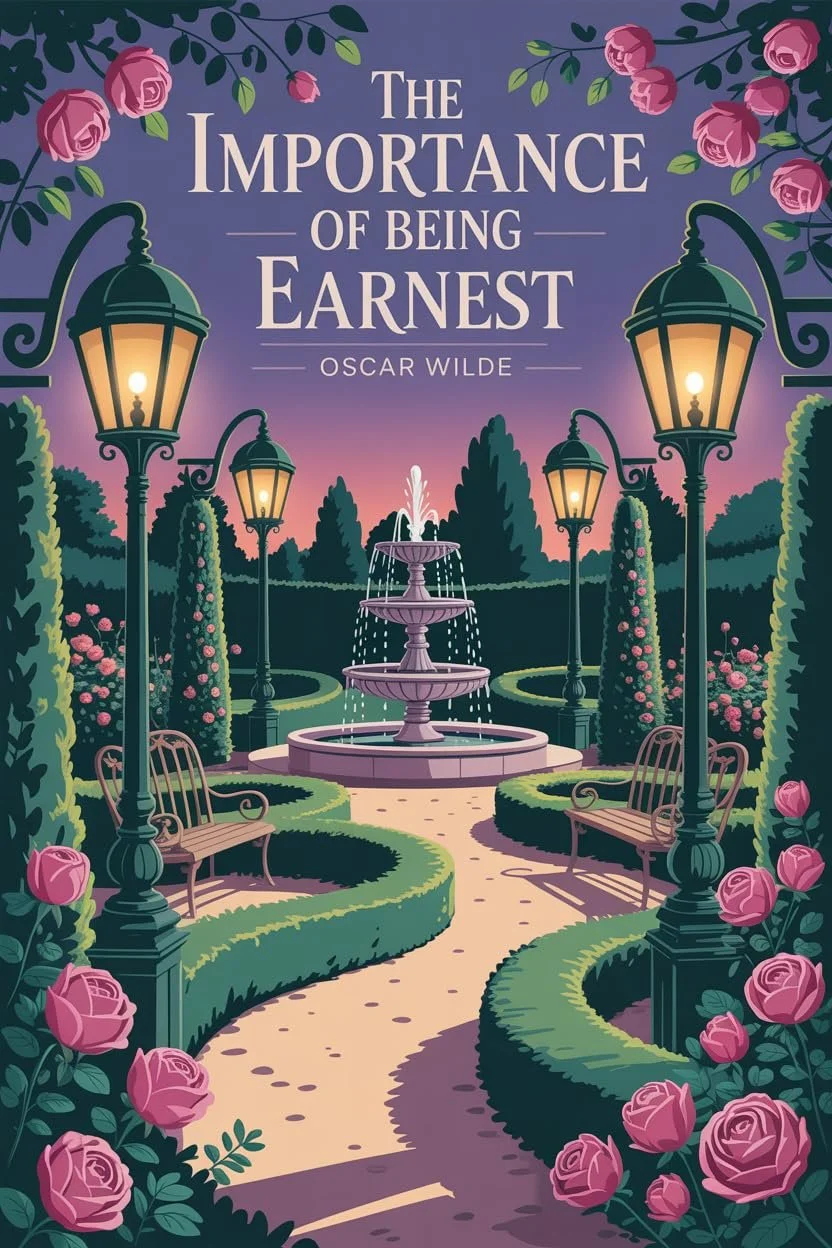
I always feel a bit guilty calling The Importance of Being Earnest “just a comedy”. Yes, it is light on the surface. Tea is poured, muffins are eaten, people lie about their names and then pretend that this is completely reasonable. Underneath the silliness sits a sharp little knife pointed at reputation, marriage, gender rules, and the way we play at being “serious” people.
This guide is for you if:
you want a short, clear summary of the play
you are picking it for a book club and need questions that go beyond “Victorians were weird”
you want to see why it still feels current in 2025
If you are just starting to explore Wilde, you might want to keep my wider reading guide nearby: Oscar Wilde Books in Order: The Best Reading Path For Every Kind Of Reader
And if you love pairing stories with sharp one-liners, my Oscar Wilde Quotes That Still Sting, Sparkle, and Occasionally Save You piece fits beautifully after this play.
Affiliate Disclaimer: This article may contain affiliate links for which, through no additional cost to you, we may receive compensation. For more information about our affiliate use, check our Disclaimer page.

Quick answer: what is The Importance of Being Earnest about?
The Importance of Being Earnest is a comedy by Oscar Wilde about two young men who invent fake identities so they can dodge family duties and pursue romance without consequences. Both use the name “Ernest” while courting two women who are convinced they could only love a man called Ernest. Their lies collide in a country house, where family secrets, lost handbags, and one unforgettable aunt expose the gap between social respectability and actual honesty.
Basic facts in one place
Playwright: Oscar Wilde
Genre: Comedy of manners / farce
Premiere: 14 February 1895, St James’s Theatre, London
Setting: Late Victorian England, in Algernon’s London flat and Jack’s country house in Hertfordshire
The play was a huge success on opening night, then got caught in the fallout from Wilde’s trial a few months later. That collision between glittering success and brutal punishment is part of why the story still feels charged.
Short, spoiler-light summary
Jack Worthing has a double life. In the country he is Jack, a respectable guardian to his young ward, Cecily. In London he calls himself Ernest and behaves in a way that would worry any respectable guardian. His friend Algernon Moncrieff suspects something, especially when he finds a mysterious engraving in Jack’s cigarette case.
Jack is in love with Algernon’s cousin, Gwendolen Fairfax. Gwendolen has decided she can only love a man named Ernest. At the same time, Algernon becomes fascinated by the idea of Jack’s ward and decides to visit the country house under the name Ernest as well.
Once everyone gathers in the country, both women believe they are engaged to “Ernest”. Lady Bracknell, Gwendolen’s terrifying mother, arrives. A lost handbag, a long-buried family connection, and a few well-timed confessions reveal who Jack really is and why the title of the play is a very smug pun.
Slightly longer summary, act by act
Act I: Muffins, lies, and a cigarette case
The play opens in Algernon’s London flat. He is waiting for Lady Bracknell and Gwendolen when Jack arrives under his city name, “Ernest”. A cigarette case engraved “From little Cecily” gives Jack away, and Algernon forces him to admit that he has invented an invalid brother named Ernest so he can go to London whenever country life feels dull. Algernon, in turn, confesses that he has invented an invalid friend called “Bunbury” for similar escape purposes.
Jack proposes to Gwendolen. She accepts, mostly because she adores the name Ernest. Lady Bracknell interviews Jack like he is applying for a job. When she learns he was found as a baby in a handbag at Victoria Station, she forbids the match and removes Gwendolen. Algernon, having overheard Jack’s country address, decides to visit Cecily as “Ernest”.
Act II: Two Ernests, one garden
In Jack’s country home, Cecily dreams of meeting Jack’s wicked brother, Ernest. When Algernon shows up claiming to be that Ernest, she falls for him at speed. Back in London, Gwendolen has discovered Jack’s country address and decides to visit. She and Cecily meet, each claiming she is engaged to Ernest. Chaos follows.
When Jack and Algernon appear, the women realise both men have lied about their names. Offended but still in love, they steer the conversation in a way that makes it very clear the gentlemen have work to do.
Act III: Handbags and resolutions
Lady Bracknell arrives and attempts to shut everything down. She approves of Cecily’s engagement to Algernon once she hears about her money. The last knot is Jack’s origin. Miss Prism, Cecily’s governess, accidentally reveals that years ago she left a baby in a handbag at Victoria Station. Jack realises he is that baby and that he is actually Algernon’s older brother.
When Jack checks the army lists, he learns his real name is, of course, Ernest. Order is restored, every couple gets their match, and Jack delivers the final line about having learned “the importance of being earnest”.

Main characters, quickly
Jack (John) Worthing – a country gentleman who invents a troublesome brother, “Ernest”, so he can go to London and behave badly.
Algernon Moncrieff – Jack’s friend, a charming bachelor who has invented a sick friend named Bunbury as his own excuse for escape.
Gwendolen Fairfax – Lady Bracknell’s daughter, fashionably sharp, devoted to the idea of marrying a man named Ernest.
Cecily Cardew – Jack’s ward, younger and apparently more innocent, with a vivid imagination and a very specific romantic script.
Lady Bracknell – Gwendolen’s mother, guardian of social order, destroyer of unsuitable matches, owner of some of Wilde’s best lines.
Miss Prism – Cecily’s governess, a knot of respectability and repressed drama.
Dr Chasuble – the country clergyman, another figure caught between duty and shy longing.
Key themes in The Importance of Being Earnest
1. Double lives and the art of escape
Jack and Algernon both invent fake people so they can escape their “proper” roles. Jack invents Ernest, Algernon invents Bunbury. The trick feels funny on stage, but the pattern behind it is familiar: a public self that is respectable and a private self that is not supposed to exist.
Critics have long pointed out the link to Wilde’s own life as a married man whose love for Lord Alfred Douglas had to stay hidden.
When I reread the play after knowing more about Wilde’s biography and his trial, the fake names stopped feeling like harmless toys. They started to look like a survival tactic that people still recognise today.
2. Names, identity, and labels that control desire
Gwendolen and Cecily both fixate on the name “Ernest”. They insist that they could only love a man with that name, which is both absurd and slightly unnerving.
It sounds like a joke about romantic quirks, yet it also reflects how desire gets shaped by labels. For Gwendolen, the name carries a promise of seriousness and reliability, though the actual Ernests are lying constantly.
The title turns that obsession into a pun: “earnest” as sincere, “Ernest” as the stylish name everyone wants. Wilde is asking what happens when people care more about the label than the actual person holding it.
3. Marriage as social contract and power game
The play pokes at Victorian marriage customs from every angle. Lady Bracknell treats marriage like a negotiation around class and money, not romance. Algernon and Jack talk about proposals as “business” or “pleasure”. Cecily and Gwendolen behave as if engagement is a story they have partly written in advance.
If you swap in dating apps and family WhatsApp threads for calling cards and formal visits, the conversations about “good matches” feel alarmingly close to home.
4. Earnestness, sincerity, and the value of not taking things too seriously
The word “earnest” carries two meanings: serious and sincere. Wilde spends the whole play teasing people who cling to seriousness as a badge of virtue. Critics often point out that he sides with irreverence, curiosity, and play instead of stiff sincerity for its own sake.
That does not mean the play rejects honesty. It questions which kind of honesty is worth fighting for. Jack’s final claim that he has learned “the importance of being earnest” lands with a wink, because the man who said it just discovered he has been Ernest all along.
5. Queer subtext and current productions
The text never states anything explicit about same-sex desire, but the world of the play is built on hidden lives, codes, and intense male friendships that ordinary society is not meant to see. Modern productions lean right into that energy.
Recent high-profile revivals, including the 2025 West End production with Stephen Fry as Lady Bracknell, have framed the play with a clear queer lens, from casting choices to staging that foregrounds same-sex affection and repressed desire.
Reading or watching Earnest with this in mind brings Wilde’s own story closer. The play opened in February 1895. The trials that destroyed his public life began weeks later.

How to read (or watch) The Importance of Being Earnest today
If this is your first play in script form, you might worry about stage directions or dialogue-heavy scenes. A few tips from my own experience:
Read it like a very fast group chat rather than a dense classic. The pace helps.
If possible, listen along to an audio production. The timing of the jokes lands better when you hear actors deliver them.
For friends who prefer listening, gifting the play as audio is a kind gesture. I put together a simple guide on how to gift an Audible book that walks through the steps.
If you want to give someone the script as an ebook, a Kindle edition is easy to annotate and carry around. My article on how to gift a Kindle book covers that process in detail.
And if you are building a little Wilde-themed care package for a friend or a club host, you might like my round up of book lover gifts that go beyond the usual mug and candle.
The Importance of Being Earnest for book clubs
If your club is used to novels, a play can feel like a leap. The nice thing about Earnest is that it is short, funny, and gives you plenty to discuss without adding homework-level length.
You can also wrap it into a mini Wilde project:
Read Earnest and then The Picture of Dorian Gray to compare Wilde’s light and dark sides.
Follow with 5 Oscar Wilde Books That Still Feel Modern if your group wants a next step.
Sprinkle in a few lines from Oscar Wilde Quotes at the start of your meeting as icebreakers.
For general help steering discussion, I also have a big set of Book Club Discussion Questions you can adapt.
Book club questions for The Importance of Being Earnest
You can pick a handful of these rather than trying to race through all of them.
Early on, Jack and Algernon both admit they invented fake people as excuses to escape their lives. Do you see that as childish, clever, or something darker?
Gwendolen and Cecily insist on marrying a man named “Ernest”. Is that just a joke, or does it say something about how we attach feelings to labels and “types”?
Lady Bracknell is often played for laughs, but she is also the guard dog of class and respectability. Where do you see her views still alive today, just in different clothes?
Which character feels most honest to you, and why? Does that change if you think about “honest about their feelings” versus “honest with other people”?
The play mocks serious, solemn behaviour quite a lot. Do you think Wilde is arguing against seriousness, or against people who use it to hide selfish motives?
Where do you see the play’s queer energy, even though the text never states anything directly? How much of that comes from the dialogue, and how much from what you know about Wilde’s life?
Do you feel any sympathy for Lady Bracknell? Is she a villain, a product of her world, or a bit of both?
At the end, Jack claims he has learned “the importance of being earnest”. Do you read that as sincere, sarcastic, or some strange mix of both?
How did you picture the staging while you read? Did any moment make you think “this would be amazing to see live”?
If this play were updated to the present day, what would replace Bunburying and fake brothers? Secret social accounts? Fake business trips? Something else?
FAQ: The Importance of Being Earnest
What is the main message of The Importance of Being Earnest?
The play pokes fun at people who treat seriousness, respectability, and social rules as proof of moral worth. Wilde suggests that honesty, playfulness, and a clear view of one’s own foolishness are healthier than stiff “earnestness” that hides selfish aims.
Why is it called The Importance of Being Earnest?
The title is a pun. “Earnest” means serious and sincere, while “Ernest” is the name both male leads pretend to have. The joke sits on the gap between real sincerity and the performance of it, and the way people fall in love with labels instead of actual character.
Is The Importance of Being Earnest hard to read?
Not really. The language is Victorian, but the sentences are clear and the jokes are quick. Reading it aloud or listening to an audio version helps a lot, especially with Lady Bracknell’s lines.
What age is The Importance of Being Earnest suitable for?
Teen readers can handle it, especially older teens who are used to reading scripts or studying classics. Most of the adult themes sit in social satire and innuendo rather than explicit content, though some historical context around Wilde’s life and sexuality may spark deeper questions.
What kind of play is The Importance of Being Earnest?
It is a comedy of manners and a farce. That means it uses misunderstandings, mistaken identity, and exaggerated social rules to make you laugh while also pointing out how ridiculous those rules can be.
Do I need to know anything about Oscar Wilde’s life before reading?
You can enjoy the play with no background at all. If you do know that Wilde was tried and imprisoned not long after its premiere, and that he had to hide parts of his life from public view, the jokes about double lives and “proper” behaviour gain extra weight.

Dungeon Crawler Carl book 6, The Eye of the Bedlam Bride, reviewed: what happens, why the series keeps getting better, and whether it's worth reading. Honest fan take.