Sherlock Holmes Books in Order: The Ultimate Guide to the Canon
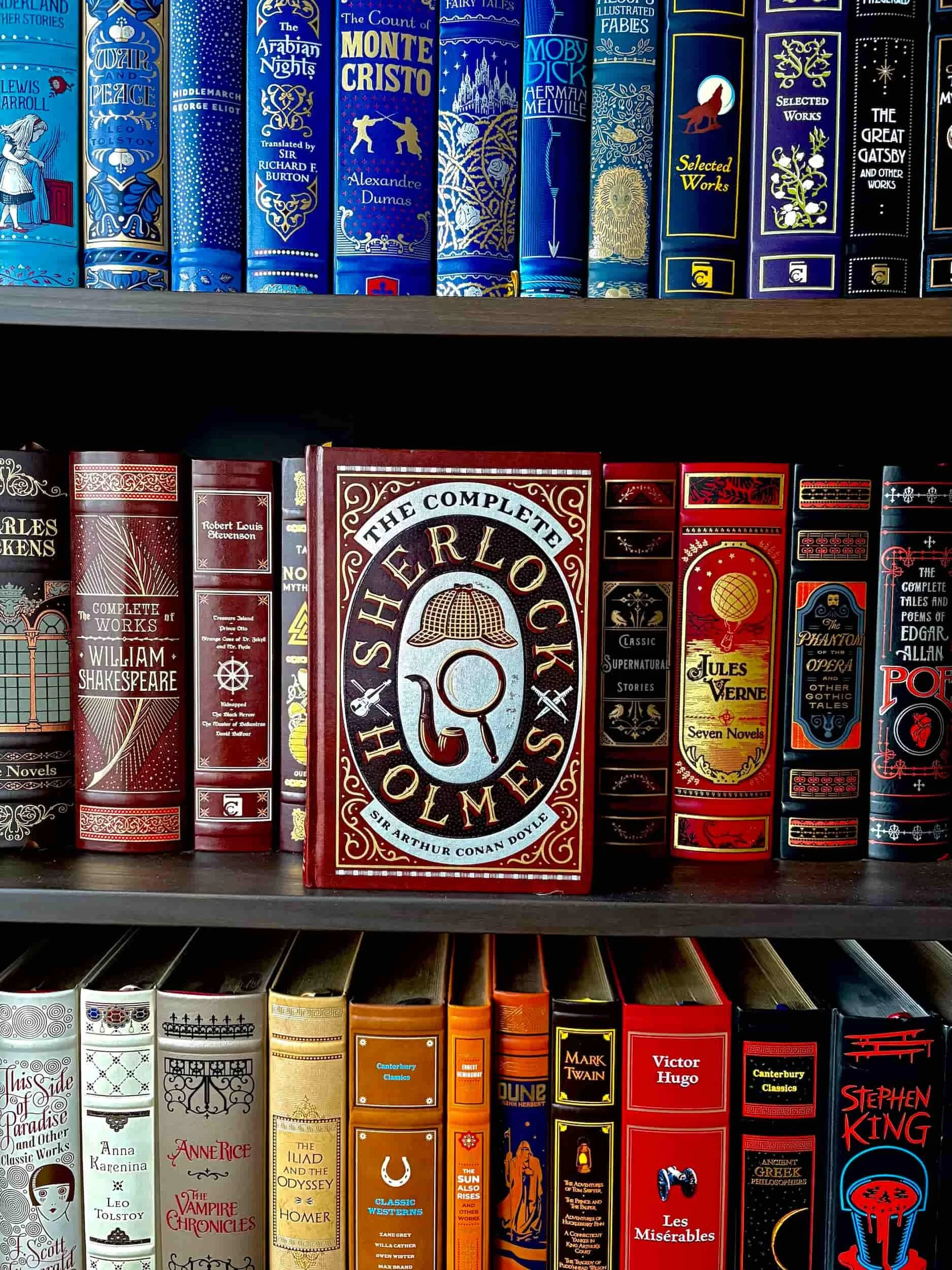
It took me a month to get through this massive tome, but it is easily one of the crown jewels of my private collection.
(Affiliate Disclaimer) This post contains affiliate links. If you use these links to buy something we may earn a commission. For more information, please see our Disclaimer.
It took me almost an entire month, but I finally did it. I read the complete adventures of the residents of 221B Baker Street from cover to cover.
There is very little need to introduce the world's most famous detective.
However, if you read all of his adventures chronologically, you quickly realize that there are massive misconceptions, fan-fiction retellings, and flat-out inaccuracies that have become so popular in modern culture we have lost touch with the source material.
To answer the question, "What kind of man is Sherlock Holmes?", I decided to do a deep dive. Here is my complete guide to the sherlock holmes novels list in order, a review of the definitive physical edition, and a look at why the detective you know from the movies is almost nothing like the man in the books.
The Book Design: The Barnes & Noble Collectible Edition
We would be remiss if we didn't start with the physical book itself. This specific edition is published by Barnes & Noble and is part of their Collectible Classics series.
This single volume contains the complete works of Sir Arthur Conan Doyle regarding Holmes and Watson: that is 4 novels and 56 short stories combined into one incredibly hefty, affordable edition.
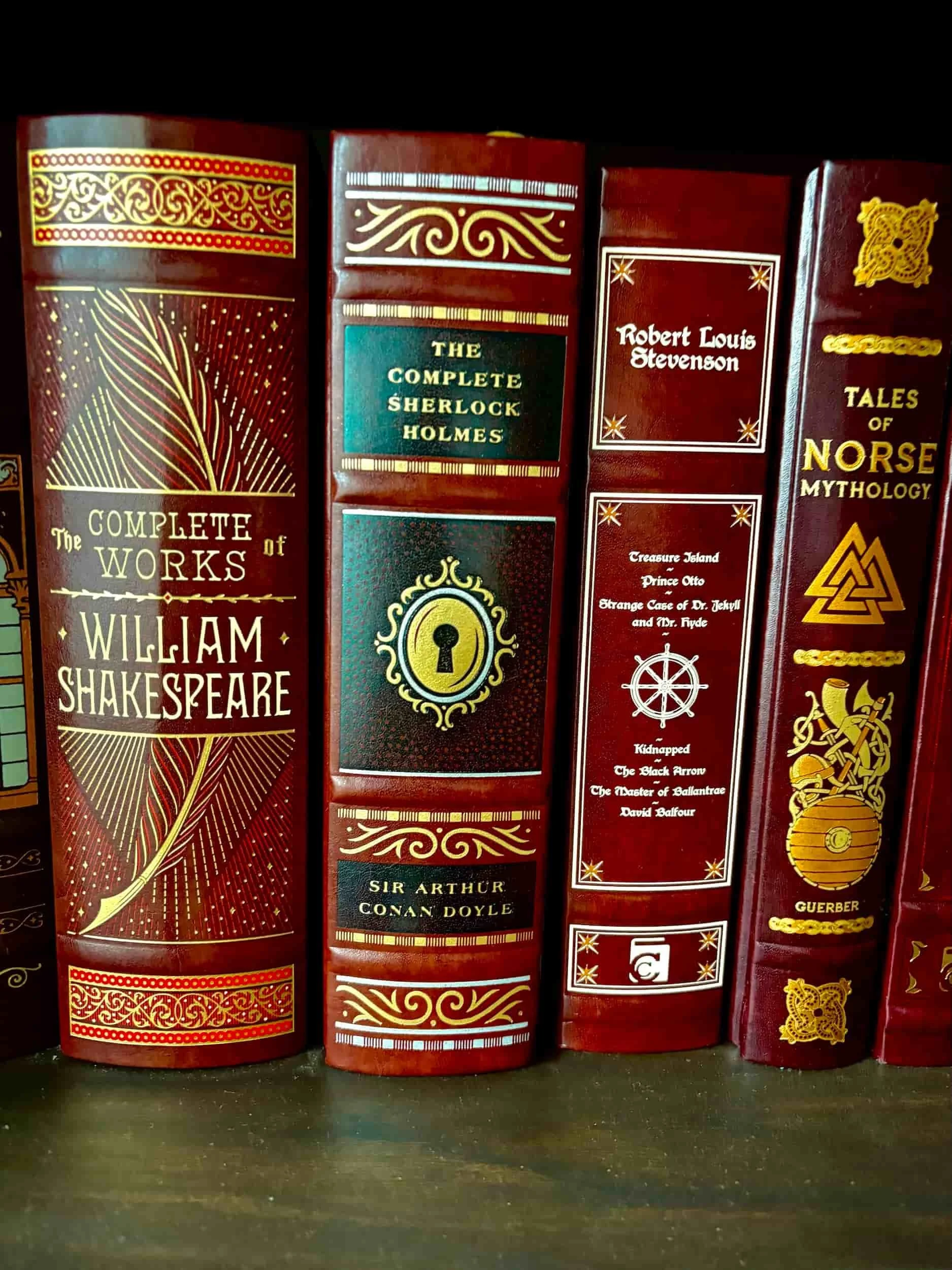
The design features a keyhole on the spine, but the key is hidden on the back cover - a nod to examining facts from various angles.
Why this edition stands out:
The Aesthetic: It features incredibly sleek gold detailing on brown imitation leather.
The Hidden Details: If you look at the spine on a shelf, you clearly see an intricate keyhole. Surprisingly, there is no key, until you take the book out and look at the back cover.
I like to believe this represents Holmes's fundamental philosophy: you must examine facts from various angles before coming to a conclusion.
The Durability: The spine is surprisingly sturdy. Even after a complete read-through (and some rather rough handling by curious toddlers in my house), the book maintained its original shape with minimal signs of wear.
(If you love collecting beautiful editions or want to start a book club discussion on classic design, check out our list of Book Club Discussion Questions that work perfectly for classics like this).
Sir Arthur Conan Doyle’s Love-Hate Relationship with Holmes
Before we look at the reading order, you have to understand the author's mindset. It might be shocking to find out that Arthur Conan Doyle actually didn't care for the character of Sherlock Holmes.
To Doyle, Holmes was just a tool created specifically for A Study in Scarlet. Doyle wanted to make his mark with "serious" historical fiction, not pulp detective stories. Throughout the early stories, you can sense his reluctance; his epilogues are often so compressed and vague they feel rushed.
His annoyance with the public's insatiable demand grew so strong that he ultimately decided to kill the brilliant detective off in "The Final Problem."
The public outrage was massive. Doyle’s editors pleaded with him. Finally, Doyle decided to name a sum of money so ludicrous he thought his editors would laugh him out of the room. Instead, they agreed immediately. Doyle "played himself," and had to resurrect his detective.
Later, a conversation with a journalist friend in Norfolk about a local legend of a ferocious dog sparked Doyle's imagination.
He wrote a story, realized adding Holmes to it would guarantee instant success, and charged his editors a premium. That story became his absolute masterpiece: The Hound of the Baskervilles.
(If you enjoy stories about authors with complicated relationships to their work, you might be interested in our Top 10 Surprising Facts About Agatha Christie).
How to Read the Sherlock Holmes Books in Order
Because of Doyle's reluctance, the series has a very loose canonical structure. If you want to read the sherlock holmes books in order, you have two choices: Publication Order or Chronological Order.
Option 1: The Publication Order (Recommended)
This allows you to experience the evolution of Doyle's writing style and the character’s popularity exactly as Victorian readers did.
The 4 Sherlock Holmes Novels:
A Study in Scarlet (1887) - The origin story where the legendary duo meets.
The Sign of Four (1890) - Introduces Watson's future wife, Mary Morstan.
The Hound of the Baskervilles (1902) - The gothic horror masterpiece.
The Valley of Fear (1915) - A gritty tale involving a secret society.
The 5 Short Story Collections:
The Adventures of Sherlock Holmes (1892)
The Memoirs of Sherlock Holmes (1894) - Concludes with Holmes's "death."
The Return of Sherlock Holmes (1905) - The grand resurrection.
His Last Bow (1917) - Holmes handles espionage during WWI.
The Case-Book of Sherlock Holmes (1927) - The final adventures.
(Once you finish the Canon and need more mysteries, check out our guide to Agatha Christie Books in Order for another massive detective marathon).
Option 2: The Chronological Timeline
When Doyle brought Holmes back from the dead, he needed a "soft reboot" so the boys could be bachelor roommates at 221B Baker Street again.
To achieve this, Doyle unceremoniously killed off Watson's wife off-screen in a single passing sentence, forcing Watson to move back in with Holmes.
If you want to read them as the events occurred in the characters' lives, follow this rough timeline:
Early Cases: Read "The Gloria Scott" and "The Musgrave Ritual" first.
The Meeting:A Study in Scarlet.
The Prime Years:The Sign of Four, followed by The Adventures and The Memoirs.
The Pre-Death Era:The Hound of the Baskervilles (chronologically occurs before his "death" at Reichenbach Falls).
The Return:The Return of Sherlock Holmes and The Valley of Fear.
Retirement:His Last Bow and The Case-Book.
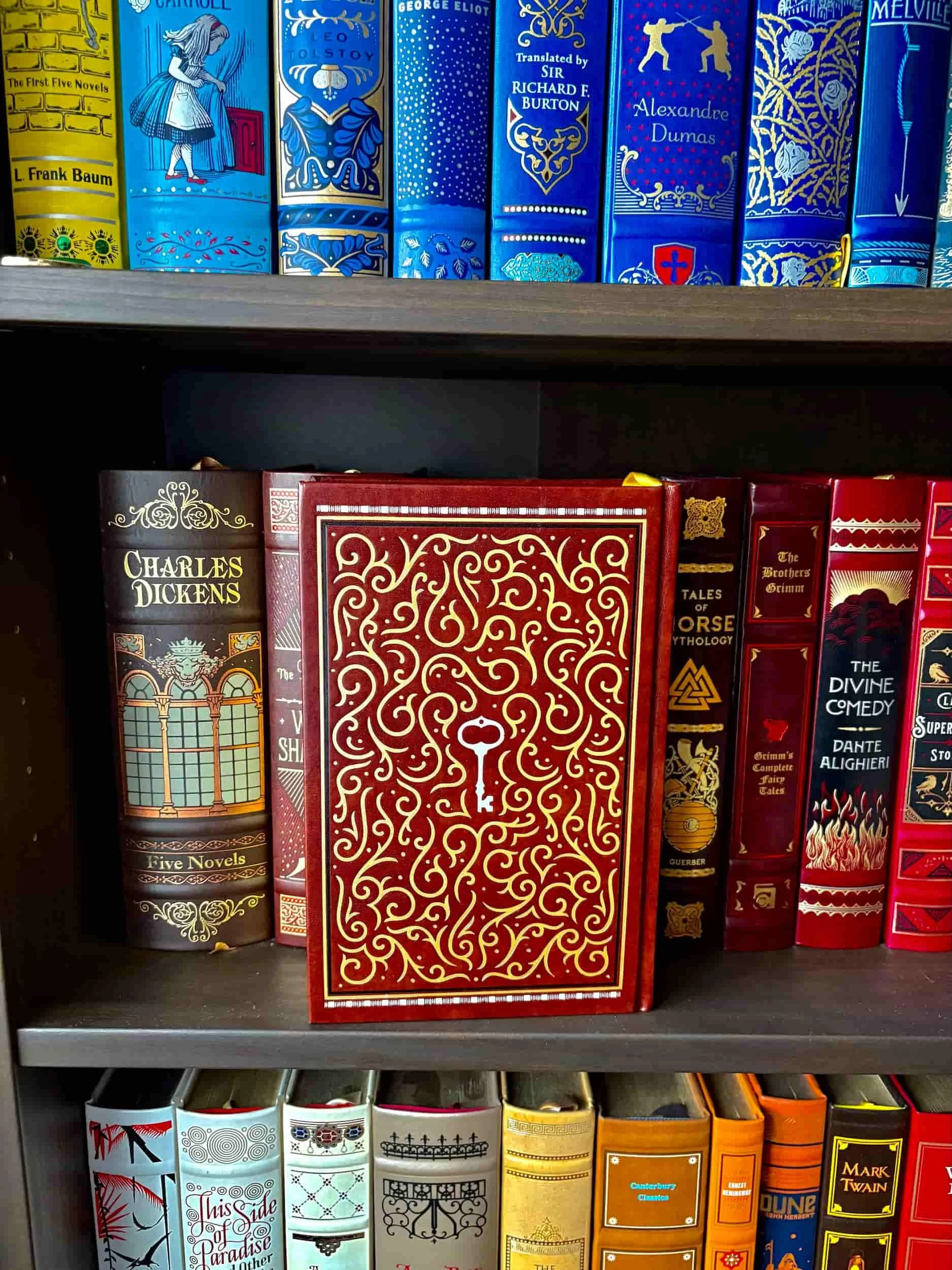
While Edgar Allan Poe invented the detective genre, Sir Arthur Conan Doyle undeniably perfected it.
Character Development: The Evolution of 221B
Reading the omnibus start-to-finish highlights how drastically the characters changed over 40 years.
Sherlock Holmes: The "Victorian Sheldon Cooper"
In the beginning, Holmes is an emotionless savant, a Victorian version of Sheldon Cooper. He has an exceptional faculty for crime-solving but is clueless about anything else.
Watson actually tests him in A Study in Scarlet and notes that Holmes's knowledge of Literature, Philosophy, and Astronomy is "Nil" (he literally doesn't know the Earth revolves around the Sun).
But as the books progress, he gains depth. By The Sign of Four, he quotes Goethe and discusses philosophy. More importantly, he develops empathy.
He stops viewing cases purely as cold logic puzzles and begins looking at the human element, often letting criminals go if he feels the law is unjust. He even apologizes to Watson for his rudeness, realizing his friend's presence is indispensable to his mental process.
(If you like brilliant but flawed detectives, see our list of Books Like Knives Out & Glass Onion for modern takes on the trope).
Dr. Watson: A Tragic Character Degradation
This is the great tragedy of the series. Initially, Watson is a man of action, a capable surgeon, a war veteran, and quite the ladies' man. He builds a successful medical practice and marries.
But after the "resurrection" of Holmes, Doyle reduces Watson to a doting sycophant. Watson loses his wife, abandons his practice, and exists solely at the convenience of his eccentric friend.
The absolute low point of this character degradation is when Watson actually refers to Holmes as "his master." Pop culture has kept this bumbling sidekick image alive, entirely forgetting the badass veteran he started out as.
Inspector Lestrade & Scotland Yard
Lestrade provides a fantastic "enemies to friends" trope. Initially, Scotland Yard detests Holmes, viewing him as a necessary evil. But as Holmes's fame grows, Lestrade softens, eventually admitting a grudging, genuine admiration for the amateur detective.
Top 5 Sherlock Holmes Myths Busted
Pop culture and cinema have heavily warped the public's perception of the sherlock holmes characters. Let's set the record straight:
The sherlock holmes hat is canon - FALSE: Holmes never wears a deerstalker hat in the text. He was a city gentleman who wore top hats or bowlers. The deerstalker was an invention of the original illustrator, Sidney Paget.
"Elementary, my dear Watson" - FALSE: This catchphrase is never used in the books. Holmes says "Elementary" once, but never in the same sentence as "my dear Watson."
The famous curved pipe - FALSE: In the original stories, Holmes mostly chain-smoked cigarettes or used a straight black clay pipe. The curved "Calabash" pipe was invented for stage plays so the actor's face wouldn't be hidden from the audience. (Ironically, it’s featured on the cover of my B&N edition!).
Lord Blackwood is his main rival - FALSE: Popularized by the Robert Downey Jr. movie, Lord Blackwood was never a major antagonist in the books.
He is the smartest man in the world - FALSE: Holmes himself admits that his brother, Mycroft Holmes, possesses a vastly superior deductive ability.
Frequently Asked Questions
Was Sherlock Holmes a real person?
No, is sherlock holmes real is a common question, but he is purely fictional. However, Sir Arthur Conan Doyle heavily based Holmes's deductive methods on a real person: Dr. Joseph Bell, a surgeon and university professor who could deduce a patient's occupation and recent activities purely through observation.
Who outsmarted Sherlock Holmes?
The most famous character to outsmart him is Irene Adler. Contrary to popular belief and modern movies, she was not a recurring romantic interest. She appears in exactly one story ("A Scandal in Bohemia") where she outwits him completely. Holmes respects her intellect so much that he refers to her forever after simply as "The Woman."
I loved Sherlock Holmes, what should I read next?
If you want something fast-paced with a modern twist on puzzles and deduction, we highly recommend checking out Books Like The Inheritance Games. For thrillers that are a bit more action-heavy, take a look at our list of Best James Patterson Books.



Dungeon Crawler Carl book 6, The Eye of the Bedlam Bride, reviewed: what happens, why the series keeps getting better, and whether it's worth reading. Honest fan take.