The Book Eaters by Sunyi Dean, Book Review
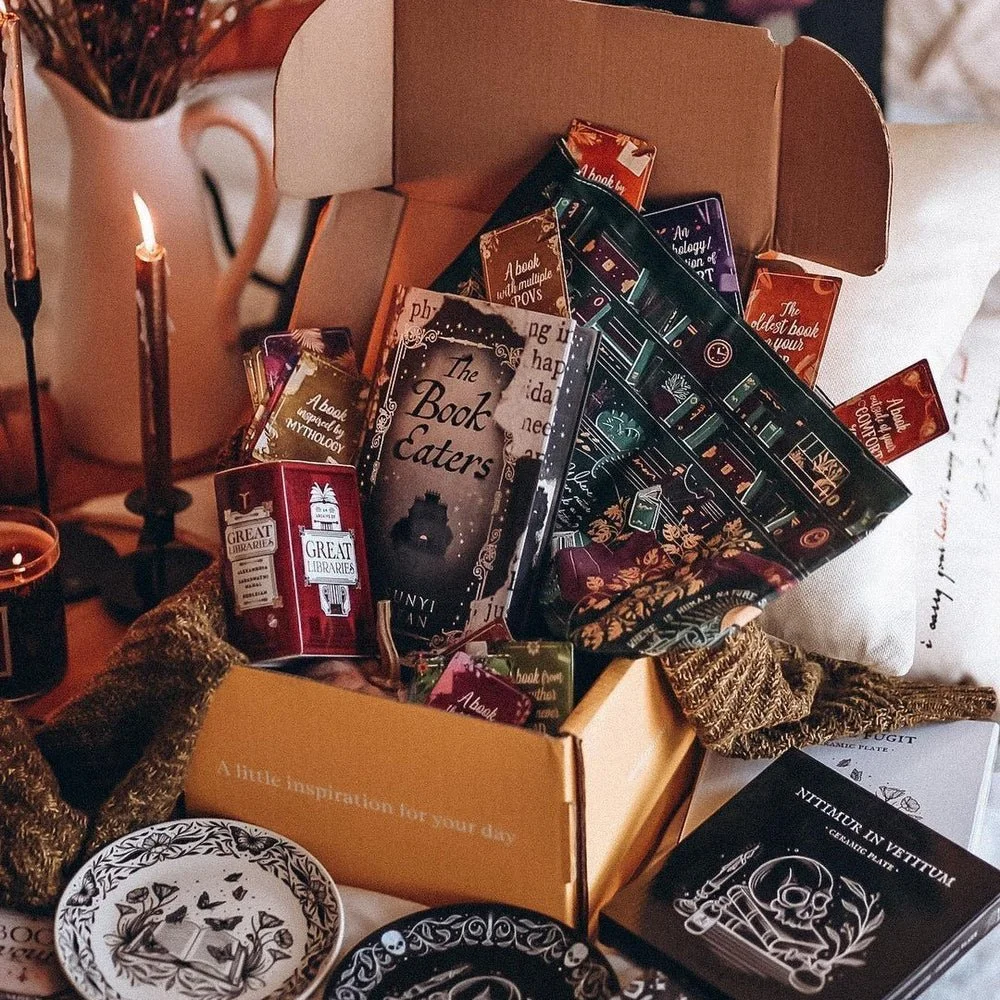
The Book Eaters. Photo by Illumicrate: https://illumicrate.com/products/the-book-eaters-sunyi-dean
Sometimes a book hits you not because it was obviously your next pick, but because it walked up quietly, handed you a steaming cup of “I-didn’t-see-that-coming,” and then curled up on your bedside table until you finished it at 2 a.m. That’s how I felt about The Book Eaters by Sunyi Dean. I absolutely loved it. As a book-lover through and through, the concept of a species that literally devours books to sustain themselves was irresistible. I do need to make a fair confession here though, I didn’t choose the book myself. I received it as part of my Illumicrate box subscription (which, let’s face it, could go either way, but this time they absolutely nailed it). I hesitantly decided to give it a go and it turned to be much better than anticipated!
From the start, the premise captivated me. Then there was Devon, a mother-figure in a brutal, patriarchal society refusing to bow down. Her son Cai, born a different kind of eater. Time-jump structure, subtle book-devouring jokes, silent commentary on gender and tradition, and the odd literary title being literally eaten? Yes, please. In this review I’ll unpack the allegorical weight of the characters, the strangeness and beauty of the world, the time-jumps and their effect, and ultimately why I believe The Book Eaters is a book worth reading at least once (and talking about much more).
Plot Summary
First off, needless to say but I’ll say it anyway - SPOILERS ahead. I’ll try to keep them to a minimum but this is a book review after all, so proceed at your own risk.
The story centres on the Fairweathers, one of six ancient families of Book Eaters - humanoid beings who gain sustenance by reading and physically consuming books, retaining their knowledge. Devon Fairweather, our protagonist, belongs to this declining clan. When her son Cai is born not a Book Eater but a Mind Eater, someone who must digest human minds rather than literature, Devon’s world shatters.
We shift between past and present: past chapters showing Devon’s indoctrination into the system (girls trained only to bear children, men ruled everything) and present chapters where she’s on the run, carrying Cai across moors and through hidden families, trying to protect him and escape what she was raised to be. Books get devoured like snacks (in one VERY memorable moment, a character bites into a Flashman novel and tastes the gunfights and sex).
By the end, the secret society’s traditions, the unnatural roles chosen for women, the cost of survival - all collide. Devon embraces motherhood, identity, and radical resistance. It’s an absolute testament to how far one is willing to go to save those they love.

What Works and Why I Loved It
An Instant “Yes” Concept for Bibliophiles
As someone who instinctively reaches for second-hand book smell and checks Goodreads too late at night, I mean obviously a book about people who eat books caught me. The metaphor is literal, visceral, and deeply satisfying. And yes, I relished the inside jokes about familiar titles being consumed.
Strong Female Lead and Social Commentary
In a world where we get copy/paste female protagonists by the dozen, Devon’s arc - from obedient daughter to protector of a son who doesn’t fit the system - is one of the most emotionally compelling journeys I’ve read in a while. The world Dean builds is cruel, gated, patriarchal, and the metaphor isn’t subtle: women’s bodies as vessels, data as consumption, minds as forbidden meals. It resonates with real-world themes of bodily autonomy and generational trauma. The historical nerd in me truly felt for the real-life echoes of forced adoptions, gender policing, and systems that value bodies over minds, all examples of a not-so-distant past where these weren’t mere fiction but actual struggles for our ancestors.
Time-Jumps Done Right
I usually approach time-jump storytelling with caution, flashbacks that confuse me, pacing that stalls. But Dean handles them deftly. The shifts feel purposeful: we understand why Devon acts one way now because we saw what she endured then.
World-Building and Literary Easter Eggs
The six Book Eater families, the system of arranged marriages, the forbidden Mind Eaters, all give the world depth. But then there’s the awesome meta layer: characters literally eating books - snacks of Hemingway, bites of Shakespeare, corners of dictionaries. It’s playful, weird, clever. Genuinely made me wonder what some of my books would “taste” like. I tried them. They taste like paper. Moving on…
What Could Have Worked Better
Every book has its quirks, and The Book Eaters is no exception. A few thoughts:
Some other readers I’ve spoken with found the pacing slower in parts, especially when the world-building overtook momentum. I didn’t really have a problem with that but it seems that people online tend to agree as well.
A minor gripe for me: the sub-plot concerning Devon’s daughter is teased then dropped. I would’ve loved more closure for that thread.
The rules of Mind Eaters are fascinating but left me wanting more concrete detail (why exactly, how, etc).
None of these diminish the overall experience for me. They’re more “would have been nice” than “deal-breaker.”
Themes & Takeaways
Consumption as Knowledge and Control
Books for nourishment, minds for power. By literally having characters eat texts, Dean underscores how knowledge can be consumed, hidden, and weaponised.
Motherhood and Rebellion
Devon’s fight isn’t just for survival. It’s defiance against everyone and everything. Against a clan that expects her to breed, against a system that refuses to name her son, she chooses love and identity over obedience.
Tradition vs Change
The Book Eaters’ society is rigid and decaying. The time-jumps highlight legacy and resistance. The novel asks: what traditions deserve saving? Which must be devoured?
Final Thoughts
If you’re a dark fantasy lover, a devourer of books yourself (hi), or someone who enjoys uncanny metaphors layered under literary pretence, go pick up The Book Eaters. This was not a book I would’ve selected myself, yet here I am, singing its praises. I found myself caring for Devon, gripping at Cai’s fate, and chuckling at a character chewing a romance novel like popcorn.
It’s richly imagined, emotionally potent, smartly structured, and stuffed full of book-lover jokes and bleak familial drama. It lived up to its premise and surprised me in the best possible way. I’ll go so far as to say: this is a fantastic chapter for anyone who loves books about books, but also for those who don’t usually pick that kind of story and are willing to try.
Rating: ★★★★½ — Four and a half stars for a novel that made me think, laugh, gasp, and appreciate once again why reading is more than turning pages.
If you enjoyed this review…
… you might like our review of 1984 (yes, I read them back-to-back) where I also talk about how humanity can slip into its own dystopia. Also, if you’re into reading books about unusual lives and identity, consider our article on Top 10 Romantasy Books According to BookTok!

Dungeon Crawler Carl book 6, The Eye of the Bedlam Bride, reviewed: what happens, why the series keeps getting better, and whether it's worth reading. Honest fan take.