
Emily Elizabeth: Unveiling the Heart's Vicissitudes
Affiliate Disclaimer: This article may contain affiliate links for which, through no additional cost to you, we may receive compensation. For more information about our affiliate use, check our Disclaimer page.
If you landed here by typing “Emily Elizabeth” into a search bar, you might have met quite a few contenders: a Clifford the Big Red Dog heroine, a couple of Instagram stars, even an FBI agent from Criminal Minds. But the Emily Elizabeth I care about most is the one whose middle name gets quietly swallowed in most bios.
Emily Elizabeth Dickinson
The poet who rarely left Amherst. The woman whose letters crossed a few metres of lawn between two houses and still changed how we read love, friendship, and desire.
This guide is my attempt to walk through those emotional zigzags, with a special focus on her letters to Susan Huntington Dickinson, the woman who signed some of them “your own Susie.”
Quick answers: who is Emily Elizabeth and why do her letters matter?
Who is “Emily Elizabeth”?
Emily Elizabeth Dickinson (1830–1886) was an American poet from Amherst, Massachusetts. She wrote nearly 1,800 poems, most of which were published only after her death.
Why pair “Emily Elizabeth” with vicissitudes?
“Vicissitudes” is a fancy way of saying ups, downs, and sudden turns. Her life and her relationship with Susan had plenty of those: infatuation, distance, jealousy, grief, and moments of almost reckless tenderness.
What is Open Me Carefully and why does everyone whisper about it?
Open Me Carefully: Emily Dickinson’s Intimate Letters to Susan Huntington Dickinson is a collection edited by Ellen Louise Hart and Martha Nell Smith. It gathers some of Emily’s most intense letters and letter-poems to Susan and restores passages earlier editors softened or cut.
EMILY ELIZABETH DICKINSON – QUICK FACTS
• Full name: Emily Elizabeth Dickinson
• Born: 10 December 1830, Amherst, Massachusetts
• Died: 15 May 1886, Amherst, Massachusetts
• Wrote: ~1,800 poems, hundreds of letters
• Most intimate correspondent: Susan Huntington Dickinson
• Key collection of their letters: Open Me Carefully (Paris Press / Chronicle Books)
Emily Elizabeth Dickinson in brief: a life circled by a few houses
Emily was born in Amherst into a prominent New England family. Her father was a lawyer and politician; her mother, Emily Norcross, was quieter and often unwell. She studied at Amherst Academy, spent a short period at Mount Holyoke Female Seminary, then returned home and never really left that orbit again.
From that tight radius, she watched the world and wrote about:
death and resurrection
bees, robins, and lightning
God, doubt, and absence
and, quite often, one particular neighbour
That neighbour was Susan Huntington Gilbert, later Susan Huntington Dickinson.
Amherst, the Homestead, and the people next door
To picture Emily’s adult life, imagine two houses with a shared border of lawn and trees:
The Homestead – Emily’s family home
The Evergreens – built by her father for her brother, Austin, and his wife, Susan
Susan and Emily were born in the same month of the same year and knew each other from adolescence. When Susan married Austin in 1856 and moved next door, that emotional geometry became a triangle: Emily, Austin, Sue. The letters between Emily and Sue stretch over about four decades, with at least three decades spent as next-door neighbours.
This small “Dickinson cast” also included:
Edward Dickinson, the stern father
Lavinia, Emily’s sister, who later found the poems
Mabel Loomis Todd, Austin’s later lover and the first editor of Emily’s poems
Martha Bianchi, Susan and Austin’s daughter, who fought to restore her mother’s place in the story
In other words, if you came here after googling “Dickinson cast” because of the Apple TV series, the real-life ensemble was just as dramatic, only with more lace curtains and fewer soundtrack drops.

Susan Huntington Dickinson: the person behind “open me carefully”
For a long time, standard biographies cast Susan as the difficult sister-in-law, occasionally even as Emily’s foe. That view comes mostly from Mabel Loomis Todd, who edited and published many of the poems while in a relationship with Austin and feuding with Susan.
Modern scholarship has been much less patient with that narrative. When editors went back to manuscripts and restored passages Todd had changed, a very different picture emerged:
Emily sent over 300 letters to Susan, more than to any other correspondent.
Susan is described as Emily’s “most beloved friend, influence, muse, and adviser.”
A 1998 study showed that some poems dedicated to Susan had her name literally erased from the record in earlier print editions.
Why Open Me Carefully matters
Open Me Carefully collects a selection of these letters and letter-poems, keeping Emily’s line breaks and quirks where possible. The title comes from one of her letter closings, where she asks Susan to open a letter “carefully” – or, as I like to read it, to read her words care fully.
The collection aims to:
restore Susan to her central role in Emily’s writing life
show how many poems first appeared inside intimate letters
reveal the intensity of language that older editors often toned down
If you are used to the “reclusive spinster in white” myth, these letters feel like someone has turned the lights on in a room you thought you knew.

Vicissitudes of a heart: the phases of Emily and Susan
I promised vicissitudes, so let us trace a few of the emotional rises and falls that show up in the letters.
1. Early passion and longing
In the 1850s, before Susan’s marriage, the surviving letters are full of urgency. Emily writes of thinking of Susan morning, noon, and night, of hearts that “almost break,” of hands that ache to hold. Many of the love-soaked phrases you often see quoted online do come from this phase, sometimes reshaped into poems later.
Modern scholars tend to read these letters as romantic, not simply “intense friendship.” The language is frankly adoring, and Emily repeatedly imagines a shared life as a kind of emotional home.
2. Marriage, houses, and sharp turns
Susan’s marriage to Austin in 1856 did not end the relationship with Emily, but the letters reflect a shift. There is still affection and intimacy, yet the tone sometimes turns cooler or more wounded.
Emily sends poems asking to “own a Susan of my own.”
She jokes about being at sea, volunteering to “drown twice” to spare Susan from sinking.
The vicissitude here is simple and devastating: the person she loves marries her brother and moves next door, becoming both confidante and reminder of a life Emily will never quite have.
3. Neighbourhood intimacy
For decades, letters go back and forth across the lawn. Emily sends drafts of poems and asks for Susan’s comments. Susan suggests changes that Emily sometimes accepts. Critics now see Susan as one of the earliest and sharpest readers of Emily’s poetry.
During these years, Susan is not just muse or crush; she is editor, critic, and sometimes gatekeeper. When Emily sends poems to other people, she often does so after discussing them with Susan.
4. Grief, illness, and distance
The later letters carry the weight of family losses. The death of Susan and Austin’s youngest child, Gilbert (nicknamed Gib), in 1883 shattered both households. Emily writes of the house grown “still” and of a silence that feels almost physical.
At the same time, other tensions grow:
Austin’s relationship with Mabel Loomis Todd, which hurt Susan deeply
disagreements over how the poems should be handled
Emily’s own failing health in her last years
Those are vicissitudes too: the slide from shared jokes and dreams to quarrels over loyalty, reputation, and legacy.
Manuscripts, “hights,” and seeing Emily’s handwriting
One of the joys of reading about Emily Elizabeth is that you can actually see her handwriting. The Emily Dickinson Archive brings together high-resolution images of manuscripts scattered between Amherst College, Harvard’s Houghton Library, and a few other major collections.
Libraries such as The Huntington Library specialize in rare American literary materials and often feature Dickinson manuscripts in exhibitions or digital projects.
When you look at those pages, a few things jump out:
Her love of alternative spellings like “Hights” for “heights.”
The way poems and letters blur into each other, with line breaks that feel halfway between conversation and hymn.
Little lexical experiments that most editors tried to smooth out.
Try this: zoom in until you can see how labeling becomes part handwriting-practice, part memory-keeping.
A sweet reminder: the same hand that writes heartbreak also writes ingredient lists.
Queer history, privacy, and the problem of editors
Reading these letters now, it is very easy to label Emily and Susan as “queer icons” and move on. Their relationship does sit comfortably inside a history of women who loved women, and scholars have written extensively about the homoerotic language in the letters.
Still, there are two questions I always sit with when reading:
What did Emily think was private?
Many of these letters were never meant for us. They survived because families kept them, and because later editors chose to publish them. That makes every swoony line feel both thrilling and slightly intrusive.Who decided which letters we see?
Mabel Loomis Todd reshaped Emily into a mysterious recluse and often erased Susan’s name from poems.
Later editors such as Martha Bianchi and the team behind Open Me Carefully pushed in the other direction, putting Susan back in the story and keeping Emily’s punctuation, spelling, and line breaks as close to the originals as possible.
In other words, the vicissitudes do not stop with Emily’s lifetime. Her reputation keeps tilting and rebalancing as new editions, archives, and TV series reinterpret her.
If you enjoy this kind of myth-busting, you might like pairing this article with His and Hers Book Club pieces that tackle other “fixed ideas” about classics, like the Animal Farm allegorical characters and quotes guide, or the unapologetically grumpy Top 10 Most Boring Books list, which asks why some canon titles make readers hit snooze.
Letters then, letters now: from Emily Elizabeth to Letters to a Young Poet and The Flower Letters
If your reading life has room for more epistolary drama, Emily’s letters sit very nicely next to a few other favourites.
Rainer Maria Rilke’s Letters to a Young Poet shares the same mix of vulnerability and fierce advice, though he writes to an aspiring writer rather than a beloved neighbour. The letters were written between 1902 and 1908 and first published in 1929.
The Flower Letters is a modern subscription where you receive beautifully designed fictional letters in the post, usually twice a month, telling a story across a year. It scratches a similar itch: you get to open someone else’s mail, guilt free.
Both are good “bridges” if you want to nudge a book club from modern romance or romantasy into older texts without killing the mood.
And if you enjoy quote collecting, our 100 Quotes About Reading and 25 Famous Book Quotes roundups make great companions. You can easily slip Dickinson lines into your collection next to Austen, Tolkien, and Orwell.
Where “Emily Elizabeth” meets pop culture searches
Because “Emily Elizabeth” is a popular name, search results can get chaotic. Very quickly, you may bump into:
Emily Elizabeth Howard, the girl from Clifford the Big Red Dog whose love literally makes her dog enormous.
Emily Elizabeth Parsons, a Civil War nurse and hospital founder whose letters give historians a rare view of women’s labour in wartime.
Characters with Emily Elizabeth tucked into their full names, like Emily Elizabeth Prentiss in Criminal Minds.
Bookish TV figures such as Emily Fields from Pretty Little Liars, whose queer storylines owe a quiet debt to women like Dickinson whose loves did not get happy endings on screen or on the page.
If your brain just tried to stitch together Emily Dickinson, Clifford’s best friend, and a teen mystery drama, welcome to the internet. This article has its feet planted firmly in Amherst, though, with one Emily Elizabeth at the centre.

How to read Emily and Susan with a book club
If you are thinking of using Open Me Carefully or Dickinson’s collected letters for a book club, you will want a different setup than for a single novel. Letters sprawl. They repeat. They contradict themselves.
Here is a simple way to structure a few meetings around the vicissitudes we talked about.
1. Start with a small “cast list”
Print a single page that covers:
Emily Elizabeth Dickinson
Susan Huntington Dickinson
Austin Dickinson
Lavinia Dickinson
Mabel Loomis Todd
Martha Bianchi
You can borrow some inspiration from our Book Club Discussion Questions article as well.
2. Read in phases, not straight through
Instead of asking everyone to read the whole collection in one go, you can group letters by mood:
early, breathless love letters
neighbourly letters filled with daily life
crisis letters around deaths, quarrels, and illness
That structure mirrors the way we already handle classics, for example. Our Pride and Prejudice quote guide groups lines by theme and offers specific ways to use each one, which keeps people from getting lost in a wall of text.
3. Pair letters with a poem and a modern echo
For each meeting, pick:
one or two key letters to Susan
one related poem (preferably one that first appeared in a letter)
one modern echo, such as a passage from Letters to a Young Poet or a scene from the TV show Dickinson
If your group likes darker classics, you can even mirror the emotional spiral with something like The Picture of Dorian Gray or The Master and Margarita, where love, guilt, and self-destruction take very different shapes.
4. Build in time for gifting and reading “extras”
Letters are perfect for gifting. A few ideas you can steal directly from other His and Hers guides:
Use the How To Gift a Kindle Book article to send a specific Dickinson edition (or a biography) to another club member so you can annotate together.
Follow the How To Gift an Audible Book guide if you want to share a Dickinson biography or a dramatized reading of the letters in audio form.
Combine a favourite quote from the letters with ideas from 18 Best Book Lover Gifts for 2025 and build a small “Emily Elizabeth” gift bundle: a notebook for copied lines, a fountain pen, and a print of one manuscript page.
FAQ: Emily Elizabeth Dickinson and her letters
Who is Emily Elizabeth Dickinson?
Emily Elizabeth Dickinson was a 19th century American poet from Amherst who wrote nearly 1,800 poems and hundreds of letters. She became famous only after her death and is now considered one of the central figures in American poetry.
Are Emily Dickinson’s letters to Susan romantic?
Many scholars read the letters to Susan as romantic, based on their language of devotion, longing, and physical desire. They sit in a long tradition of women writing to women with intensity that goes beyond social friendship, though labels like “lesbian” or “bisexual” are modern additions, not words Emily used herself.
What is Open Me Carefully?
Open Me Carefully: Emily Dickinson’s Intimate Letters to Susan Huntington Dickinson is a curated collection of letters and letter-poems edited by Ellen Louise Hart and Martha Nell Smith. It focuses on the correspondence between Emily and Susan and works to restore passages and dedications that earlier editors cut or softened.
Where can I read Emily Dickinson’s letters online?
You can find letters in several places:
The Emily Dickinson Archive, which offers high-quality images and transcriptions of manuscripts from major collections
Digital collections from Amherst College and Harvard’s Houghton Library
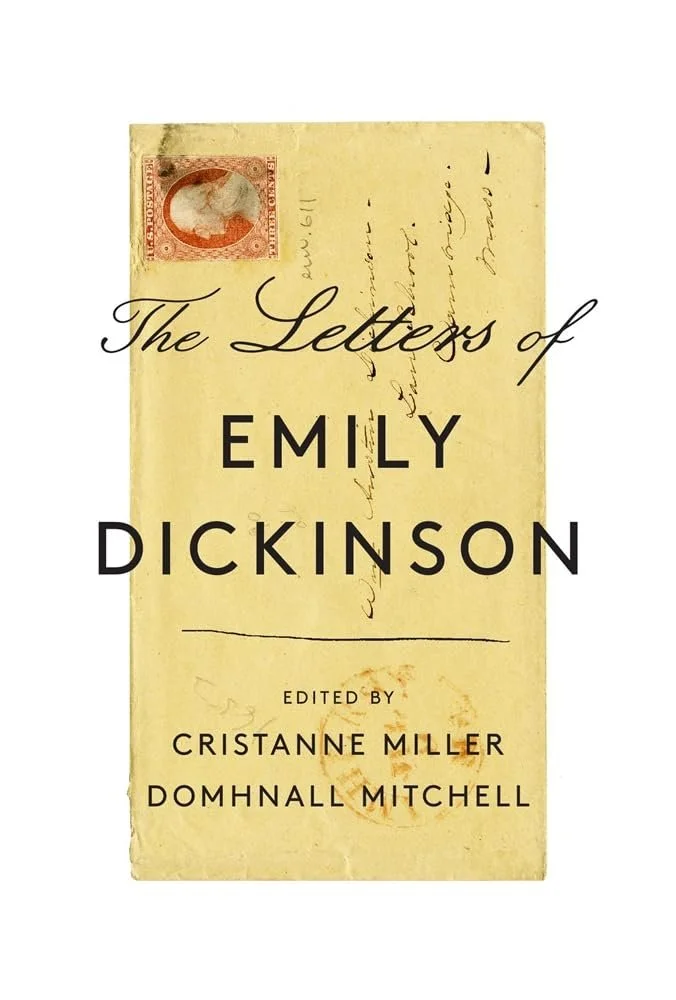
Modern edited volumes such as The Letters of Emily Dickinson and Open Me Carefully
Check your local library or ebook services if you prefer reading them as a gathered volume rather than piecing them together online.
How do Emily Dickinson’s letters compare to Letters to a Young Poet?
Both sets of letters speak with emotional honesty about art, solitude, and love, though Dickinson writes mostly to one beloved neighbour while Rilke answers a young poet’s questions about life and work. Many readers enjoy reading the two side by side, since both show how private correspondence can become a kind of accidental literature.
Where should I start if I want to read Emily Dickinson’s poetry too?
A gentle way in is to pair a compact selected poems edition with guides that give context, such as His and Hers Book Club’s pieces on classic books to read at least once, The Picture of Dorian Gray, 1984, and The Master and Margarita. That way, Dickinson joins a wider shelf of classics rather than sitting alone in a corner, which feels more in line with how she actually read and wrote: surrounded by other voices.
References
Emily Dickinson Museum, “Susan Huntington Gilbert Dickinson (1830–1913), sister-in-law.” Emily Dickinson Museum
Emily Dickinson Museum, “My Susie.” Emily Dickinson Museum
Emily Dickinson Museum, “Herbarium.” Emily Dickinson Museum
Britannica, “Emily Dickinson.” Encyclopedia Britannica
Harvard Library, “The Emily Dickinson Collection.” Harvard Library
Hart, Ellen Louise and Martha Nell Smith, Open Me Carefully (Paris Press, 1998) excerpted PDF pages shown above. web.english.upenn.edu+3web.english.upenn.edu+3web.english.upenn.edu+3
Wesleyan University news on Open Me Carefully rights and publication history. Wesleyan University
The New Yorker, “When Emily Dickinson Mailed It In” (letters context). The New Yorker
Academy of American Poets, “Letter to Susan Huntington Dickinson.”
Chronicle Books, “Stories for Romantics Boxed Set” (includes Open Me Carefully).
The Huntington Library listing for Letters of Emily Dickinson. Find A Grave
Apple TV+, “Dickinson” (series information).


Dungeon Crawler Carl book 6, The Eye of the Bedlam Bride, reviewed: what happens, why the series keeps getting better, and whether it's worth reading. Honest fan take.