10 Classic Children’s Books to Build Your Child’s First Library
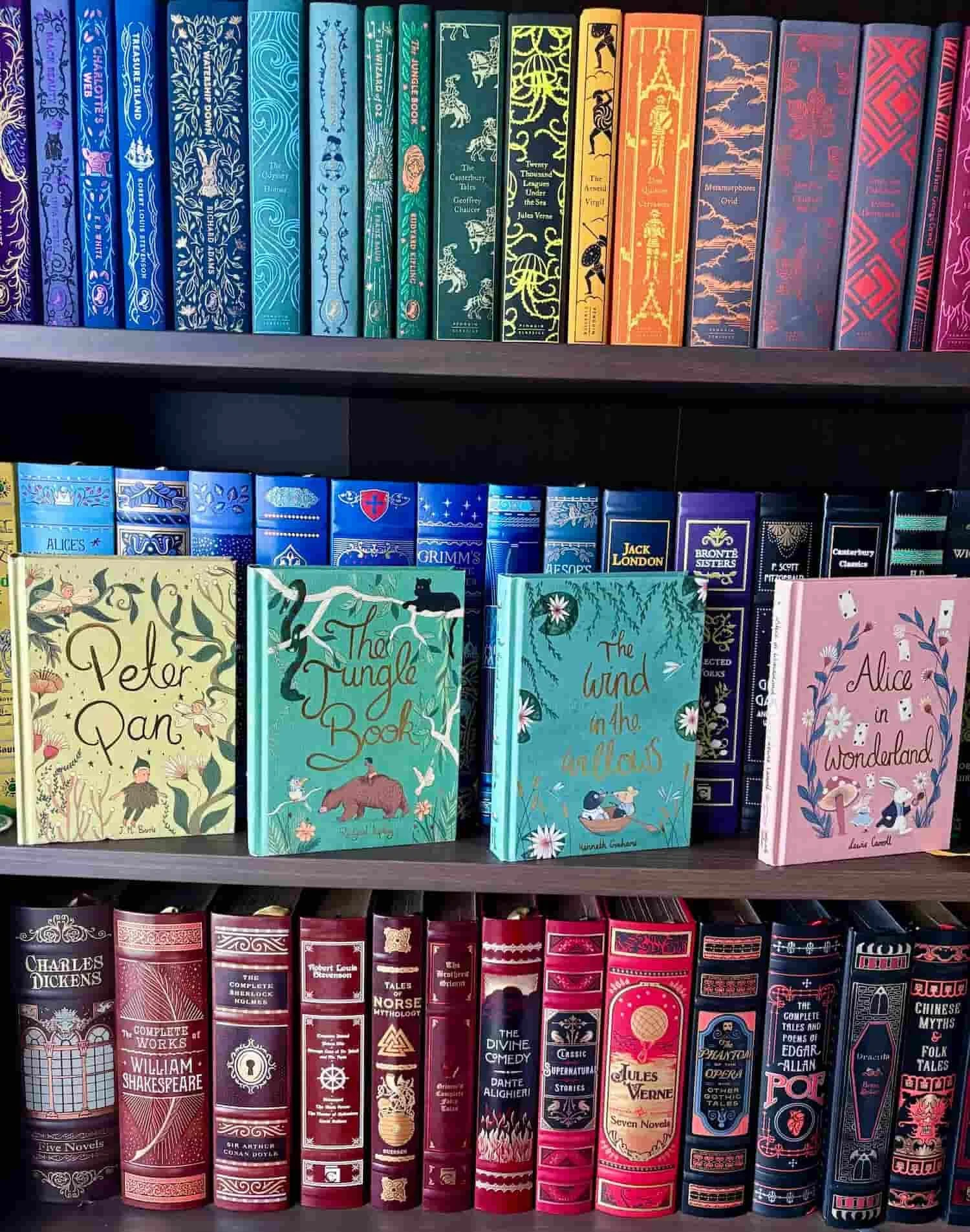
Peter Pan, The Jungle Book, The Wind in the Willows, and Alice in Wonderland - Stani’s favourite editions from our library, from Wordsworth Classics.
(Affiliate Disclaimer)This post contains affiliate links. If you use these links to buy something we may earn a commission. For more information, please see our Disclaimer.
My wife and I are currently navigating the chaos of raising two little boys. As our eldest enters that magical stage where he is becoming interested in actual stories (and not just chewing on the corners of board books), I realized I had a mission to fulfill.
I wanted to introduce him to the magnificent world of reading, not just as a pastime, but as a way to understand the world.
To prepare, I have started collecting and reading the absolute classics of children’s literature. Some of these are old friends I haven't seen in twenty years; others are new discoveries recommended by parents in my circle who have walked this path before me.
Whether you are looking for a gift for a nephew, a grandchild, or building your own nursery library, here are the 10 Best Classic Children’s Books that belong on every shelf.
Note: The first 7 books on this list are from my personal library - the ones I am will definitely be reading to my boys. The final 3 are next on my 'To-Buy' list based on recommendations from other parents. I have included links to the specific editions I own (or plan to buy) so you can build a matching collection.
At a Glance: 10 Classic Books for Every Child
If you are in a rush, here is our quick list of the best classic stories to start your library:
Alice's Adventures in Wonderland (Best for Imagination)
The Little Prince (Best for Life Lessons)
The Jungle Book (Best for Adventure Lovers)
Peter Pan (Best for Dreamers)
The Wind in the Willows (Best for Bedtime)
The Wonderful Wizard of Oz (Best for Friendship)
The Hobbit (Best Introduction to Fantasy)
The Complete Poems for Christopher Robin (Best for Poetry)
The Velveteen Rabbit (Best for Empathy)
Pippi Longstocking (Best for Strong Characters)
Alice's Adventures in Wonderland
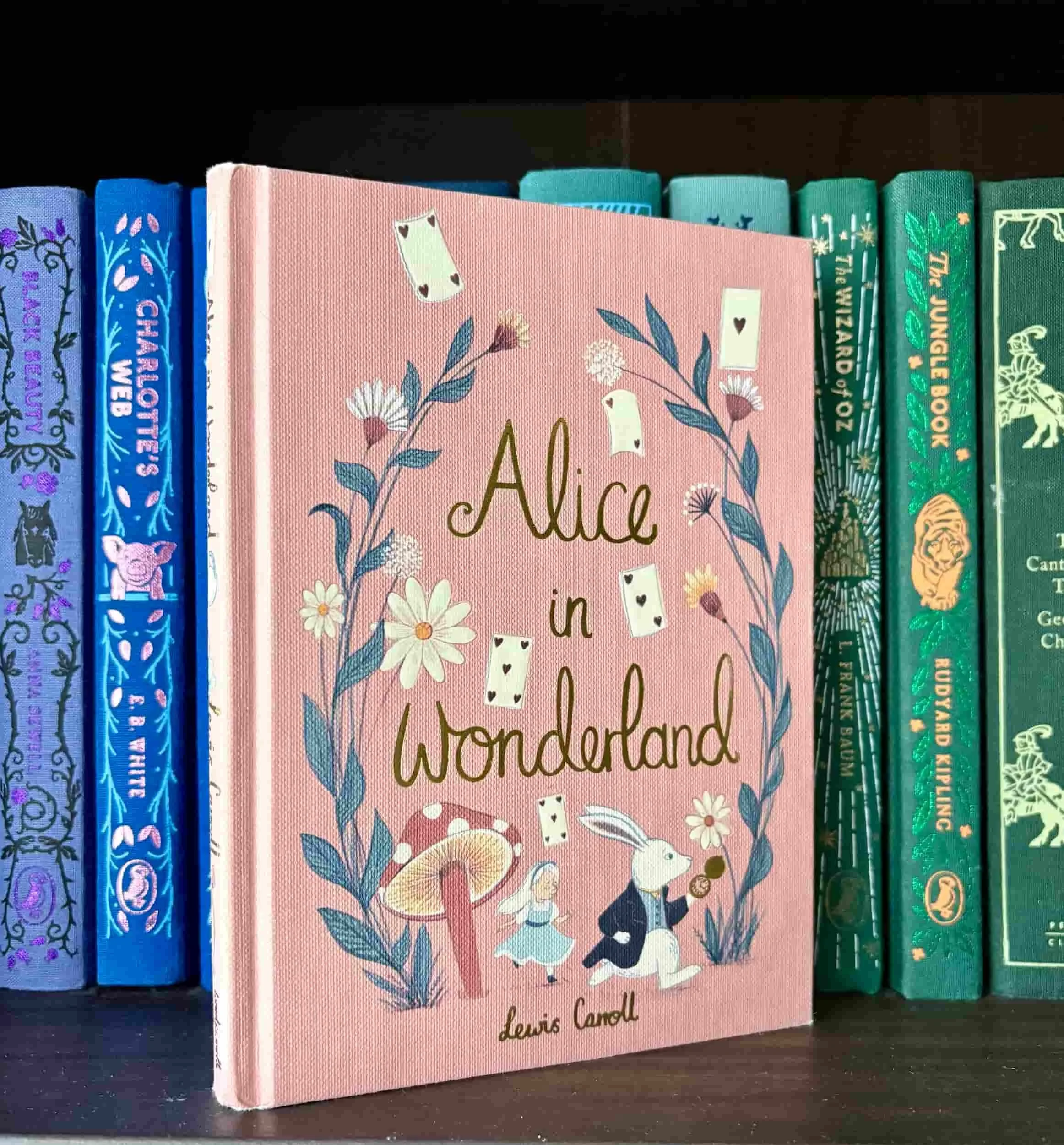
My well-loved copy of Alice. It's perfect for practicing silly voices during bedtime reading.
Author: Lewis Carroll (1865)
Best For: sparking imagination and practicing your funny voices.
The History: Written by an Oxford mathematician during a boat trip with the real-life Alice Liddell, this book changed children's literature forever. Before Alice, most kids' books were preachy and moralizing. Alice was the first to be purely, unapologetically fun.
The Story: A young girl falls down a rabbit hole into a nonsensical world inhabited by a Hookah-smoking Caterpillar, a Mad Hatter stuck in eternal tea-time, and a Queen with a penchant for beheadings. Logic is abandoned, and wordplay reigns supreme.
My Take: I recently re-read this, and it is a joy to read aloud. The text is so rhythmic and whimsical that it practically begs you to do silly voices. If you want to see your child giggle at the sheer absurdity of language, or if you just want to flex your acting skills, this is the one to start with.
The Little Prince (Le Petit Prince)
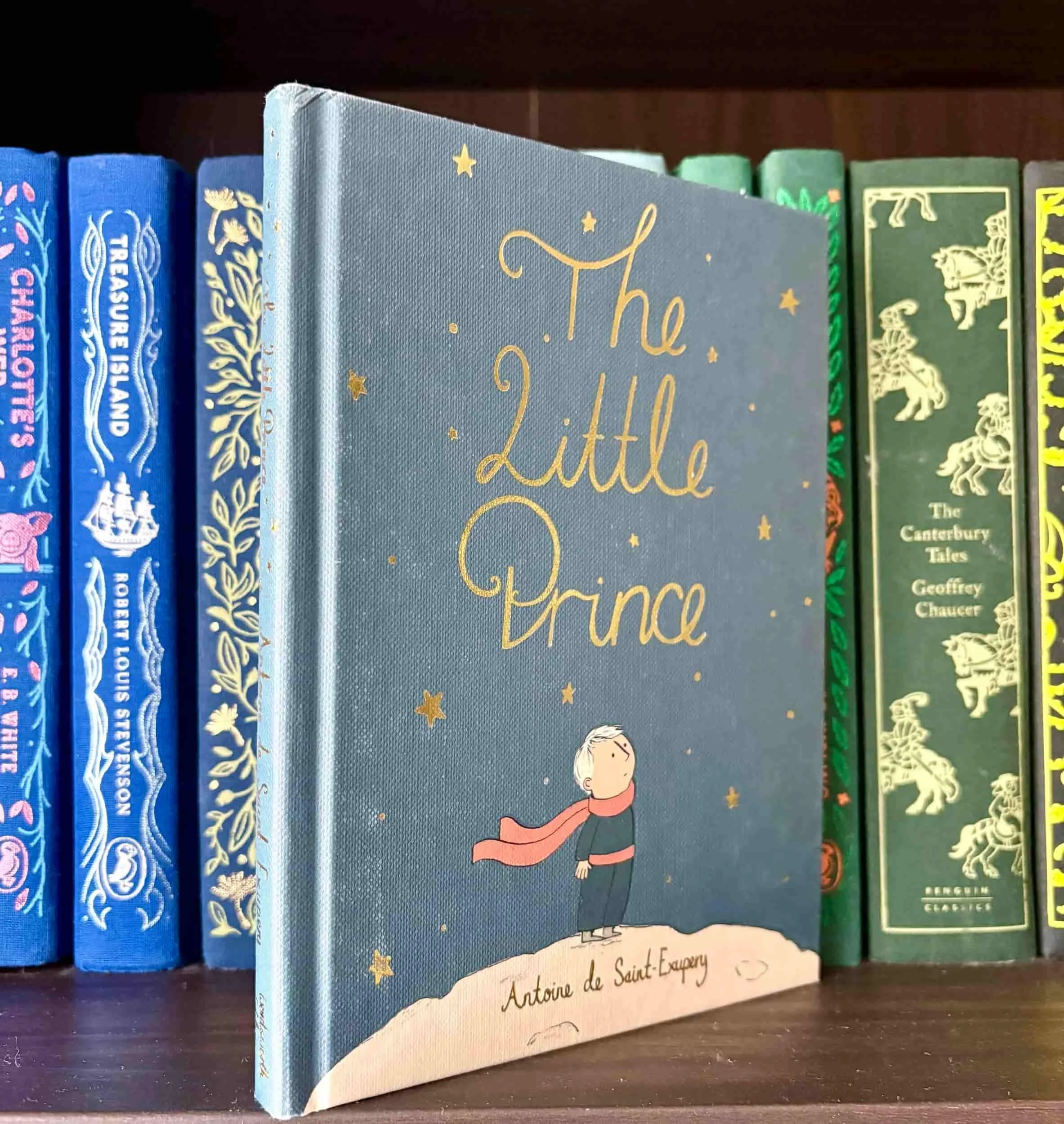
The Little Prince: The book that made me weep as an adult. A must-have for every child's shelf.
Author: Antoine de Saint-Exupéry (1943)
Best For: Teaching children (and reminding adults) about what truly matters.
The History: Written by a French aristocrat and pioneering aviator while he was exiled in New York during WWII, this is one of the best-selling books in history.
The Story: A pilot crashes in the Sahara Desert and meets a young prince who has fallen to Earth from a tiny asteroid (B-612). The Prince recounts his journey across the planets, where he met various adults who were obsessed with "serious matters" like counting stars or ruling over nothing.
My Take: I will admit it: I wept when I read this last year. It is deceptively simple. To a child, it is a story about space travel and a fox. To an adult, it is a heartbreaking meditation on love, loss, and how we lose our imagination as we grow up. It is a book that will grow with your child; they will understand it differently at 5, 15, and 50.
The Jungle Book
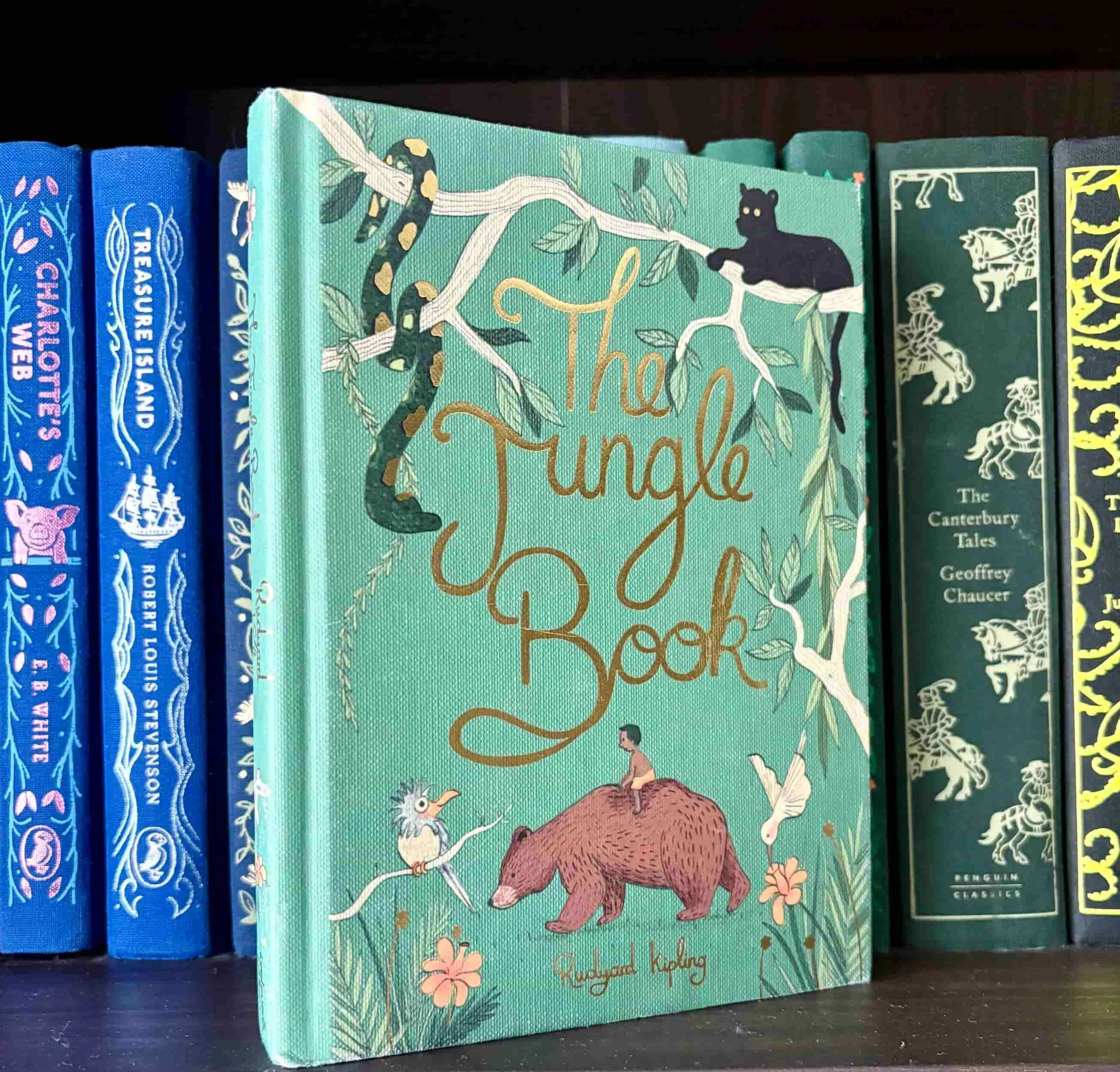
Forget the movie: the book is a masterpiece. Reading Kipling’s original The Jungle Book to my boys.
Author: Rudyard Kipling (1894)
Best For: Adventure lovers and animal enthusiasts.
The History: Kipling was born in Bombay (now Mumbai) and spent his early childhood in India (if you are interested in more literature from the region, check out our guide to the Best Indian Novels). These stories were written while he was living in Vermont, dreaming of the Indian jungles he missed.
The Story: While we all know Mowgli, the "man-cub" raised by wolves, the actual book is an anthology. It includes the story of Rikki-Tikki-Tavi (a brave mongoose fighting cobras) and Kotick (a white seal seeking a safe haven).
My Take: If you only know the Disney version, you are in for a surprise. The book is darker, richer, and far more profound. Only about half the book focuses on Mowgli, but the themes are consistent: the "Law of the Jungle," respect for nature, and the complex relationship between humans and animals. It is a masterclass in storytelling that treats children like intelligent readers.
Peter Pan
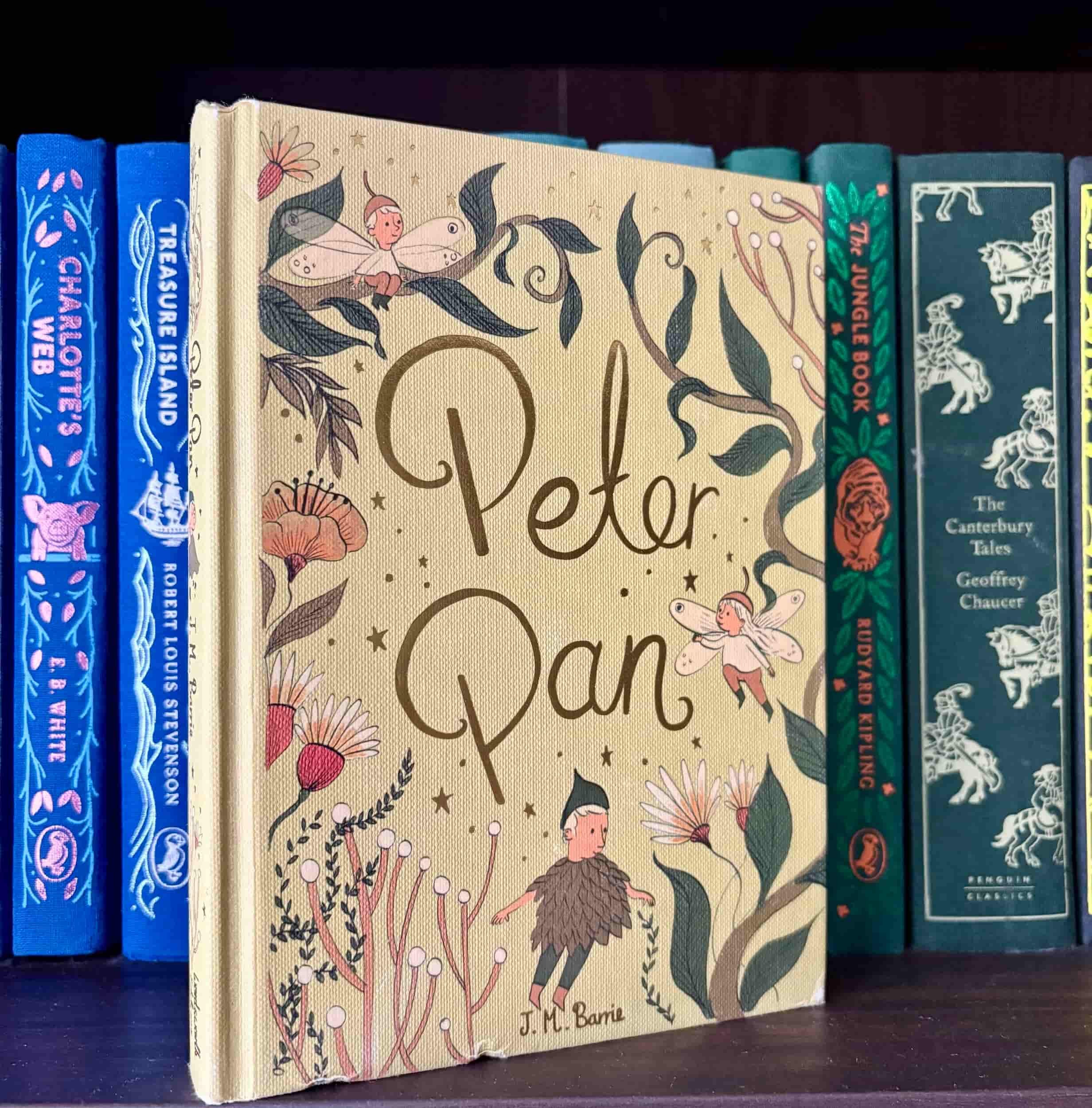
Peter Pan: The ultimate story of boyhood adventure (and refusing to grow up).
Author: J.M. Barrie (1911)
Best For: The child who dreams of flying.
The History: Barrie created Peter Pan based on the Llewelyn Davies boys, a family of children he befriended in London's Kensington Gardens. It started as a play and evolved into the novel Peter and Wendy.
The Story: The Darling children, Wendy, John, and Michael, are whisked away from their London nursery by a boy who refuses to grow up. They fly to Neverland, a place of mermaids, fairies, and the villainous Captain Hook.
My Take: This is the quintessential story of boyhood adventure. It captures that fleeting moment in childhood where magic feels real and shadows can be detached from your feet. While some aspects are dated, the core promise of the book: that adventure is waiting just outside your window, is something every child should hear.
It’s also the perfect precursor to swashbucklers like The Three Musketeers, though you might want to wait until they are teenagers for that one!
The Wind in the Willows
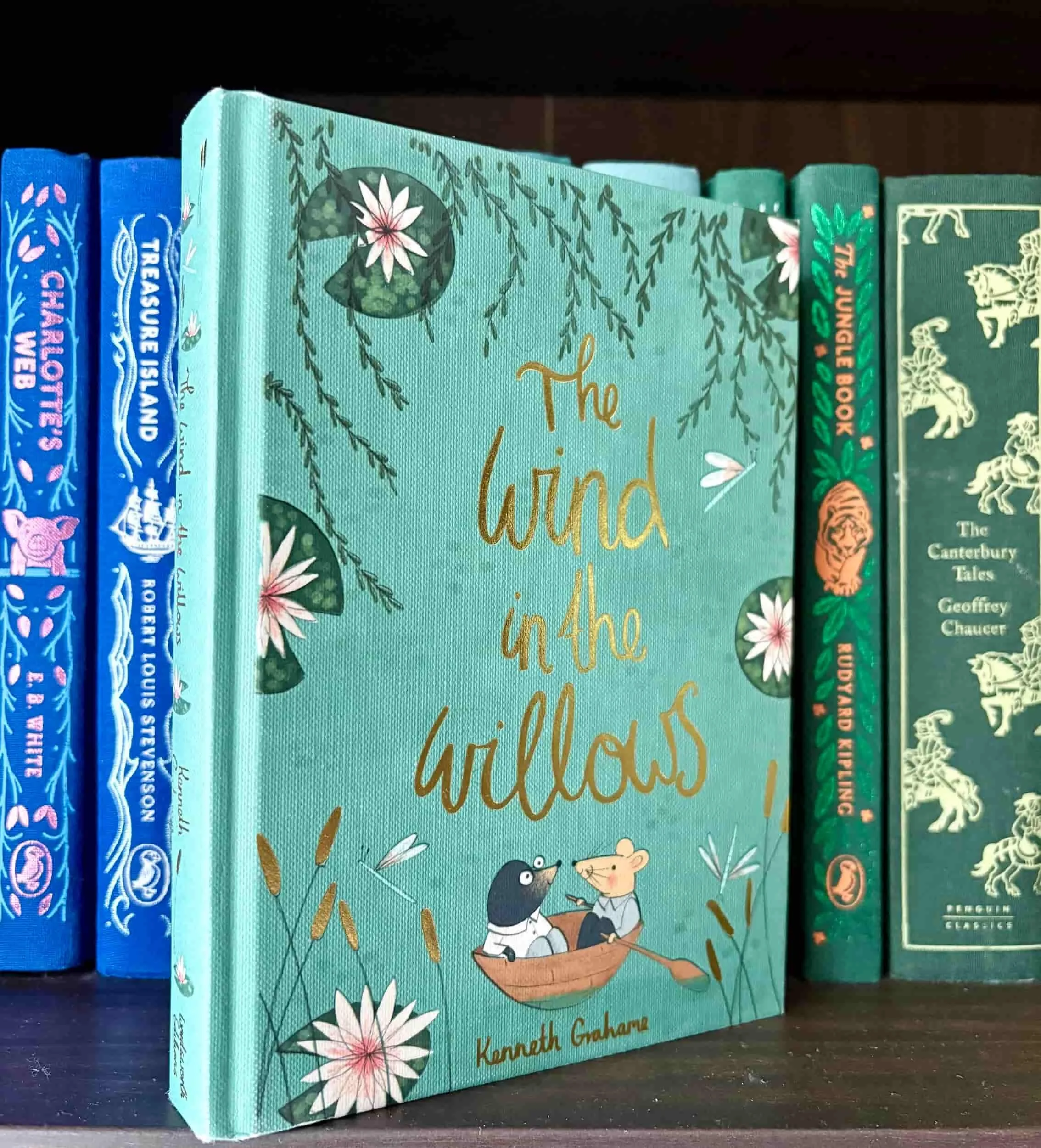
A cozy classic. The Wind in the Willows is surprisingly sophisticated, but I’m sure my sons will adore the animal characters.
Author: Kenneth Grahame (1908)
Best For: A cozy bedtime read about friendship and comfort.
The History: Grahame wrote this as a series of bedtime stories for his son, Alastair. It struggled to find a publisher until Theodore Roosevelt (yes, the President) wrote to Grahame telling him how much he loved it. Roosevelt helped get it published in the US, cementing its status as a classic.
The Story: It follows the gentle adventures of Mole, Ratty, Badger, and the chaotic Mr. Toad. From lazy afternoons on the river to Toad’s obsession with motorcars (and subsequent prison break), it is a story about the comforts of home and the thrill of the open road.
My Take: The language here is sophisticated—Grahame doesn't talk down to kids—but that’s what makes it beautiful. It is profound, educational, and deeply comforting. I love the idea of reading the same words to my boys that Teddy Roosevelt read to his children over a century ago.
The Wonderful Wizard of Oz
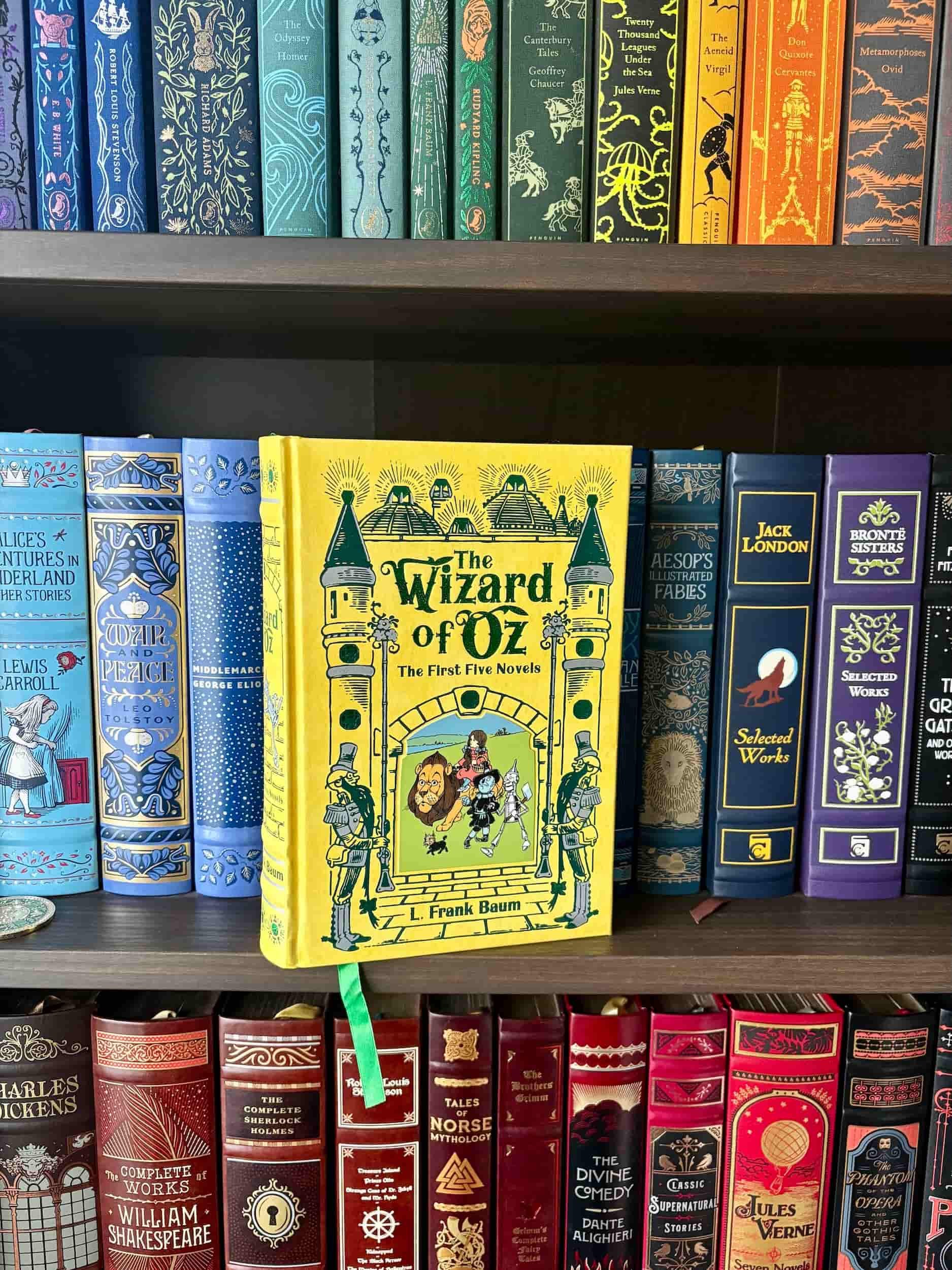
Our rather rare edition of The Wizard of Oz. It’s a great way to teach kids about courage and heart.
Author: L. Frank Baum (1900)
Best For: Learning the value of friendship and courage.
The History: Baum wanted to create a distinctly "American" fairy tale, moving away from the knights and castles of European folklore.
The Story: Dorothy Gale is swept away from gray Kansas to the technicolor land of Oz. To get home, she must find the Wizard, accompanied by a Scarecrow who wants a brain, a Tin Woodman who wants a heart, and a Lion who needs courage.
My Take: This is the ultimate road trip story. The brilliance of Oz isn't the magic; it’s the characters. It teaches children that the things they are looking for: bravery, empathy, intelligence, are usually already inside them; they just need a little push (and maybe a wizard) to bring them out.
The Hobbit
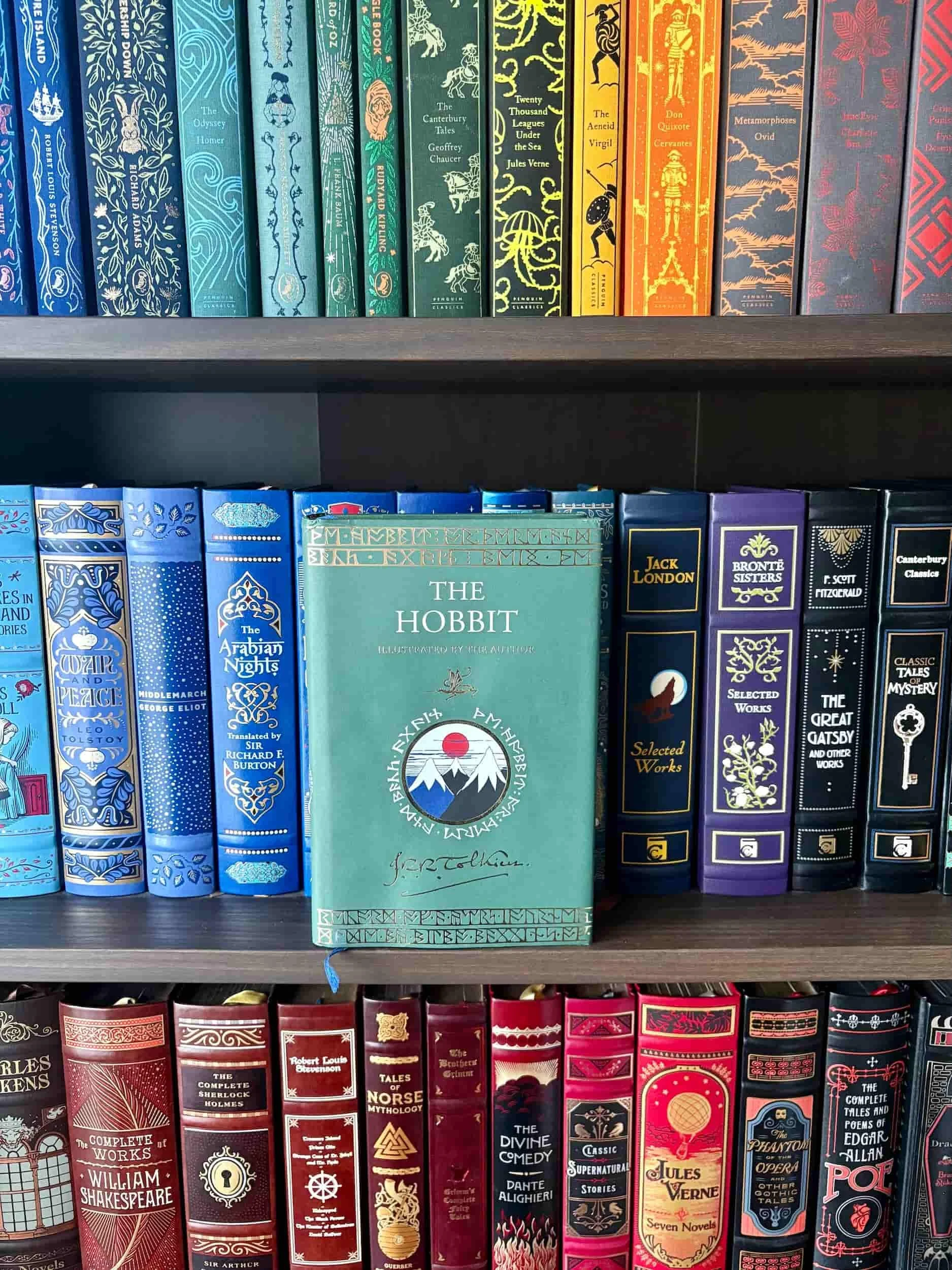
The start of the greatest adventure. I can't wait to introduce my eldest to Middle-earth with The Hobbit.
Author: J.R.R. Tolkien (1937)
Best For: Introduction to high fantasy and epic quests.
The History: Tolkien, an Oxford professor, literally wrote the opening line: "In a hole in the ground there lived a hobbit" on a blank exam paper he was grading. He wrote the rest as a bedtime story for his own children.
The Story: Bilbo Baggins, a respectable hobbit who likes comfort and tea, is tricked by a wizard into joining a group of dwarves to steal treasure from a dragon.
My Take: This is one of my absolute favorite stories ever written. Unlike The Lord of the Rings, which is epic and heavy, The Hobbit is light, funny, and fast-paced. It is perfectly sized for a child’s attention span but carries the weight of a fully realized world. I cannot wait to share Middle-earth with my boys.
And once they master Middle-earth, they will be ready for the humour of Terry Pratchett’s Discworld in no time.
On My "To-Read" List
These are the classics I haven't gotten to yet, but they are next in the queue based on high recommendations.
The Complete Poems for Christopher Robin
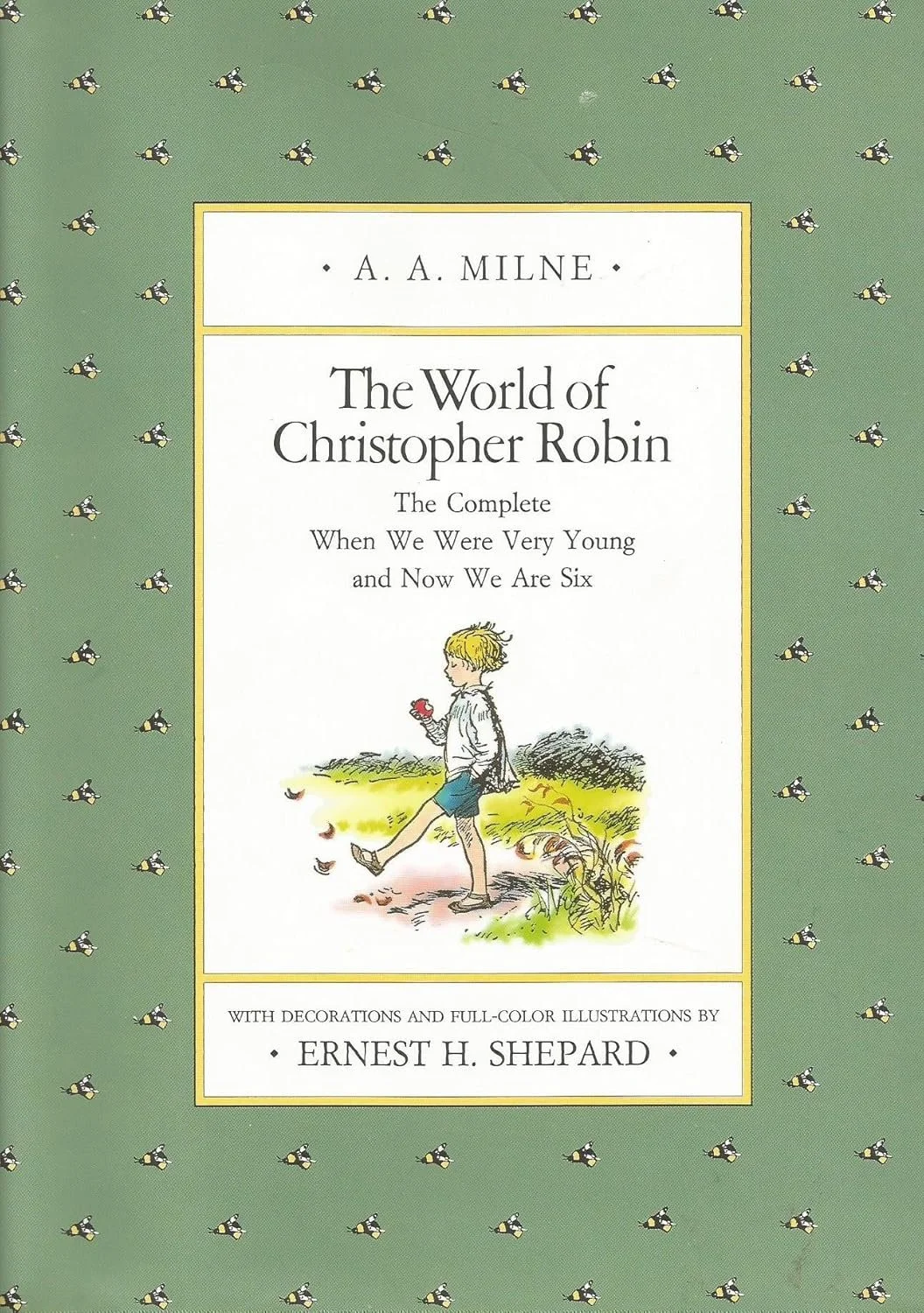
Next on my list: The original Winnie-the-Pooh poetry collection. (Image via Amazon).
Author: A.A. Milne (1924/1927)
Why it’s on the list: Before there was Disney, there were these poems. This collection brings together When We Were Very Young and Now We Are Six. It introduces Winnie-the-Pooh and friends in their original context. I want to read this because the rhythm of poetry is fantastic for developing a child's ear for language. Plus, who doesn't love the Hundred Acre Wood?
The Velveteen Rabbit
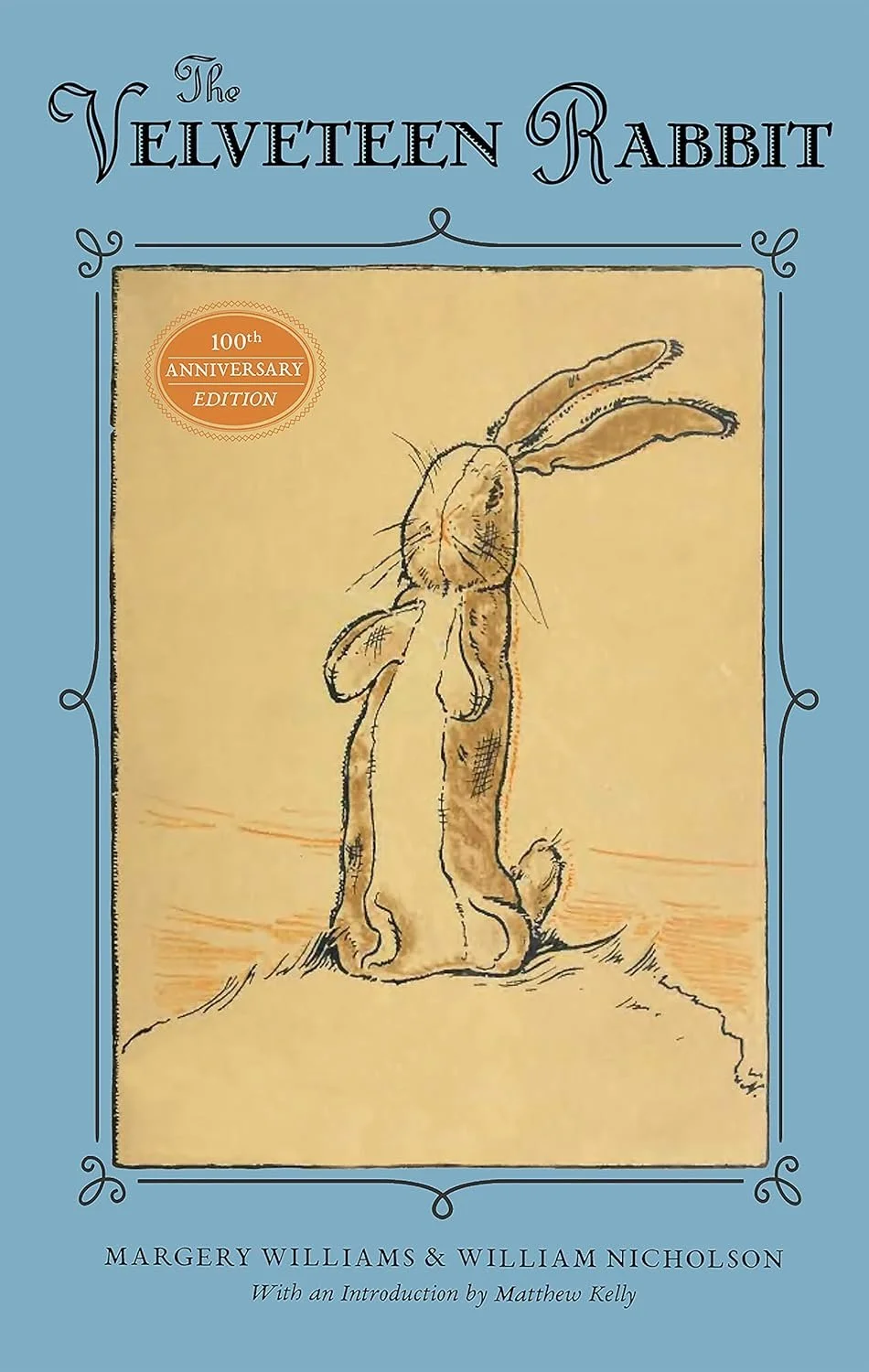
The Velveteen Rabbit is widely recommended for teaching children about love and loss.
Author: Margery Williams (1922)
Why it’s on the list: I have been told this is a tear-jerker in the best possible way. The story follows a stuffed rabbit who wants to become "Real." The lesson, that you become real when a child loves you for a long time, even if your fur gets worn off, sounds like a beautiful sentiment to share with a child who has a favorite teddy.
Pippi Longstocking
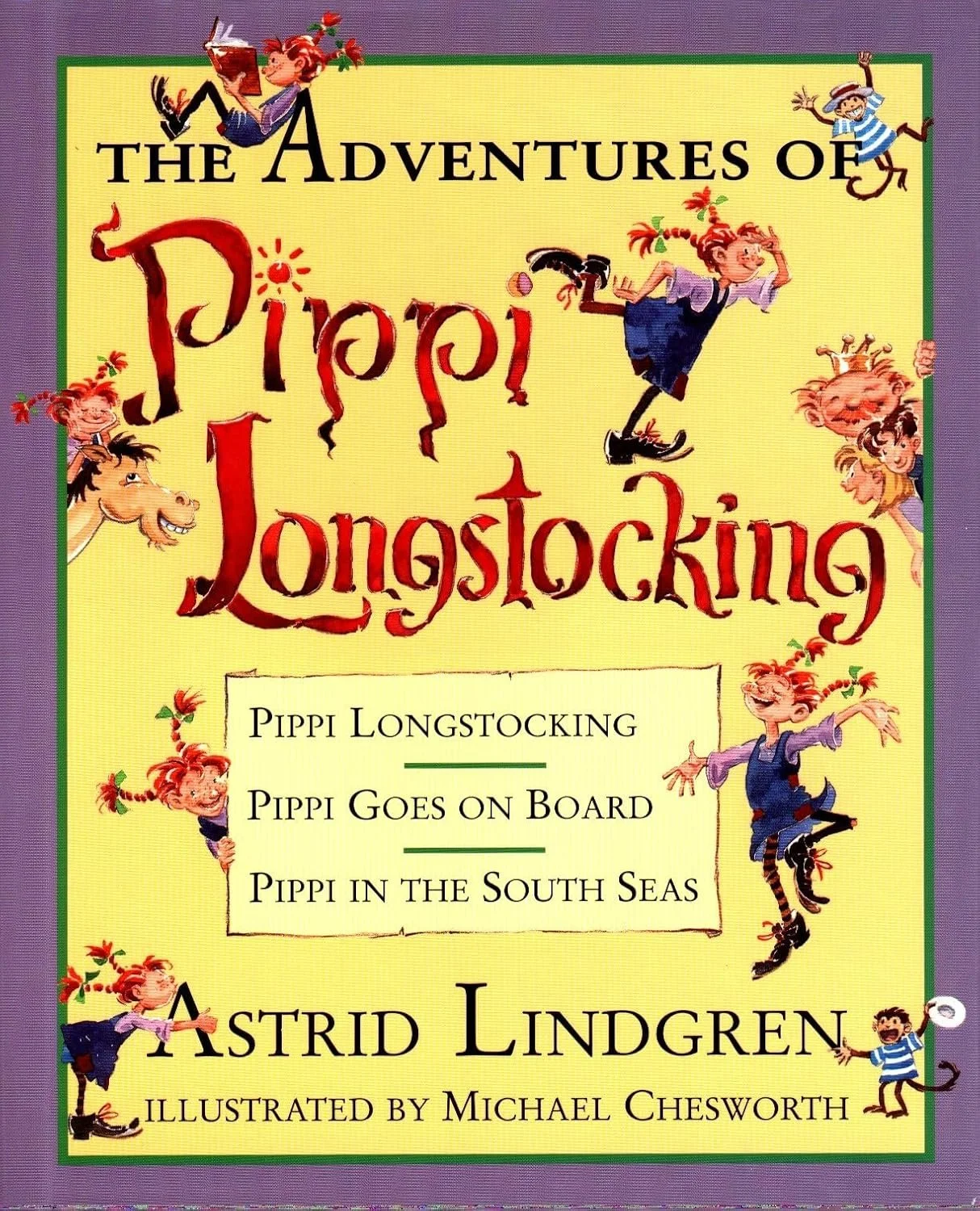
Need a little chaos? Pippi Longstocking is the perfect gift for the strong-willed child in your life.
Author: Astrid Lindgren (1945)
Why it’s on the list: I read this about 25 years ago in school, and while my memory is hazy, I recall loving Pippi’s chaos. She is the strongest girl in the world, lives with a monkey, and answers to no one. In a world of rules and schedules, I think every kid needs a little Pippi Longstocking energy to remind them that it’s okay to be different, strong, and a little bit wild.
Frequently Asked Questions about Classic Children's Books
What is the best age to start reading classic books?
You can start reading to them from birth! For these specific chapter books, ages 6-10 is the "golden spot" for reading aloud, as they can follow the plot. However, simple stories like Winnie the Pooh or Peter Pan can be enjoyed by younger children too.
Are original versions too difficult for modern kids?
Not necessarily. Children are linguistic sponges. While books like The Wind in the Willows use sophisticated vocabulary, reading them aloud helps children learn new words in context. Don't be afraid to pause and explain a word—it’s part of the fun.
Which classic book is best for a boy?
While all these books are unisex, The Hobbit and The Jungle Book are fantastic for high-energy adventure. For a more sensitive or thoughtful child, The Little Prince is a wonderful choice.
What if my child is a bit older?
If your child has outgrown Peter Pan and is looking for puzzles and mystery, we highly recommend The Inheritance Games.

Dungeon Crawler Carl book 6, The Eye of the Bedlam Bride, reviewed: what happens, why the series keeps getting better, and whether it's worth reading. Honest fan take.