My Top 10 Discworld Books by Terry Pratchett (A Work in Progress)
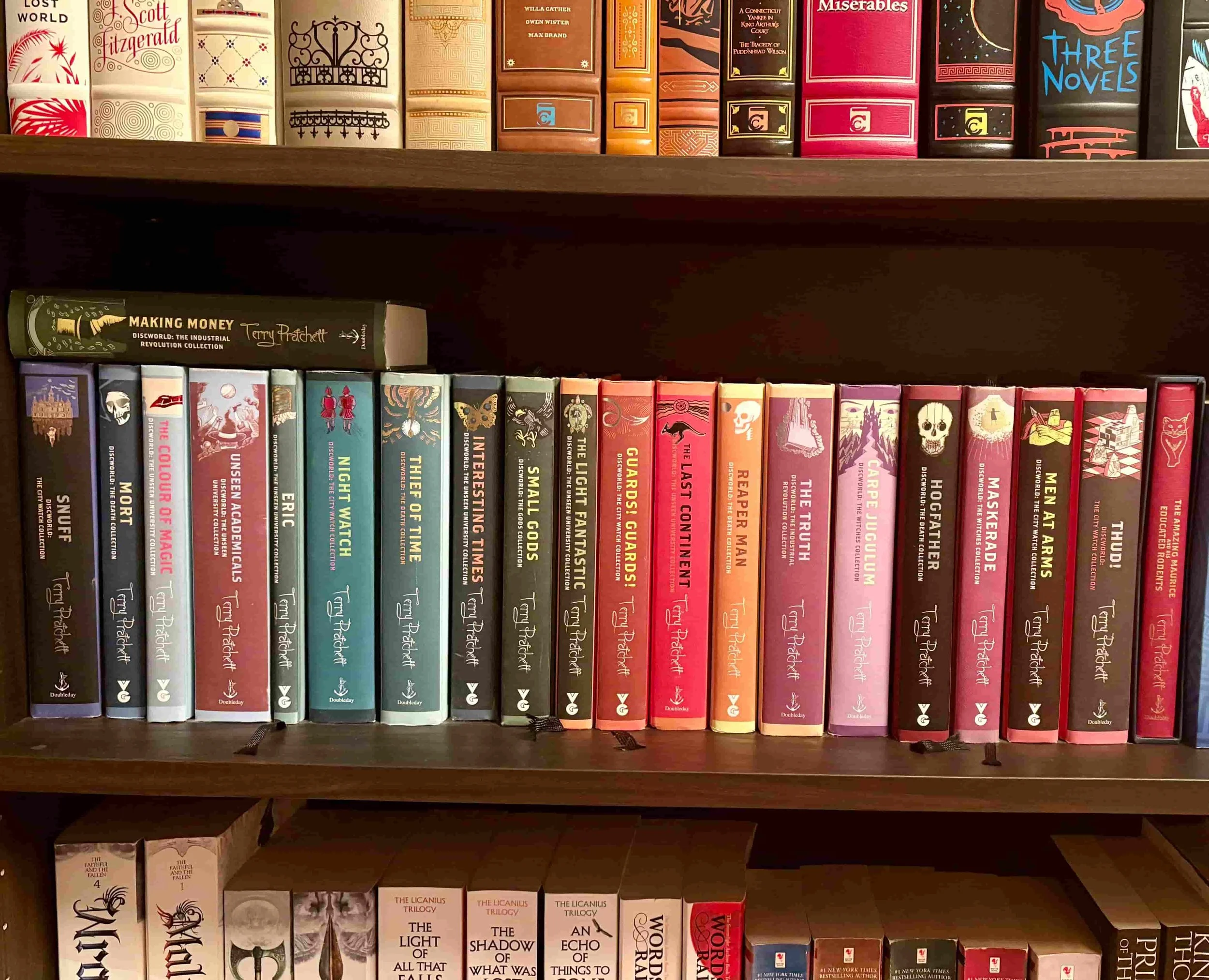
My growing collection of the Discworld Collector's Library editions. (I’m running out of shelf space!)
(Affiliate Disclaimer)This post contains affiliate links. If you use these links to buy something we may earn a commission. For more information, please see our Disclaimer.
When I first looked at the sheer volume of Terry Pratchett's work, which includes 41 novels, maps, science companions and more, I felt completely intimidated.
But I also felt a need to measure up. My eldest brother has read the entire Discworld series at least twice. He was the one who first handed me a copy of Mort nearly 20 years ago, sparking a lifelong obsession with a flat world resting on the backs of four elephants and a giant turtle.
Since then, Mort has held a special place in my heart, serving as my gateway into Pratchett's genius. Currently, I have tackled about two-thirds of the series. I am fully aware that this list might change as I make my way through the final third, but for now, these are the stories that have left the biggest mark on me.
A Note on Ranking: Choosing just 10 books from 41 is a herculean task. So, rather than pitting them against each other, I have listed these in no particular order. These are simply the 10 entries I have loved the most so far.
At a Glance: My Top 10 Discworld Picks
If you are in a rush, here is the quick list of my personal favorites (in no particular order):
Mort (Best Starting Point)
Guards! Guards! (Best Characters)
Interesting Times (Funniest Satire)
The Colour of Magic (Purest Fantasy)
Carpe Jugulum (Best Villain Battle)
The Truth (Most Relevant Today)
Hogfather (Deepest Philosophy)
Snuff (Darkest Themes)
Night Watch (The Masterpiece)
Eric (Best Short Read)
Mort
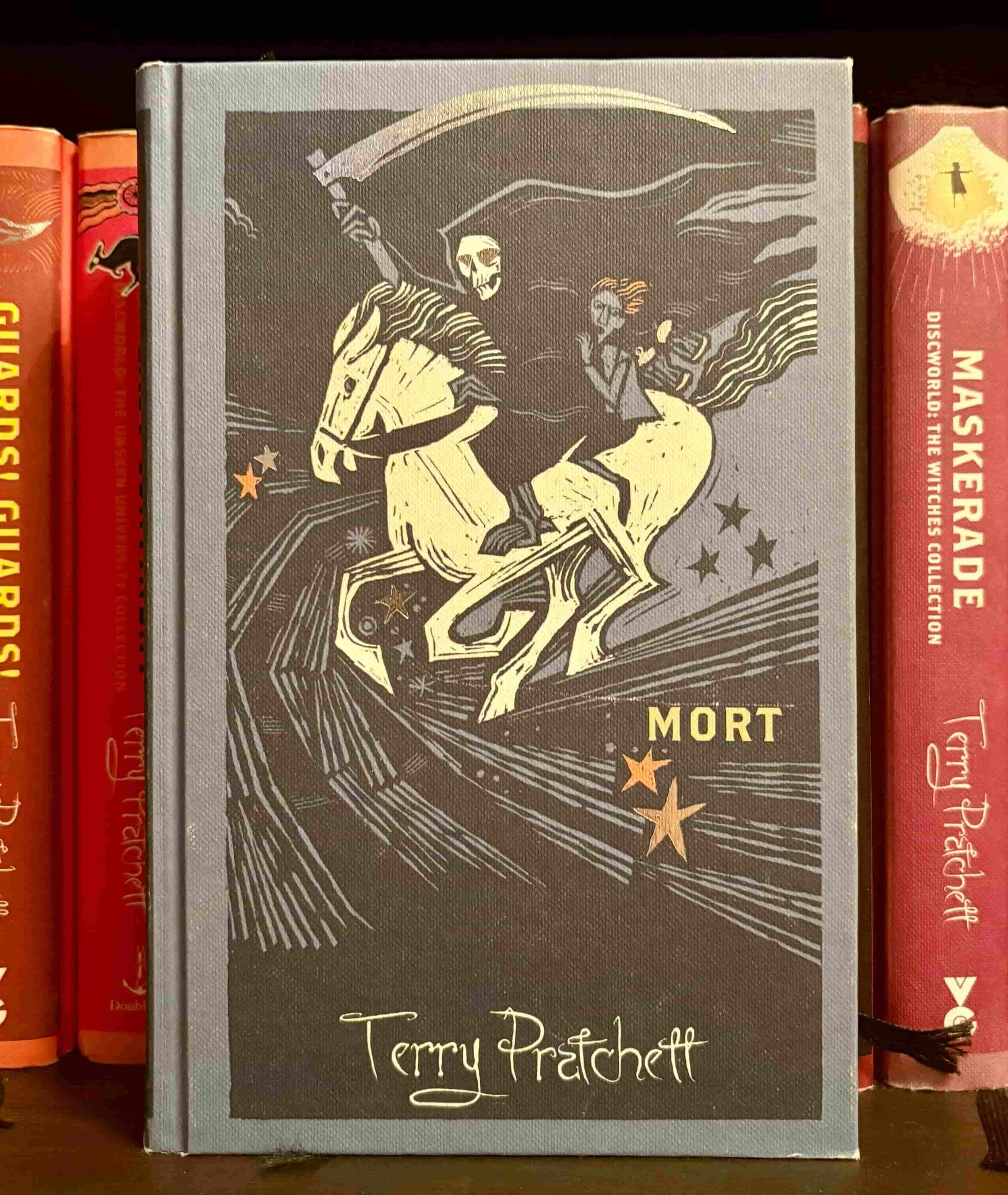
The book that started it all for me: Mort. The cover art perfectly captures Death's unexpected apprenticeship.
Sub-Series: Death
Why it made the list: The perfect entry point.
My Thoughts: What struck me most about Mort wasn't just the humor, though seeing Death try to fly-fish or get drunk is objectively hilarious.
It was the surprising tenderness of the character. Pratchett takes the ultimate terrifying concept, the Grim Reaper, and turns him into a fascinated observer of humanity.
Reading this, I found myself caring less about the plot to save a princess and more about Death’s existential crisis. He doesn't want to kill; he just wants to understand.
The relationship between him and his awkward apprentice, Mort, felt like a bizarre father-son dynamic that unexpectedly warms your heart. It is the book that convinced me fantasy could be philosophical without being boring. 👉 Read my full review of Mort
Guards! Guards
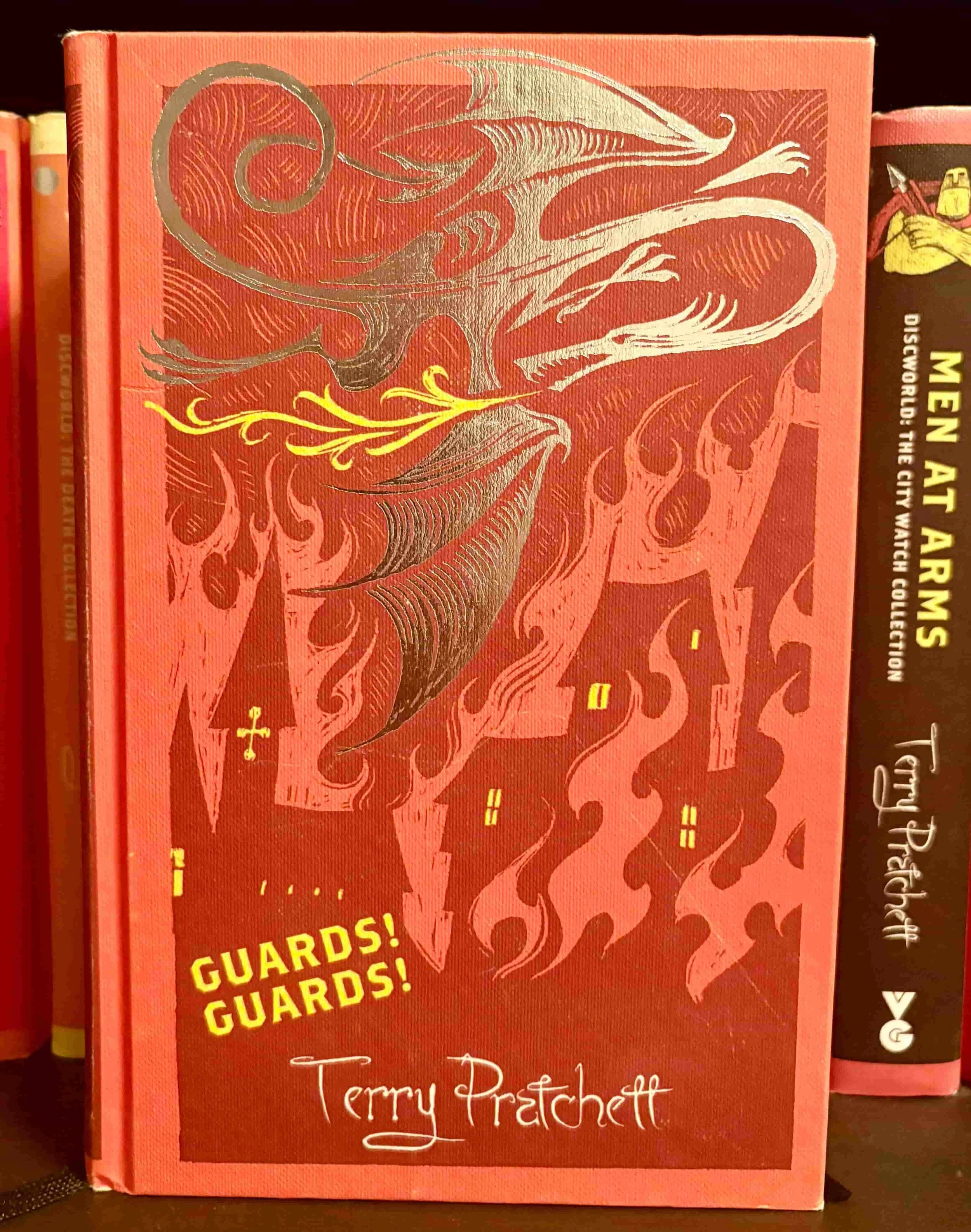
The red dragon cover of Guards! Guards!, the debut of the City Watch and Captain Sam Vimes.
Sub-Series: City Watch
Why it made the list: The birth of the City Watch.
My Thoughts: Sam Vimes is, without a doubt, one of the greatest literary characters ever written. In Guards! Guards!, we see his rawest form: a drunk, cynical man in a city that has legalized crime via the Thieves' Guild.
What I loved is how Pratchett flips the script. In any other fantasy book, the return of a dragon would be a majestic, terrifying event.
Here, it is a nuisance that exposes how cowardly the "noble" class really is. The highlight for me was the camaraderie of the Night Watch: Vimes, Carrot, Nobby, and Colon.
Watching this group of misfits find their dignity in a city that despises them is one of the most satisfying character arcs I have ever read. 👉 Read my full review of Guards! Guards!
Interesting Times
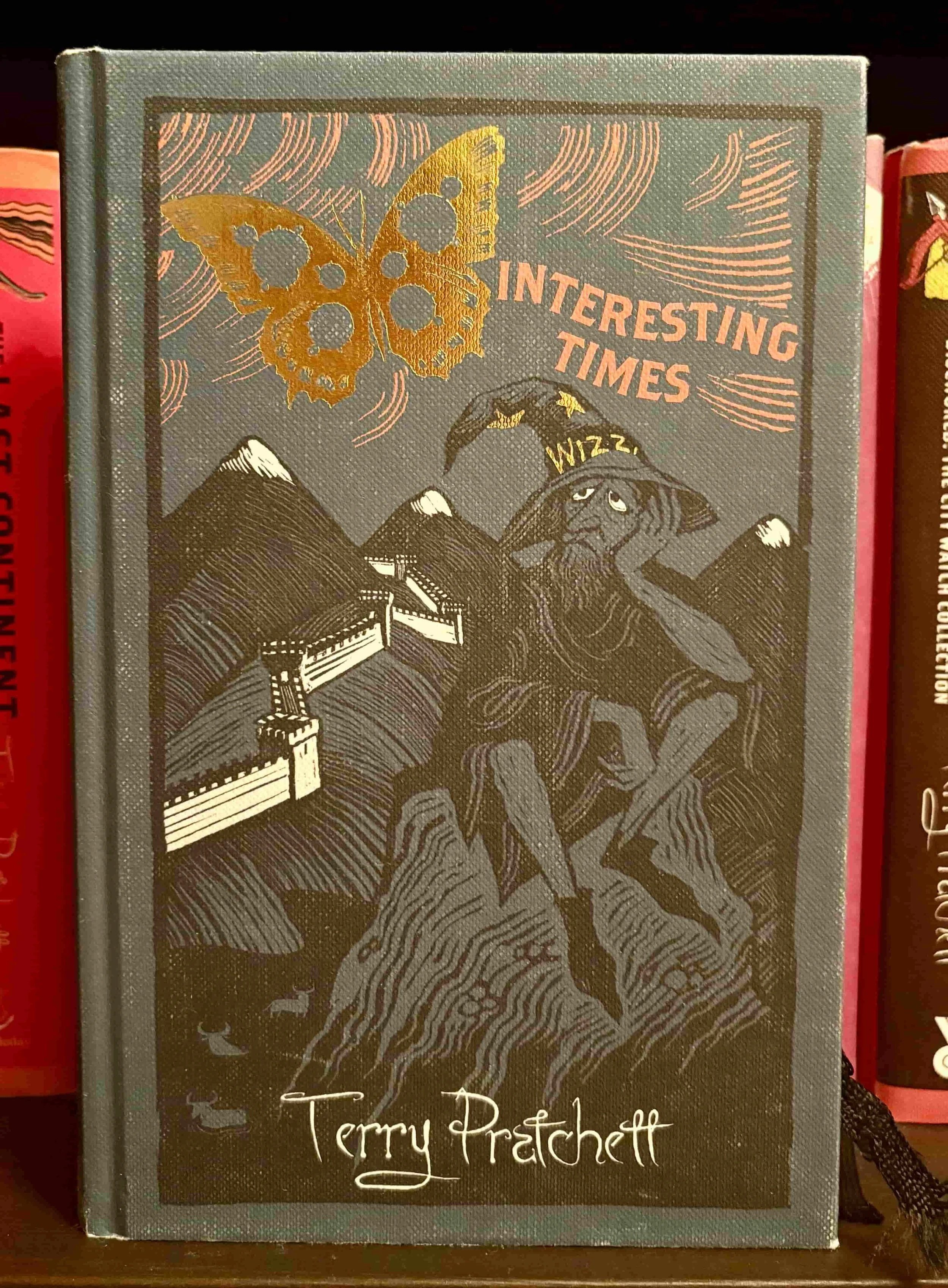
Interesting Times, featuring Rincewind, Cohen the Barbarian, and a very reluctant revolution.
Sub-Series: Rincewind / The Wizards
Why it made the list: Satire of revolutions and empires.
My Thoughts: I usually prefer the Watch books, but Interesting Times made me laugh harder than almost any other entry.
The brilliance lies in the contrast. You have the Agatean Empire, a rigid society obsessed with order and politeness, colliding with Rincewind, a chaotic coward who just wants a potato.
My favorite element, however, is the "Silver Horde", a group of ancient barbarians led by Cohen. Pratchett essentially asks: "What happens to Conan the Barbarian when he’s 80 and has back pain?"
The answer is both hilarious and surprisingly poignant. It is a sharp critique of how history is written by the winners, even if those winners are geriatric warmongers.👉 Read my full review of Interesting Times
The Colour of Magic
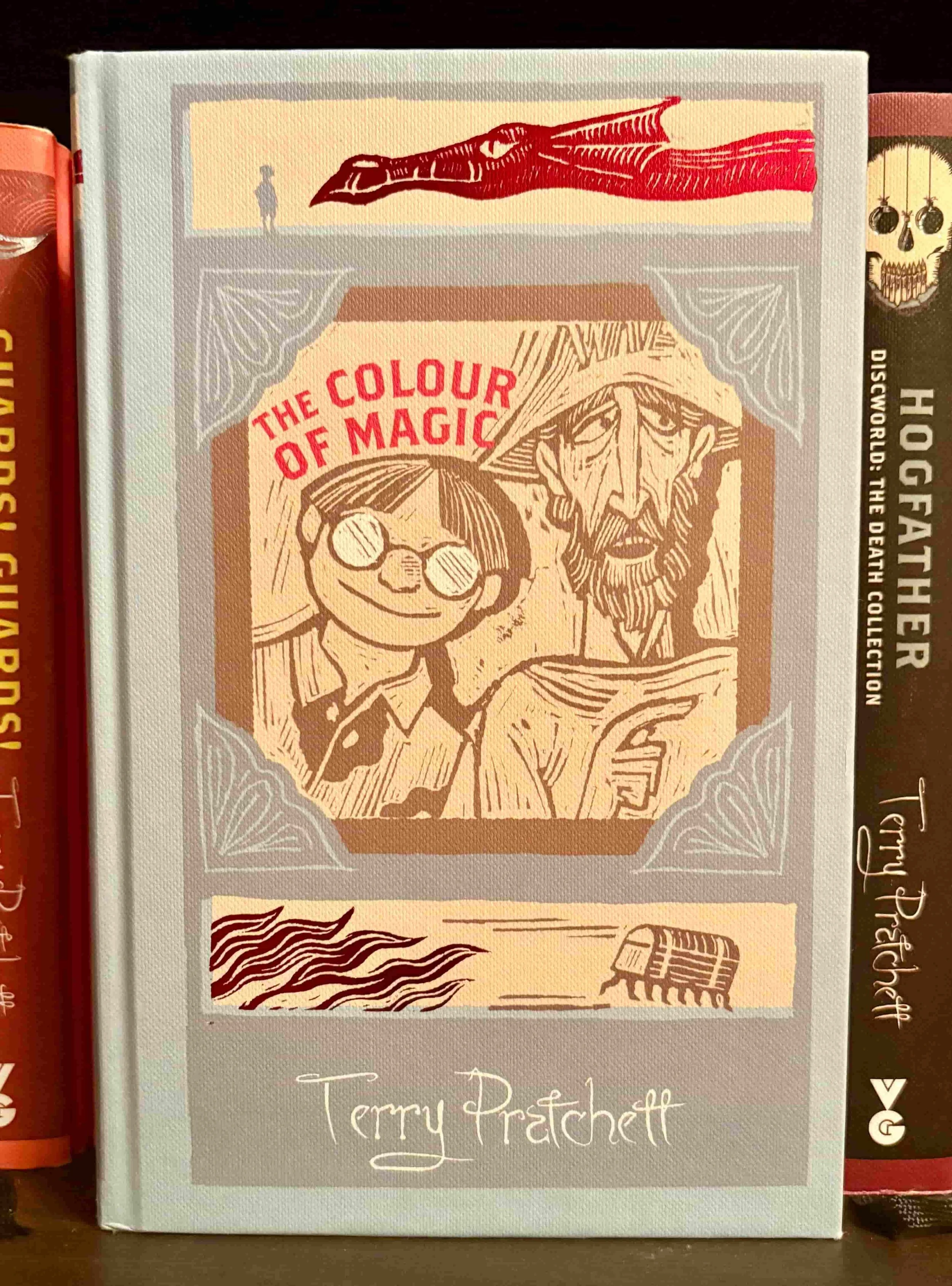
Where the chaos began. The Colour of Magic introduces Rincewind, Twoflower, and The Luggage.
Sub-Series: Rincewind
Why it made the list: Where it all began.
My Thoughts: This book feels different from the rest of the list. It is looser, crazier, and less structured. But that is exactly why I love it. It feels like Pratchett was playing Dungeons & Dragons and decided to break every single rule.
The dynamic between Rincewind, the cynical local, and Twoflower, the naive tourist, is the perfect vehicle for world-building.
Through Twoflower’s eyes, we see the absurdity of Ankh-Morpork, from the tavern brawls to the existence of The Luggage.
While it lacks the emotional depth of later books, the sheer creativity on display here, like the Wyrmberg or the edge of the world, is unmatched. It is pure, unfiltered imagination. 👉 Read my full review of The Colour of Magic
Carpe Jugulum
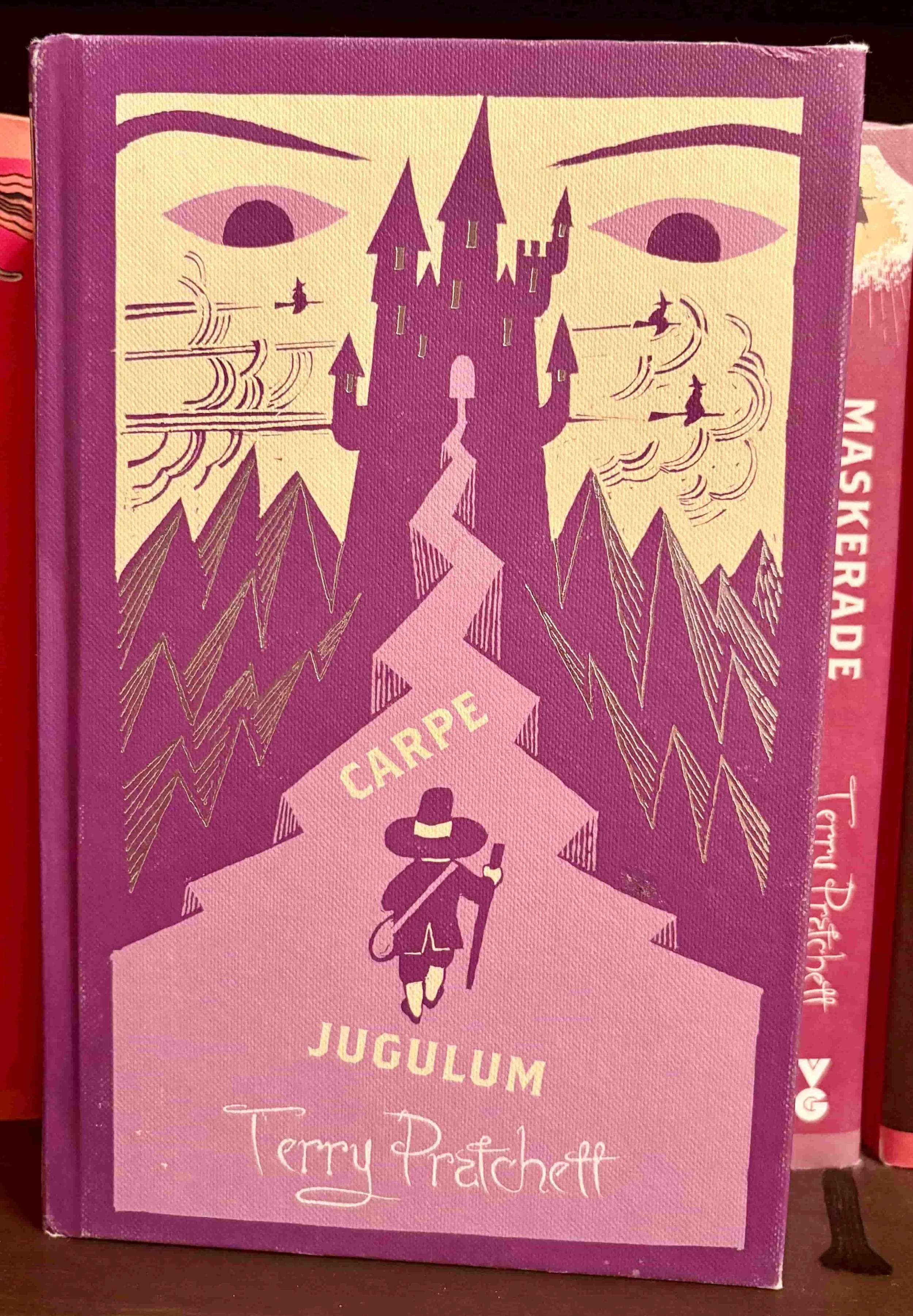
Carpe Jugulum: The ultimate showdown between Granny Weatherwax and modern vampires.
Sub-Series: The Witches
Why it made the list: Modernity vs. Tradition.
My Thoughts: I have always found the Witches books to be the most "grounded" of the sub-series, dealing with human psychology rather than high magic.
Carpe Jugulum takes this to the next level by introducing villains who cannot be defeated by traditional means.
The Magpyrs are terrifying not because they are monsters, but because they are modern. They use gaslighting and PR to manipulate the kingdom of Lancre.
Watching Granny Weatherwax battle them is a masterclass in character writing. She doesn't win because she is stronger. She wins because she understands the darkness in her own soul better than they do. It is a powerful reminder that "good" isn't the same as "nice."
The Truth
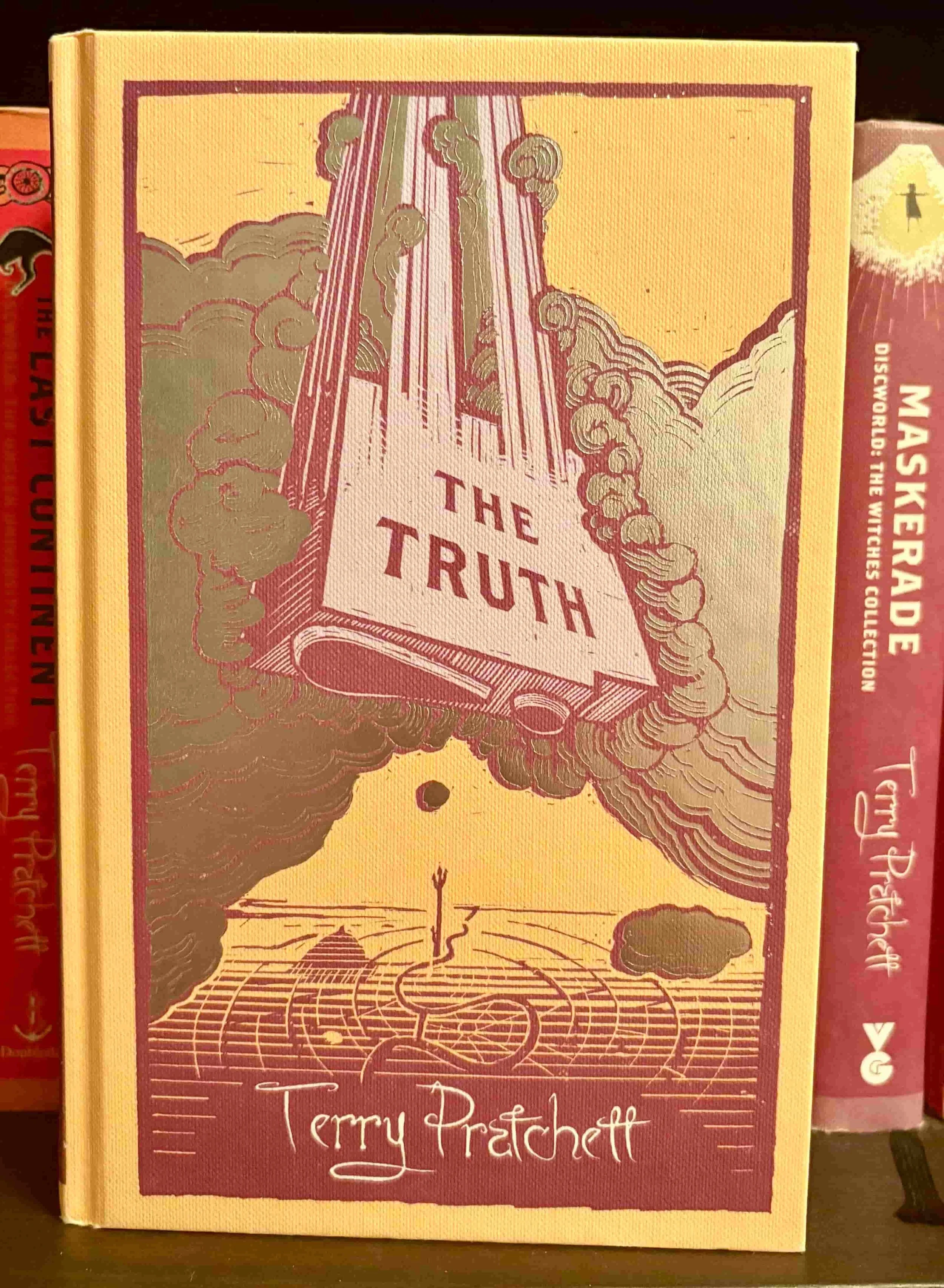
The Truth brings the printing press (and fake news) to Ankh-Morpork.
Sub-Series: Industrial Revolution
Why it made the list: The power of the press.
My Thoughts: As someone who consumes a lot of media, this book hit close to home. It explores how easily the "truth" can be twisted once you put it in print.
What stands out to me is the villainous duo, Mr. Pin and Mr. Tulip. They are genuinely threatening in a way few Discworld antagonists are, bringing a gritty, noir thriller vibe to the story.
But the real star is the concept of the newspaper itself. Pratchett brilliantly satirizes everything from clickbait (vegetables shaped like funny things) to political spin.
It made me realize that the printing press was just as dangerous to the established order as any dragon.
Hogfather
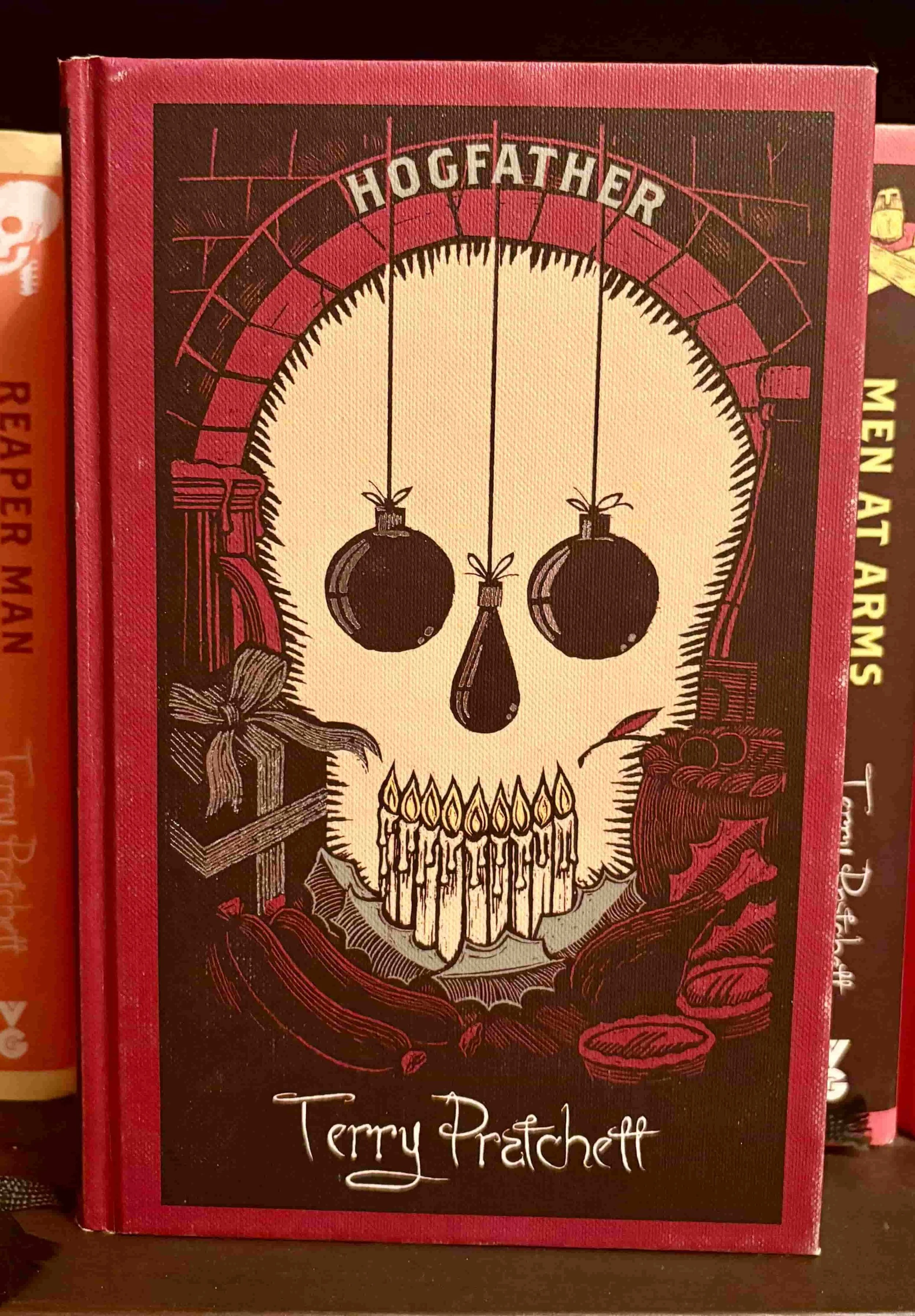
Hogfather: The only Christmas story that features the Grim Reaper delivering presents.
Sub-Series: Death
Why it made the list: The importance of belief.
My Thoughts: This is easily the most "quotable" book in the series. I went in expecting a Christmas parody and came out with an existential crisis about the nature of humanity.
The core message, that we need to practice believing in the "little lies" (fantasy) to believe in the "big lies" (justice, mercy), reshaped how I view the fantasy genre as a whole. It justifies why we read fiction in the first place.
Plus, the subplot of the god of hangovers, Bilious, is one of the funniest side-gags Pratchett ever wrote. It strikes that perfect balance between festive cheer and dark philosophy.
Snuff
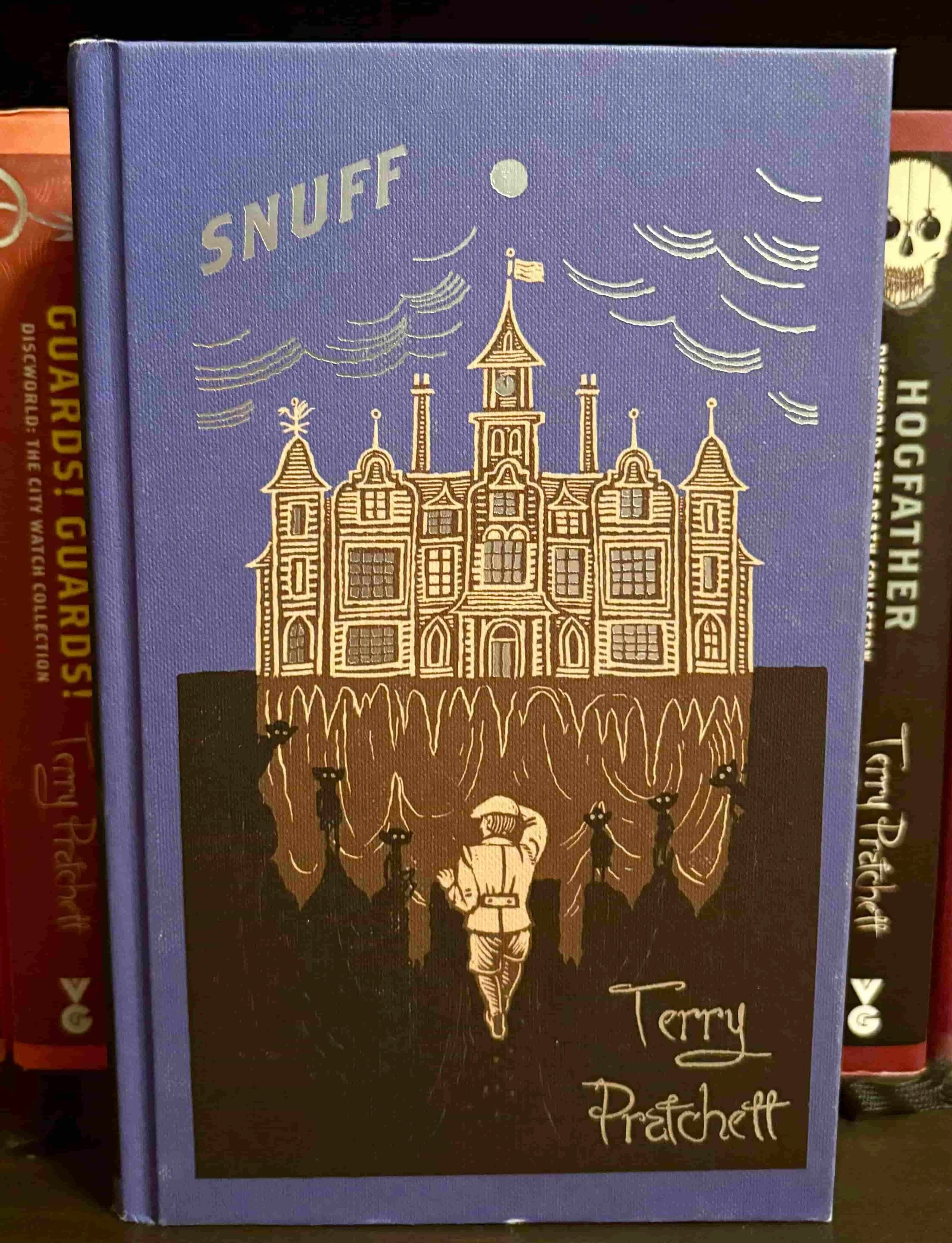
Snuff features a darker, grittier Sam Vimes tackling justice in the countryside.
Sub-Series: City Watch
Why it made the list: A darker, more mature Vimes.
My Thoughts:Snuff is often criticized for being slower than previous Watch books, but I appreciated the change of pace.
Seeing Vimes out of his element in the countryside, stripped of his city streets, forces him to rely on his moral compass rather than his badge. The exploration of the Goblins broke my heart.
Pratchett has always championed the underdog, but here he tackles dehumanization with a righteous fury that feels palpable. It is not just a mystery; it is an angry book, and Vimes is the perfect vessel for that anger.
The scene on the boat, where Vimes’ sheer presence terrifies the villain, is one of the most badass moments in the canon. 👉 Read my full review of Snuff here
Night Watch
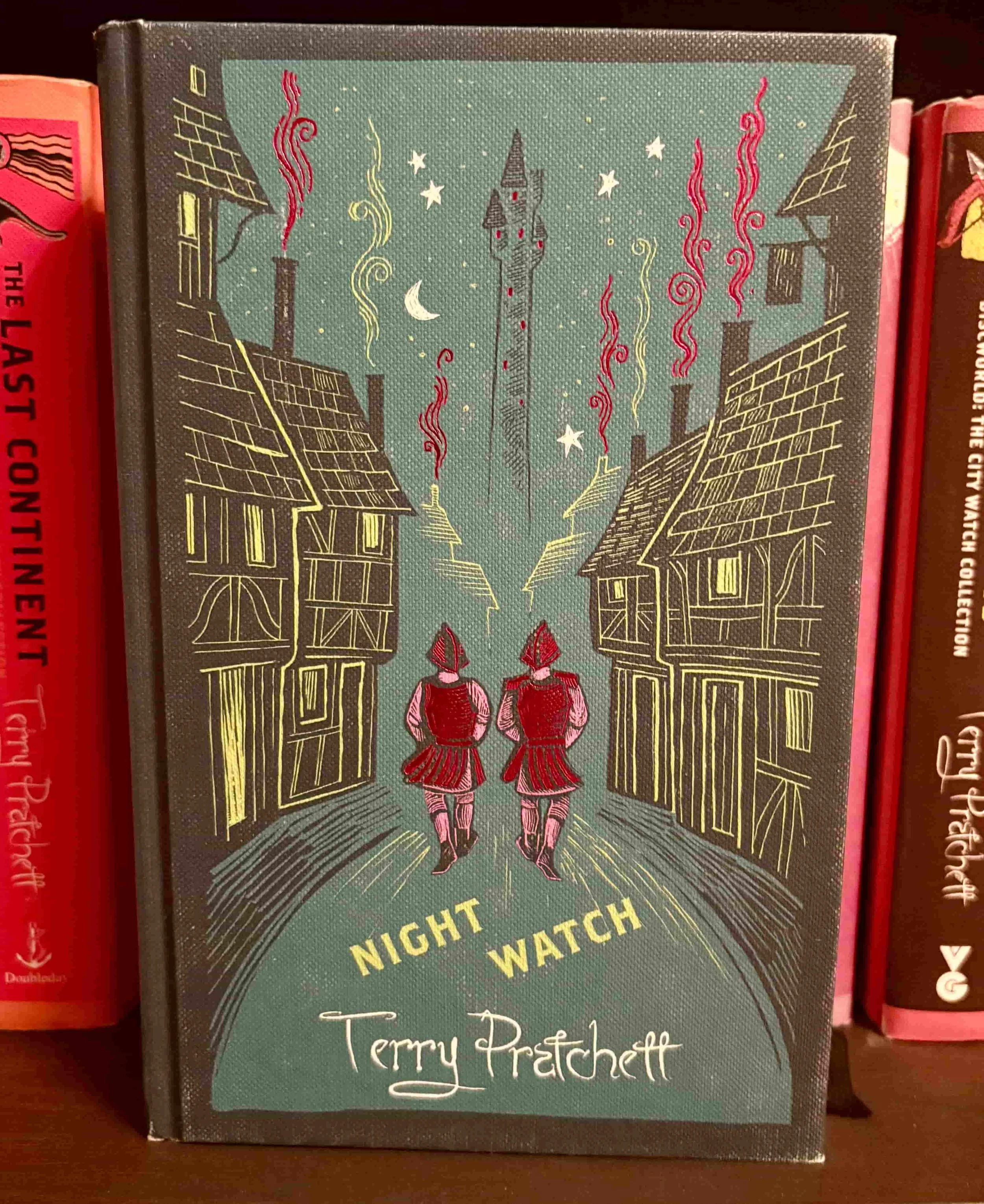
Night Watch, widely considered the masterpiece of the entire series.
Sub-Series: City Watch
Why it made the list: The masterpiece.
My Thoughts: This book hurt to read, in the best possible way. It strips away the comfort of the familiar Ankh-Morpork and throws Vimes into a past that is darker and crueler than the present. The emotional weight comes from Vimes mentoring his younger self.
We finally see why he is the way he is. We see the cynicism, the anger, but also the unshakeable code of honor. It is a tragedy, really, because Vimes knows he can’t save everyone.
He just has to do the job. If you only read one Discworld book (after the starter ones), make it this one. It transcends the genre.
Eric
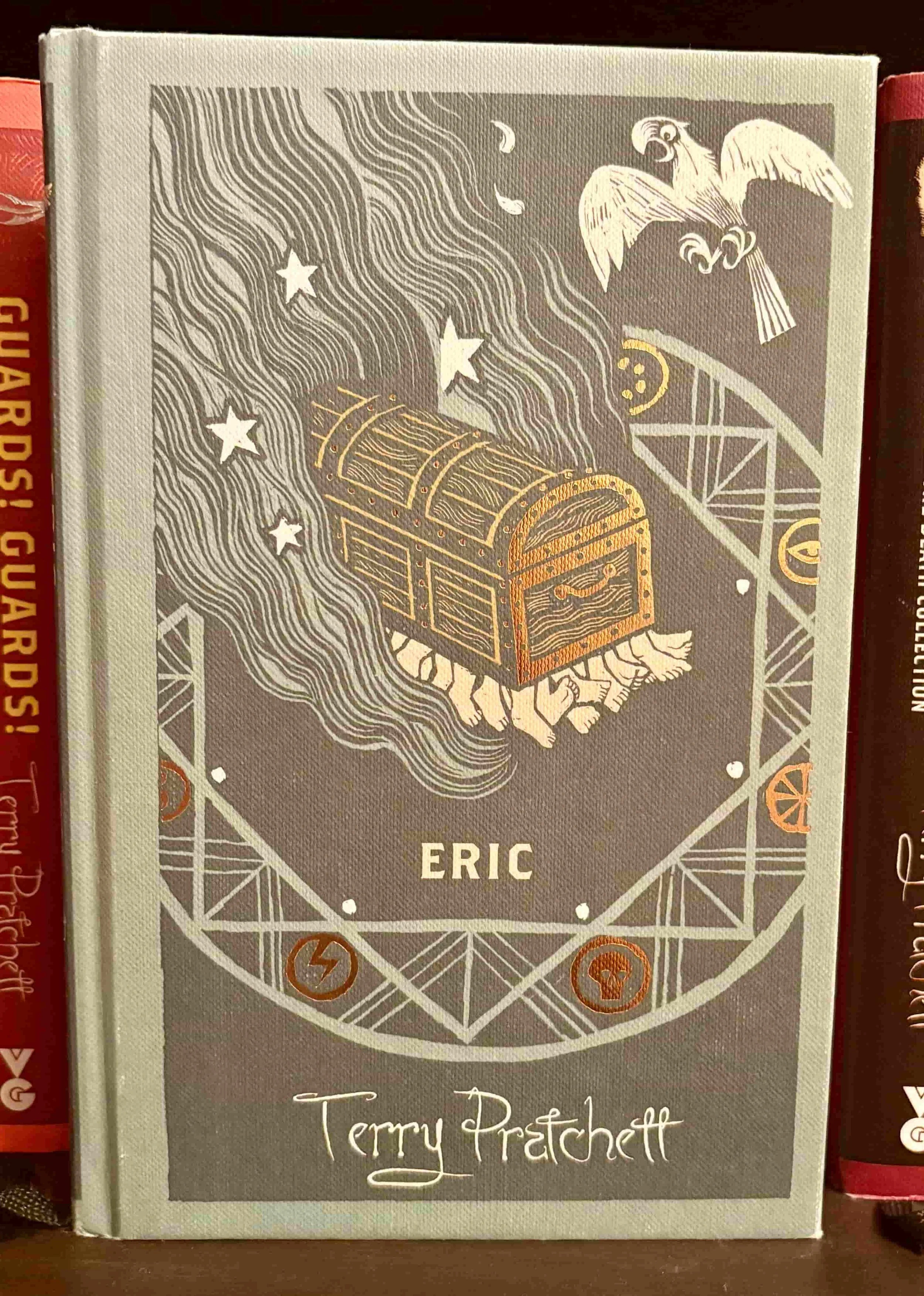
Eric: A short, punchy parody of Faust (and bureaucratic Hell).
Sub-Series: Rincewind
Why it made the list: A bite-sized classic.
My Thoughts: After the emotional heaviness of books like Night Watch, Eric is the perfect palate cleanser. It is short, punchy, and relentless in its mockery of history and religion.
My favorite part is Pratchett’s vision of Hell. He reimagines it not as a pit of fire, but as a bureaucratic nightmare of endless meetings and paperwork.
As someone who has worked in an office, this felt more terrifyingly accurate than Dante’s Inferno. It is a quick read, but it packs more clever ideas into 100 pages than most authors manage in a trilogy. 👉 Read my full review of Eric
Final Thoughts: The Road to 41
As I mentioned at the start, this list is a snapshot of my journey so far. I have read about 30 of the 41 novels, meaning there are still hidden gems (and perhaps a few duds) waiting for me in the final stretch.
I am particularly looking forward to finishing the Tiffany Aching series and finally tackling The Shepherd’s Crown, though I admit I am delaying that one because I am not quite ready to say goodbye to Sir Terry’s voice just yet.
Once I have closed the back cover on the 41st book, I will return to this list for a final, definitive update. Until then, I will wear my "Aspiring Pratchett Expert" badge with pride.
Did I miss your favorite? If you are a veteran fan and angry that Small Gods or Going Postal didn't make the cut, let me know in the comments! You might just convince me to read them next.
Frequently Asked Questions about Terry Pratchett Books
What is the best Discworld book to start with? Most fans recommend "Mort" (for fantasy lovers) or "Guards! Guards!" (for mystery fans). We recommend saving "The Colour of Magic" for later, as it is more chaotic than the rest of the series.
Do I need to read Terry Pratchett books in order? No! You can read them as standalones. However, reading specific sub-series (like the City Watch or The Witches) in order adds a lot of depth to the character arcs.
How many books did Terry Pratchett write? Sir Terry Pratchett wrote 41 novels set in the Discworld universe, along with numerous maps, short stories, and science companions.

Dungeon Crawler Carl book 6, The Eye of the Bedlam Bride, reviewed: what happens, why the series keeps getting better, and whether it's worth reading. Honest fan take.