Dungeon Crawler Carl Book 6: Everything You Need to Know About The Eye of the Bedlam Bride
A Natural Follow-Up to Book 5, and a Harder Read Than I Expected
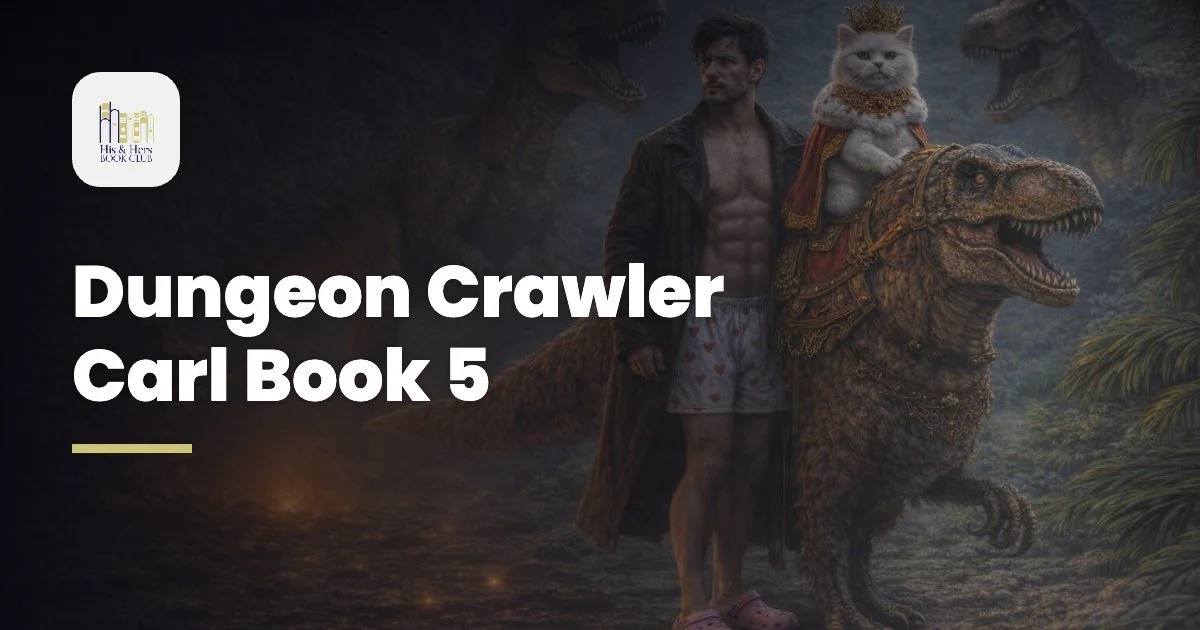
If you caught our review of Dungeon Crawler Carl Book 5, you'll know we were already deep in the weeds of this series. Book 5 left things in a place that felt genuinely precarious, and I came into book six hoping for some momentum, maybe even a little relief. What I got was something messier and more unsettling than that, and I mean that as a compliment, eventually.
Honesty first: I had mixed feelings about this one. It took me a while to work out why, and when I did, I found myself going back to something Carl himself keeps repeating in the earlier books. "Things are going to get a lot worse. We are going to have to make terrible decisions to survive." That line lands very differently once you've actually watched those terrible decisions happen.
What Is the 6th Dungeon Crawler Carl Book?
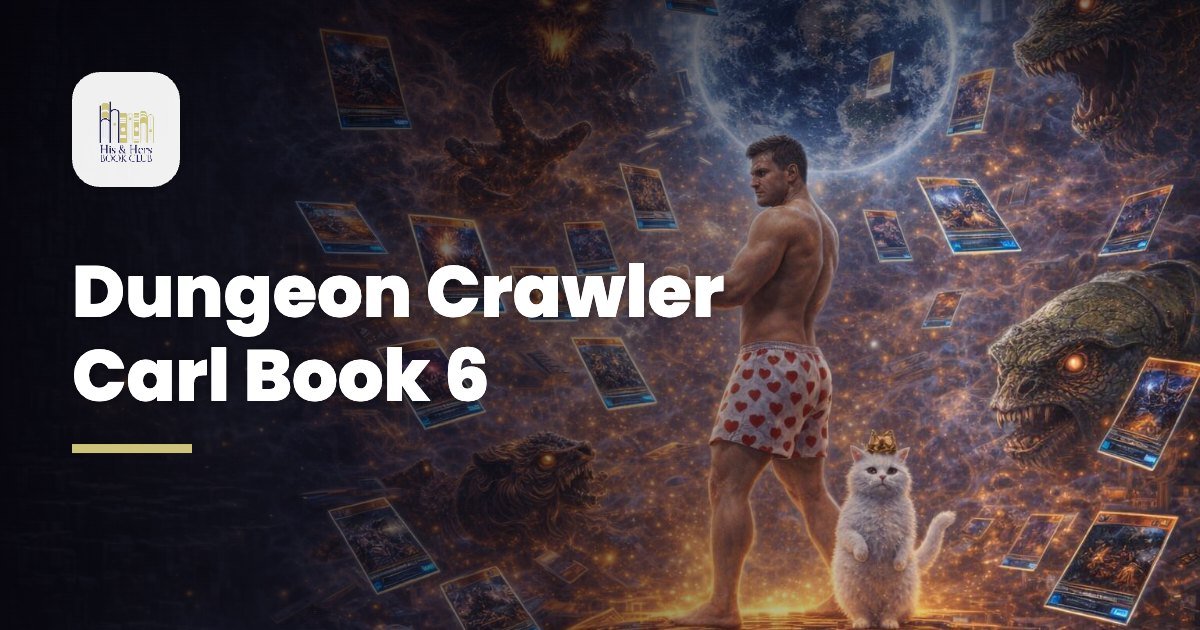
The sixth book in Matt Dinniman's Dungeon Crawler Carl series is The Eye of the Bedlam Bride. It follows directly from the events of book five and takes Carl and Princess Donut through one of the strangest, most emotionally complex floors in the series so far.
The setting alone deserves its own paragraph. This floor is an exact replica of Earth in the days immediately before its collapse. It is populated by intangible, looping ghosts of humanity, people who are completely unaware of what is coming for them. They go about their days, repeat their routines, and cannot be touched or warned. As a backdrop for a LitRPG dungeon floor, it is quietly devastating in a way that sneaks up on you.
The gameplay mechanic layered on top of this setting is a deck-building card game, something close in spirit to Pokémon or Magic: The Gathering for anyone who has played either. Carl and Donut must track down, fight, and capture legendary local Earth folklore monsters across different regions of this ghost-Earth, turning them into summonable cards. The combination of that card-collecting structure with the haunted, looping world underneath it creates a tonal tension that is very much intentional. You are hunting creatures across a world that is already dead, watched by people who don't know it yet.
The Book That Made Me Rethink the Main Character
This is where my mixed feelings come from, and I think they're actually the most interesting thing about the book.
By book six, we've spent a significant amount of time viewing everything through Carl's perspective. He's funny, he's resourceful, he clearly loves Donut, and Dinniman has done a good job of making him someone you root for. But this book is the one where the layers start peeling back in a way that isn't always comfortable. What we find underneath is not what I was prepared for.
Take Carl's habit of justifying killing NPCs by telling himself they'd be better off dead. In the earlier books, it reads as dark humour, as Carl's way of coping. By book six, it starts to feel like something else: a rationalisation. A story he tells himself because it is the only story that lets him keep functioning inside the dungeon. He's not wrong, exactly. But he's not exactly right either. And the book is interested in that gap in a way the earlier entries weren't quite brave enough to be.
This is one of the most important rules of storytelling, and Dinniman applies it here with real nerve: main characters do not have to be good people. Carl is portrayed as more just than most people in his situation would be, genuinely. But a truly ideal moral person would not survive the dungeon for five minutes. His goodness is relative, contextual, and sometimes self-serving. Sitting with that is uncomfortable. It's also what makes him feel like a real person rather than a protagonist-shaped object.
The trick Dinniman pulls off, and it is a genuine trick, is that Carl never loses his core humanity through all of this. The crassness is still there. The absurdity is still there. Donut's aristocratic indignation is absolutely still there. But those things now function as evidence of how hard the characters are working to stay themselves inside conditions designed to grind that selfhood away. The horror and the jokes are doing the same job from opposite directions.
The Lore That's Been Quietly Cooking This Whole Time
Behind all the crass humour and the escalating chaos, Dinniman has been building something. Book six is the point where that becomes impossible to ignore.
The political machinery running the dungeon as an alien broadcast spectacle has been growing in complexity since the early books, and here it starts to show its teeth in ways that reframe things you thought you understood. There are revelations in The Eye of the Bedlam Bride that made me want to go back to book two and reread entire sections with new eyes. That's the sign of a writer who knows exactly where he's been going all along, even when the surface of the story looked like pure chaos.
Mordecai's expanded role in this entry feels particularly earned. He's been a constant presence, but here the story gives him room to become something more than a mentor figure, and the result is one of the emotional highlights of the whole series. Some of the secondary crawlers who've been orbiting the story quietly also get their moments. Dinniman plants seeds slowly and harvests them at exactly the right time.
The Ghost-Earth Setting and Why It Works So Well
I want to spend a moment on the setting because I think it does something genuinely clever that doesn't get enough credit.
Placing Carl and Donut on a replica of the Earth they lost, watching ghost-versions of people live out their last days in an endless loop, is not just an interesting gameplay wrapper. It is grief made literal. These are people who had no idea what was coming. Carl did not know either, not really, when it started. Walking through that world and fighting monsters while those ghosts go about their unknowing lives is a specific kind of awful that Dinniman leans into without being heavy-handed about it.
The card-game mechanic suits the setting better than it might first appear. Hunting regional folklore creatures across different ghost-Earth locations gives the floor a scavenger-hunt energy that keeps the pace up, while the underlying horror of the world it's set in keeps the emotional temperature from ever getting too comfortable. It is the series' best tonal balancing act since book one.
Why I Came Around on My Mixed Feelings
When I finished The Eye of the Bedlam Bride, my immediate reaction was something like unease. Not dissatisfaction, but a kind of moral discomfort that I wasn't sure I'd signed up for. It took a few days before I realised that was precisely the point.
The books I remember longest are usually the ones that made me shift in my seat a little. The ones that asked me to examine the character I'd been rooting for and reckon with the fact that my affection for them doesn't make them straightforwardly good. Book six is that kind of book. It made me work. It made me think. And it made me more invested in where this story is going than I was even after book five.
Why I Recommend It:
The Eye of the Bedlam Bride is Matt Dinniman at his most ambitious. The ghost-Earth setting is genuinely haunting, the card-game mechanic is better than it sounds, and the moral complexity of Carl's character gets the serious examination it's been earning across five books. It's not the most immediately satisfying entry in the series, but it is arguably the most important one. If you enjoy serialised fantasy where the long game pays off, it sits comfortably alongside other best fantasy series worth reading that reward patience and commitment in equal measure.
Read This If:
You've read books one through five and want to know whether the series still has somewhere interesting to go. It does.
You enjoy serialised fiction where the author is clearly playing a very long game with the lore, in the same vein as the Red Rising series.
You like your comedy dark, your horror earned, and your protagonists genuinely complicated rather than just edgy.
You're prepared to have your comfortable assumptions about a character you like tested properly.
A Reminder on Reading Order
This is not an entry point. Nothing about The Eye of the Bedlam Bride will make sense, emotionally or narratively, without the five books that precede it. The grief hits harder because you know who is gone. The moral complexity lands because you've had time to build up your affection for Carl and then watch it get complicated. Start with Dungeon Crawler Carl, book one, and let the series do its work on you in order.
If you're new and want a sense of what you're getting into before you commit, our review of book five is a good place to see where the series stands at full speed, without the spoilers that would come from jumping straight in here.
On Matt Dinniman and How This Series Gets Written
The Dungeon Crawler Carl series began as a web serial on Royal Road before moving into published ebook and audiobook formats. That serialised origin is visible in the pacing. These books move. Every chapter earns its place, and the worldbuilding is always doing multiple jobs at once, which is the craft of a writer who had to keep readers turning pages one chapter at a time.
The audiobook narration by Jeff Hays is worth mentioning separately. It adds an entire extra dimension to the comedy and to the quieter emotional beats, and this particular entry, with its haunting ghost-Earth sequences, benefits enormously from a strong performance. If you have the option of audio, it is worth considering. If you want to share this one with someone who prefers to listen, our guide to gifting the audiobook format walks through the whole process.
If any of this has you curious about where the series is heading, or if you want to watch two people with genuinely different reading tastes argue about whether Carl made the right calls in book six, we'd love to have you along.
His and Hers Book Club is Alex and Stani, a husband and wife who cover fantasy, crime, literary fiction, classics, and self-improvement, and who almost never agree on what to read next. Subscribe to our free newsletter at hisandhersbookclub.com for new reviews and reading guides, and follow us at @hisandhersbookclub on Pinterest and Instagram if you want the debate in real time.
Frequently Asked Questions
What is the 6th Dungeon Crawler Carl book?
The sixth book in the Dungeon Crawler Carl series is The Eye of the Bedlam Bride by Matt Dinniman. It follows Carl and Princess Donut through a floor built as an exact replica of Earth in the days before its destruction, populated by looping ghost-versions of humanity, with gameplay structured around capturing regional folklore monsters in a deck-building card format.
Do I need to read the earlier Dungeon Crawler Carl books before book 6?
Yes, without question. The Eye of the Bedlam Bride builds directly on character relationships, deaths, and plot threads established across the first five books. The emotional weight of this entry depends entirely on what came before. You can get a full overview of the Dungeon Crawler Carl series on our site, but the short answer is: go back to book one if you haven't started yet.
Is Dungeon Crawler Carl suitable for readers who don't usually read LitRPG?
It tends to work well for readers who wouldn't normally pick up a LitRPG title, and it has built a following among the same crowd drawn to fantasy books that have blown up on BookTok for exactly this reason. The game-system elements are present and Dinniman explains them clearly, but they serve the story rather than dominating it. If you enjoy character-driven fiction with dark comic edges and genuine emotional stakes, the genre label is not a barrier.
Is the Dungeon Crawler Carl audiobook worth it?
Both formats are strong, but the audiobook narration adds a great deal to the comedy and to the more emotionally charged moments. It is particularly worth considering for this entry, where the ghost-Earth sequences benefit from a strong vocal performance. If you have access to both, try a chapter or two in audio before deciding. And if you're thinking about gifting the audiobook to someone, our guide covers everything you need to know.
How many books are in the Dungeon Crawler Carl series?
Matt Dinniman has indicated the series is a longer multi-book arc, and entries beyond book six have been released or announced. A confirmed final book count has not been publicly fixed. Check the author's official channels for the most up-to-date information on upcoming releases.


Dungeon Crawler Carl book 6, The Eye of the Bedlam Bride, reviewed: what happens, why the series keeps getting better, and whether it's worth reading. Honest fan take.