
(Affiliate Disclaimer) This post contains affiliate links. If you use these links to buy something we may earn a commission. For more information, please see our Disclaimer.
If you've followed us on Instagram or TikTok recently, you've probably noticed something strange happening to my content. About a month and a half ago, on a whim, I decided to finally check out some Warhammer 40k books. I'd been circling the hobby for years, mostly because the art looked incredible and I kept hearing about "primarchs" and “space marines” without really knowing what they meant. I picked up one book. Just to see.
Guys, my life has not been the same since.
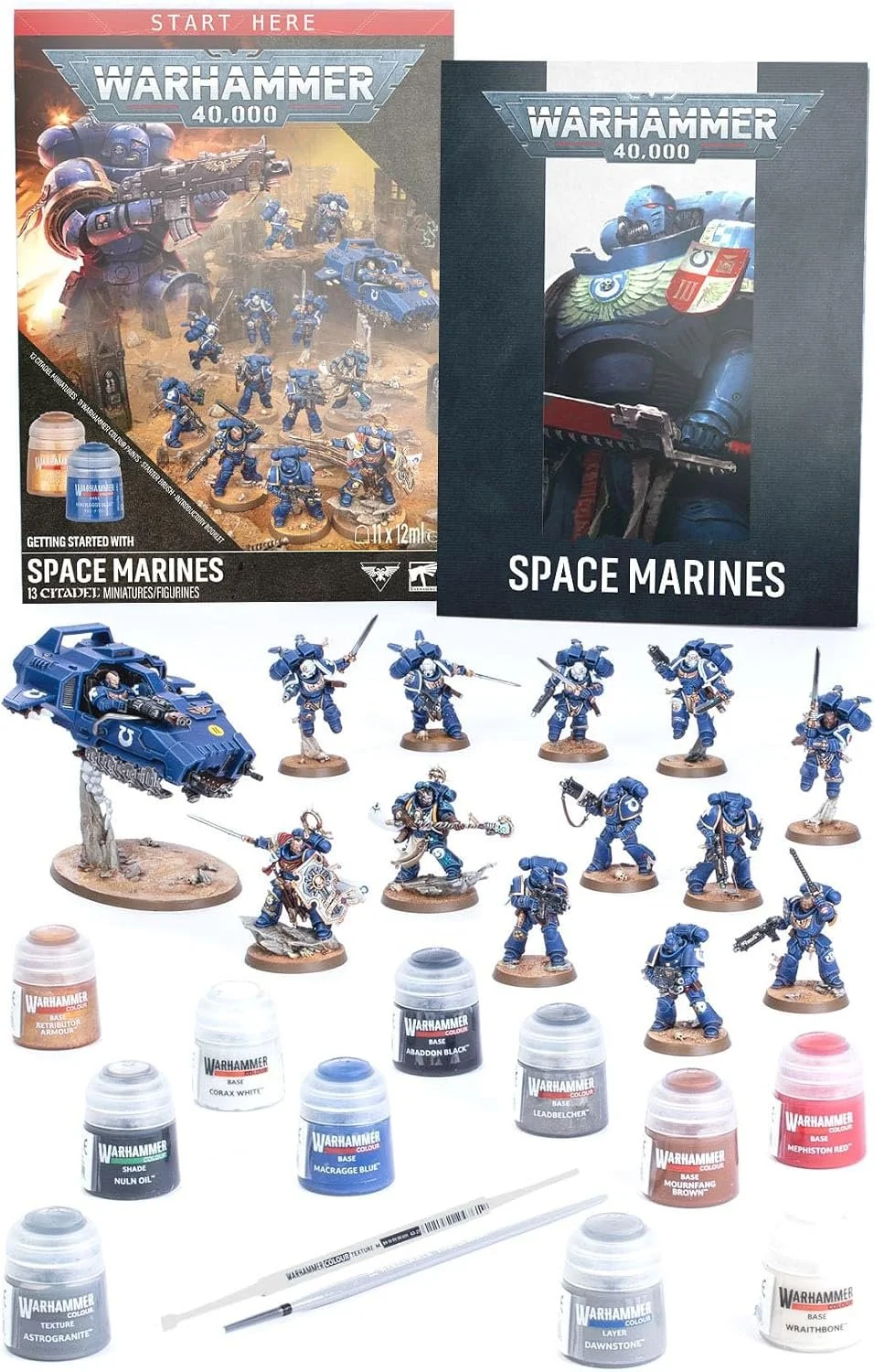
I'm currently on my ninth Warhammer 40k novel. I now own a miniature starter set that I have painted exactly two models from (progress is progress). I'm posting consistently again across every channel for the first time in months. And I've nearly, nearly, gotten Stani invested too, which anyone who knows us will understand is basically a miracle.
So this isn't an article written by a forty-year veteran of the Black Library. This is written by someone who went from zero to obsessed in six weeks flat, and who remembers exactly how overwhelming it felt to google "where do I even start with Warhammer books" and get a hundred conflicting answers from people who've clearly been in this for decades. I'm going to try to save you some of that confusion.
First, a Quick Word on 40k vs 30k
Before you pick anything up, you need to know this distinction, because it genuinely changes what you're reading.
Warhammer 40,000 (40k) is the "present day" of the setting: a grim far future where humanity is a paranoid, fractured empire run by a corpse-god on a life support throne, constantly at war with aliens, demons, and itself. Warhammer 30,000, better known as the Horus Heresy, is the prequel era. It's the civil war that happened ten thousand years earlier and basically explains why everything in the 40k present is so broken, so distrustful, and so utterly bleak.
You don't strictly need to read them in chronological order. But understanding which era a book sits in will save you a lot of "wait, who is this guy and why is everyone acting like he's a god" confusion.
The Two Books Everyone Recommends (And Why They're Both Right, Sort Of)
Ask ten Warhammer veterans where to start and you'll mostly get two answers, often delivered with the confidence of someone defending a sports team.
The first camp points you toward the Eisenhorn trilogy, which follows an Imperial Inquisitor hunting heresy and chaos cultists across the galaxy. It reads like detective noir with psychic powers and daemons, and it's frequently cited as one of the best entry points into 40k because it's self-contained, character-driven, and doesn't assume you already know the lore.
The second camp will tell you to start the Horus Heresy series, beginning with the opening trilogy that kicks off the entire civil war. This is the origin story of basically everything in 40k: why the Emperor is silent, why certain Space Marine chapters hate each other, why the whole setting feels like one long, slow-motion tragedy.
Here's the thing both camps tend to leave out, though, and it's the whole reason I landed where I did.
My Honorable Mention: Where I Actually Started
I didn't start with either of the "correct" answers. I started with Valdor: Birth of the Imperium, and honestly, I think it deserves way more credit as an entry point than it gets.
It follows Constantin Valdor, the Captain-General of the Emperor's personal bodyguard, during the earliest days of the Imperium, before the Heresy, before the Space Marine Legions were even fully formed. It's a slower, more political book than a lot of 40k fiction. There's less constant warfare and more worldbuilding about how this entire empire was stitched together in the first place.
What made it a great accidental starting point for me is that it establishes the Emperor, Valdor, and the earliest Custodes with almost no assumed prior knowledge. I wasn't drowning in acronyms and faction names I didn't recognize. I was learning the foundation of the setting at the same pace the book was building it.
Would I officially recommend it as book one for everyone? Not quite. It's a bit of a slower burn, and some of its payoff only really lands once you know more of the wider story. But as an accidental on-ramp, it worked beautifully for me, and if you stumble across it first the way I did, don't panic. You're in good hands.
So What's the Best Warhammer 40k Book to Actually Start With?
Here's my actual, considered take, and I know it's going to ruffle a few feathers among the old guard: start with the main Horus Heresy books, then move on to Eisenhorn.
I know. I know! The internet will tell you Eisenhorn is the gentler, more accessible entry point, and in a vacuum, that's true. It's shorter, it's more contained, and it doesn't require you to track a dozen Space Marine Legions across a galaxy-spanning civil war.
But here's the thing a lot of the veterans recommending Eisenhorn first don't quite account for: when many of them started reading 40k, the Horus Heresy series either didn't exist yet or was still being written. They read Eisenhorn first because, at the time, it genuinely was the best-written, most accessible option on the shelf. The foundational Heresy lore just wasn't properly fleshed out yet.
That's no longer true. The Horus Heresy books now exist as a complete, sprawling foundation myth for the entire setting, and reading them first means every single 40k book you pick up afterward, Eisenhorn included, lands with way more weight. You'll understand exactly why the Inquisition is so paranoid. You'll get why certain chapters are despised. You'll recognize names dropped casually in later books as actual emotional gut-punches instead of throwaway references.
Read Eisenhorn cold, with zero Heresy knowledge, and it's a genuinely great, thrilling ride on its own merits. Read it after the Heresy, and it becomes something richer: a story happening in the long shadow of a tragedy you now understand intimately.
Why I Recommend This Order
Starting with the Horus Heresy main books gives you the emotional and historical backbone of the entire 40k universe before you start meeting its present-day characters. It's a bit like reading a family's origin tragedy before meeting the grandchildren who are still, unknowingly, living in its fallout.
It also front-loads the big, operatic, galaxy-scale storytelling that makes Warhammer fiction so addictive in the first place. Legions turning on each other. Brothers becoming enemies. A golden age curdling into the grim, paranoid 40k present we all recognize from the art and the tabletop. Once you've got that in your bones, every later book you read feels like it's in conversation with something you already care about.
Read This If
You want your first Warhammer read to explain the "why" behind the setting, not just drop you into it
You like sprawling, multi-character, high-stakes war stories with real emotional betrayal at the center
You're the kind of reader who'd rather build a strong foundation first, even if it means a slightly steeper opening chapter or two
You eventually want Eisenhorn, or any later 40k book, to hit twice as hard because you actually understand what's at stake
And if none of that appeals and you just want a tight, accessible, standalone-feeling story to dip your toe in first? Start with Eisenhorn. It's a genuinely great series and a perfectly valid door into this universe. There's no wrong answer here, just different flavors of overwhelmed.
Oh, and if you do end up starting with Eisenhorn, my personal recommendation is to get the Omnibus edition: it features all 4 (yes, I know I said trilogy above but if you read them you’ll understand why) main books plus all short stories in chronological order. Missing out on the short stories won’t have a massive effect on the outcome, but it once again makes the main story that much more interesting, especially if you catch certain throwback references.
If this whole saga of me accidentally becoming a Warhammer person has you curious what else is making its way onto our shelves lately, across fantasy, crime, literary fiction and everything in between, you can follow us on TikTok and Instagram at @hisandhersbookclub where Stani and I continue to share about almost everything we read.
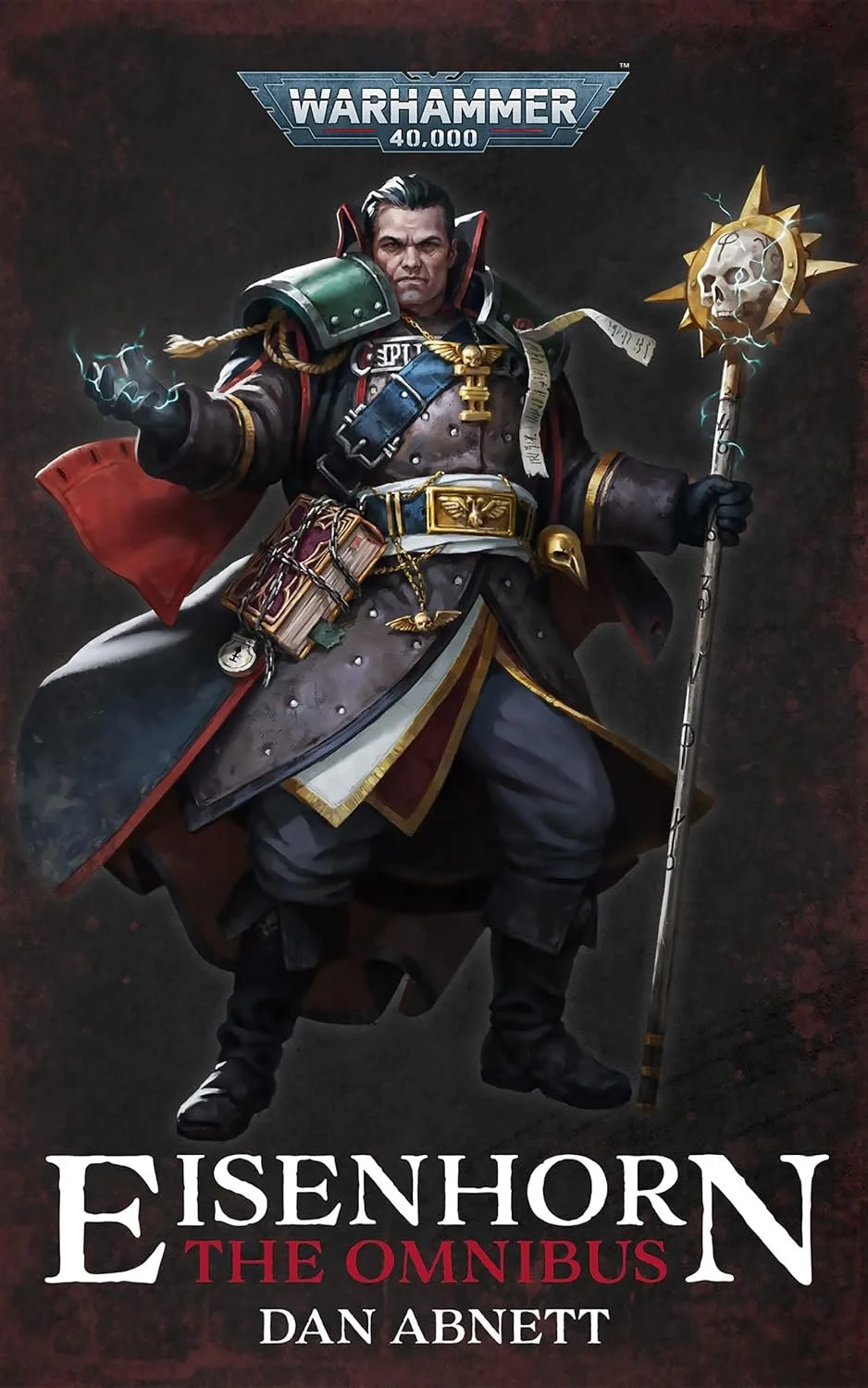
The exact Eisenhorn edition I got, which I highly recommend, as it lists all the books and short stories in chronological order. Buy here on Amazon.
Frequently Asked Questions
Do I need to read the Horus Heresy books in order?
Mostly yes, at least for the opening trilogy, since it sets up the core betrayal and characters the rest of the series builds on. After that initial run, some of the side novels and anthologies can be read more flexibly, but the main numbered sequence is best tackled in order.
Are Warhammer 40k books worth reading if I don't play the tabletop game?
Absolutely. I haven't played a single tabletop game and I'm nine books deep. These novels work as standalone science fiction and military fantasy, and plenty of readers get into the books with zero interest in ever touching the miniatures.
Is Warhammer 40k fiction considered grimdark?
Yes, it's one of the settings most commonly cited when people explain what "grimdark" means. Expect a universe where there are no clean victories, humanity is barely holding on, and moral compromise is baked into nearly every faction.


Looking for the best Warhammer 40k books to start with? Here's an honest, no-nonsense reading order from a brand new fan nine books deep already.