
10 Mark Twain Facts That Sound Fake But Are True (2026)

Disclaimer: This article uses affiliate links, meaning: at no additional cost to you, we earn a small commission if you click-through and make a purchase.
The Man Behind the Mustache
Mark Twain is often reduced to a caricature: the white suit, the wild hair, and the witty quotes you see on Instagram.
But when I dove deeper into his biography while re-reading The Adventures of Huckleberry Finn a couple of years ago, I realized that the real Samuel Clemens was far more interesting, and chaotic, than the legend suggests.
He wasn't just the "Father of American Literature." He was a steamboat pilot, a failed miner, a terrible investor, and a cat lover who preferred felines to people.
To truly understand his books, you have to understand the man who wrote them. His life was filled with the same kind of absurd adventures and biting satire that defined his novels.
Here are the 10 Mark Twain facts that changed the way I read his work, and why they matter.
Mark Twain's Childhood: Surviving Against the Odds
What would the world be, without Mark Twain in it? Thankfully, we never have to know the answer to that question, yet the literary world came disturbingly close to never knowing one of it's most brilliant and fascinating figures.
Twain was born 2 months prematurely on November 30th, 1835 in Florida and remained sickly throughout the first seven years of his childhood.
Financial struggles and lack of proper medical care stacked the odds against his family, as he was one of only three siblings (from 7 in total) to survive to adulthood.
My Take: It is hard to reconcile this fragile start with the robust, adventurous voice we hear in The Innocents Abroad. If anything, his early fight for survival might explain the resilience found in so many of his young protagonists.
The Origin of "Mark Twain": Was it his real name?
Surprise, surprise! Mark Twain is actually an alias, which the author assumed early on in his career.
He was born Samuel Langhorne Clemens and he tried out a number of different names - including the hilariously sounding Sergeant Fathom and Thomas Jefferson Snodgrass, before settling on the one that the world came to know and love.
"Mark Twain" supposedly refers to two fathoms (12 feet or 3.6 meters) deep, in boat slang. There have been many theories as to where and how exactly he picked the name.
Twain eventually confessed to swiping it from a captain named Isiah Sellers, who used it at the New Orleans Picayune. This however, has never been corroborated by any other source and to this day remains a subject of much debate.
Personally, I'm a huge fan of the urban legend, according to which Mark Twain used to walk into a bar and shout out "mark twain", prompting the bartender to mark twain (or two) drinks on the wall with chalk.
Sounds like a great way to keep sights of your bar tab, doesn't it?
Reader's Connection: If you read Life on the Mississippi, you can actually see where this obsession began. The river terminology wasn't just a job for him; it was a language that defined his identity.
From Steamboats to Silver: His Time as a Miner
Twain was definitely not afraid to try a variety of different jobs. Apart from working on an actual steamboat, he also worked as a miner in Nevada, where Samuel and his brother fled to, in order to avoid the American Civil War.
Unfortunately for them, the war greatly affected the mining trade, which by itself was hard and dismal.
Luckily, he didn't have a long stint as a miner, as he quickly got his first writing job for Virginia City's Territorial Enterprise newspaper, where he was tasked with covering crime, politics, culture, and to some disappointment from his end - mining.
Why it matters: This period wasn't wasted time; it became the direct inspiration for Roughing It. His signature dry humor about the "American Dream" and the absurdity of greed really started to shine in these rough mining camps.
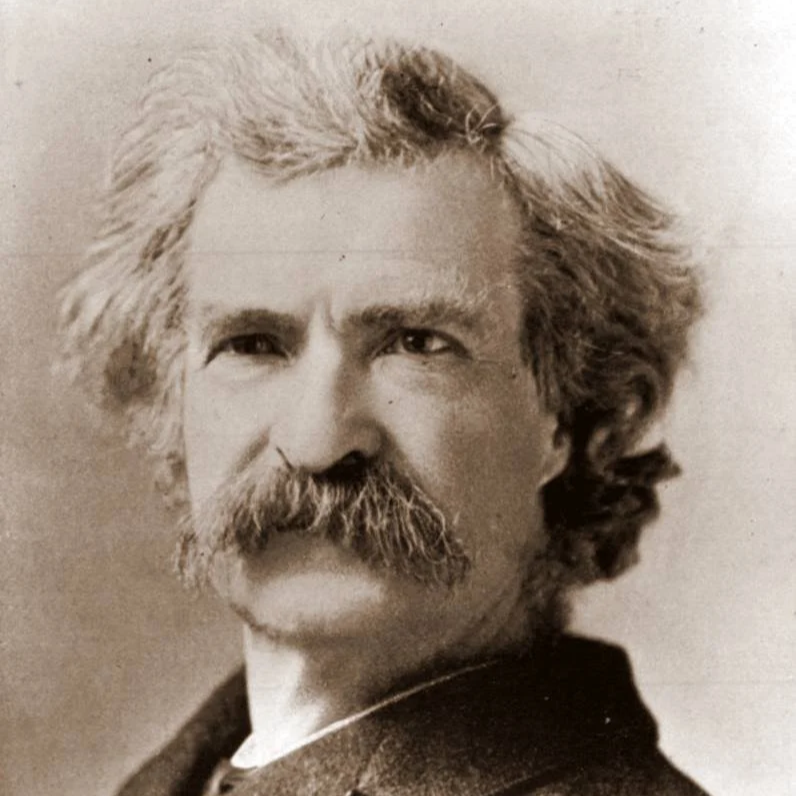
I still can’t believe that he could procrastinate like the best of us!
Why Huckleberry Finn Took 7 Years to Write
Inspiration is a fickle mistress - she can derail a writer's journey on a whim, just as easily as she can provide the missing piece to fit a novel together.
Following the success of The Adventures of Tom Sawyer in 1876, Mark Twain began working on the sequel but after about 400 pages he just wasn't feeling it.
He famously told a friend he liked it "only tolerably well, as far as I have got, and may possibly pigeonhole or burn" the manuscript.
Thankfully, he didn't burn it but he did put it on hold for several years, before a sudden burst of inspiration struck, prompting him to finally finish it in 1883.
For the Writers: For anyone who has ever struggled to finish a creative project, it is comforting to know that even the "Great American Novel" sat in a drawer for years. Sometimes, the best stories just need time to marinate.
The Memory Builder: Did Mark Twain invent a board game?
What do you do when you're procrastinating on writing the next great American novel? You create a board game, obviously!
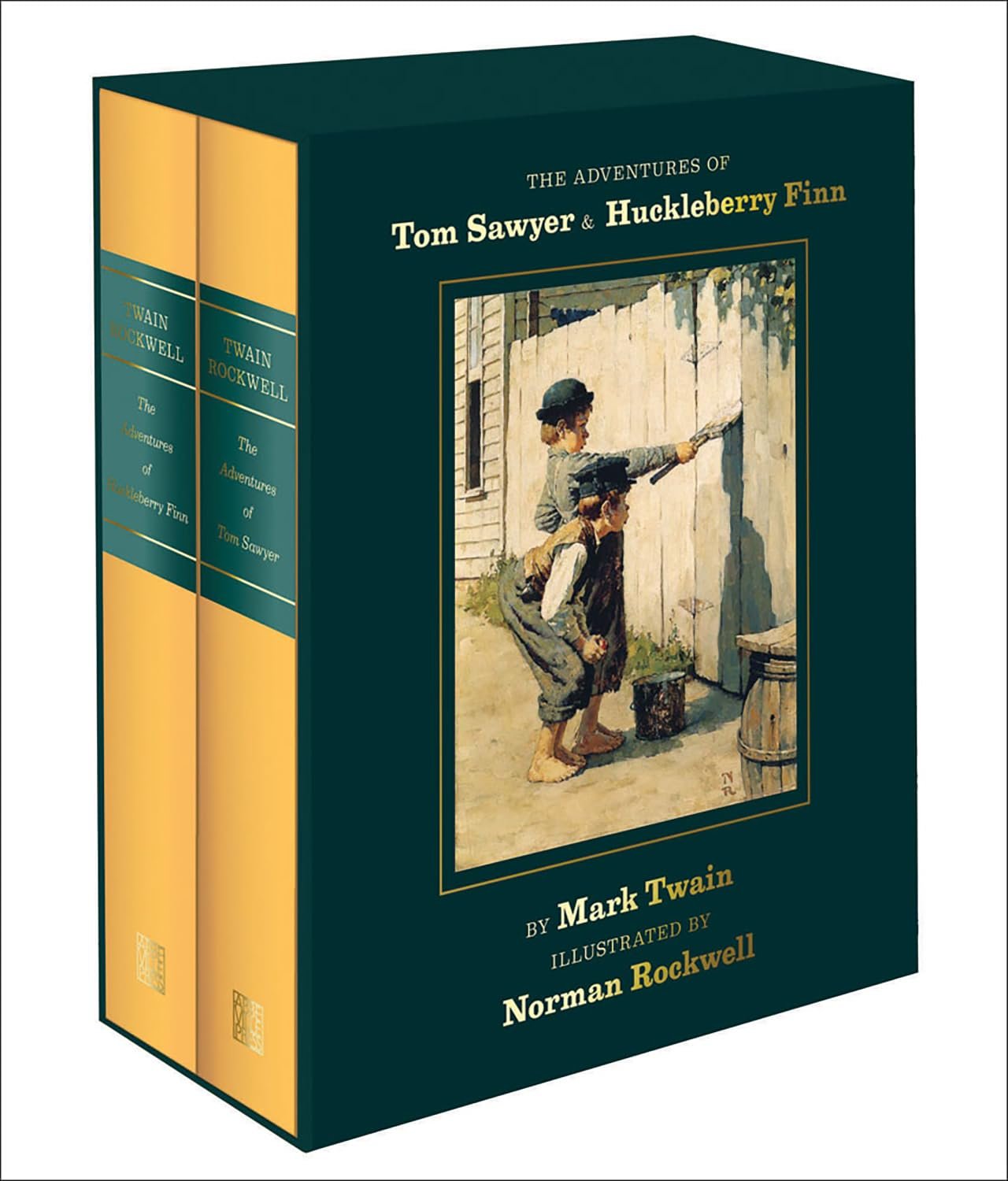
Twain is credited with the creation of a game, he himself dubbed "Memory Builder". The game was aptly named, as it required a vast knowledge of historical facts and trivia.
It's biggest strength was also, unfortunately, what made the game nearly unmarketable. It's commercial flop never stopped Twain from patenting it, though, and working on it for almost two years.
The game was actually called 'Mark Twain's Memory Builder.' It was patented in 1885 but failed because it looked more like a tax form than a game!
Fun Fact: This explains a lot about his writing style. Twain’s plots often feel like intricate puzzles. His mind was always working on mechanics, whether he was designing a game or structuring the time-travel logic in A Connecticut Yankee in King Arthur's Court.
Mark Twain’s 19 Cats (and their incredible names)
Stani and I have a really close friend, who would be ecstatic to find out that her life trajectory shares at least one trait with Twain's life.
Twain absolutely adored cats - he would even "rent" cats to keep him company while he travelled. He was so bedazzled with the felines, that at some point he had 19 of them at the same time.
I can only imagine the smell in his apartment. No mice though, so at least that's a plus.
When asked about his cat obsession, Twain retorted that he found cats much preferable to humans, even going as far as saying that "If man could be crossed with the cat, it would improve man, but it would deteriorate the cat".
Fun fact: He didn't just have 19 cats; he gave them names like Satan, Sin, Sour Mash, Pestilence, and Bambino. He even famously 'rented' three kittens for a summer while traveling, naming them Sackcloth and Ashes.
Literary Note: You can see this affection in his writing; he often gives animals more dignity and intelligence than his human characters. As he famously wrote in Pudd'nhead Wilson, "A home without a cat — and a well-fed, well-petted and properly revered cat — may be a perfect home, perhaps, but how can it prove title?"

The Truth Behind Famous Mark Twain Quotes
Seriously, go to any "self-help" or "motivation" page on Instagram and you can't scroll for 5 minutes without running into a quote attributed to Mark Twain.
Funnily enough, a vast majority of these quotes are either misquoted or belong to completely different people. Our guess? We think that people just like using Twain's picture due to his glorious moustache and piercing gaze.
One of his most well-known quotes, "It is better to keep your mouth shut and appear stupid than to open it and remove all doubt" is actually a dumbed-down version of what he actually said: " [He] was endowed with a stupidity which by the least little stretch would go around the globe four times and tie".
How to spot a fake: Real Twain quotes usually have a darker, more cynical edge (like the one about stupidity above). If a quote sounds too sweet or purely inspirational, he probably didn't say it.
If you love witty insults, check out our collection of Oscar Wilde Quotes That Still Sting: Twain and Wilde were the masters of the one-liner.
The Halley’s Comet Prediction: Predicting his own death
As unbelievable as it sounds, Twain managed to predict his own death almost to the day.
As he commented in 1909, "I came in with Halley’s Comet in 1835. It is coming again next year, and I expect to go out with it. It will be the greatest disappointment of my life if I don’t go out with Halley’s Comet. The Almighty has said, no doubt: ‘Now here are these two unaccountable freaks; they came in together, they must go out together.’ Oh, I am looking forward to that."
Mark Twain passed away in his home on April 21, 1910 - exactly one day after Halley's Comet's perihelion.
My Take: This feels like a plot point straight out of his fiction—too poetic to be real, yet it happened. It was the perfect final chapter for a man who lived his life as a story.
Mark Twain’s Bad Investments (and Bankruptcy)
There is a famous quote by Robert T. Kiyosaki, author of the best-selling book Rich Dad Poor Dad, which goes like this: "A person can be highly educated, professionally successful, and financially illiterate". Unfortunately, this saying describes Mark Twain's investment capabilities perfectly.
After becoming a successful writer, he put his money in multiple bad investments, none of which turned profitable and he soon went bankrupt.
Sadly enough, a few of these flopped investments were in his own inventions and patents, some of which, like his automatic typesetting machine, proved so costly they put him in severe debt.
Nonetheless, the writer managed to pay off all his debtors in full by conducting multiple highly profitable (and physically taxing) lecture tours around the world.
Reader's Connection: His financial failures fueled the biting satire in The Gilded Age. He understood the absurdity of greed and speculation so well because he fell victim to it himself.
The End of the Line: Does Mark Twain have living descendants?
Personally, I find this the saddest part of this list. While Twain's life certainly had it's fair of tragedies - including financial and health struggles, and the death of his father when he was only 11 - his descendants faired little better.
In 1870, Twain married Olivia Langdon and the two had four children.
One child died as a toddler and another two passed away in their 20s. Olivia herself died in 1904 at the age of 58, followed by her famous husband only 6 years later.
The surviving child, Clara, lived to the ripe age of 88 and passed away in 1962. Clara had only one child, Nina, who passed away shortly after her mother (1966), childless and with no heirs to the family name.
Thus, unfortunately, by 1966 the line of Samuel Langhorne Clemens, who the world will forever remember as Mark Twain, ended.
But while his direct descendants might be gone, Twain will be forever survived by two fictional children that he fathered - Tom Sawyer and Huckleberry Finn.
The Legacy: While his direct bloodline ended, his literary lineage is immortal. Every modern American writer who uses vernacular speech or satire owes a debt to Samuel Clemens. As Hemingway said, "All modern American literature comes from one book by Mark Twain called Huckleberry Finn."
Did you like my list of top 10 Mark Twain facts? Let us know in the comments below!



Dungeon Crawler Carl book 6, The Eye of the Bedlam Bride, reviewed: what happens, why the series keeps getting better, and whether it's worth reading. Honest fan take.